졸업을 위해 잠시 베이징의 학교로 돌아갔던 김현웅이 다시 회사로 복귀했다. 송부장과 나는 숙소로 사용했던 과거 리화화장품 사무실에서 이사 나와, 회사에서 멀리 떨어지지 않은 바오롱아파트에 방 세 칸짜리를 얻어 살고 있었다.
과거 민대표와 이상무가 리화화장품 사무실을 주재원 숙소로 쓰자고 제안했을 때, 내가 반대했던 것도 이렇게 곧 이사 갈 것이 뻔히 내다 보였기 때문이었지만, 한치 앞도 못 보는 그들 덕에 회사는 사무실을 숙소로 바꾸고 침대 등 각종 비품들을 구입하느라 수 백만원을 날리고 말았다.
중국의 대부분의 아파트는 모든 가구와 전자제품이 함께 설치된 채 임대되고 있기 때문에, 구입한 물건들이 두 달만에 처치 곤란한 애물덩어리가 되자, 우리는 아는 사람을 통해 이사비용을 지불하지 않는 조건으로 그냥 업자에게 넘겨주어버렸다.
김현웅이 칭다오로 돌아와 단체 숙소로 들어오자 드디어 집이 가득 차는 느낌이 들었던 것도 잠시, 한달 뒤 송부장의 가족이 한국에서 칭다오로 이사 오면서 송부장은 별도로 한국인들이 모여 사는 티엔타이청(天泰城)의 한국인 아파트로 이사해 나갔다.
이로써 본격적으로 회사의 임원이자 총경리인 나와 20살 연하의 신입사원 김현웅의 짧은 동거가 시작되었다. 어찌 보면 20년이라는 세대차이도 그렇겠지만, 신입사원이 직장 상사, 그것도 하늘같은 임원과 한 집을 같이 쓴다는 것은 쉬운 일이 아니었을 것이다.
그나마 중간에서 완충작용을 해주었던 송부장마저 없는 지금 김현웅은 회사와 집에서 모두 상사를 모시고 있는 꼴이 되었으니, 스트레스가 이만 저만이 아니었을지도 모른다. 그러나 이는 나도 마찬가지였다.
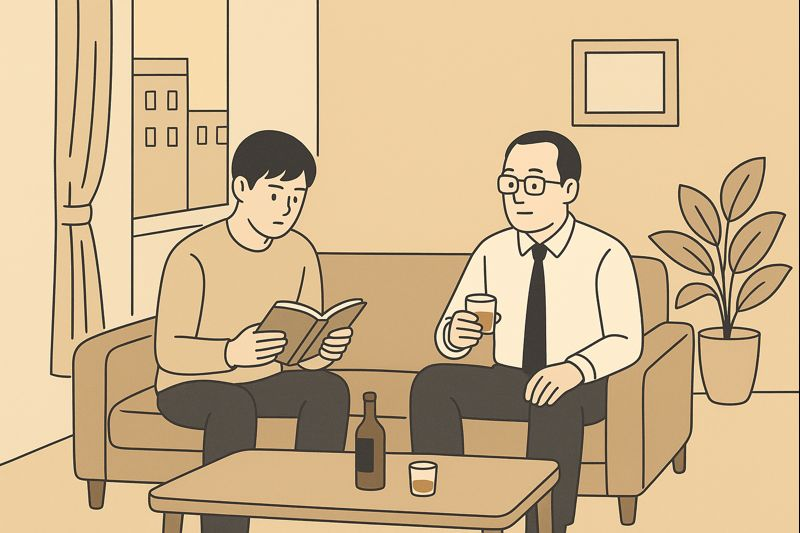
술을 좋아하고 활달한 편인 나는 송부장이 있을 때만 해도 죽이 맞아 숙소에서 술도 한잔 하기도 했었지만, 원래 말이 적고 술을 좋아하지 않는 김현웅과는 술 한잔 하기도 껄끄러웠으며 이래저래 점점 눈치 보게 되는 안사람 같은 느낌이 들게 되었다.
하루는 칭다오에서 대학동문회장을 맡고 있는 내가 동문회에 참석했다가 후배들을 데리고 12시가 넘어 집으로 데려온 적이 있었다. 이미 2차까지 가서 모두들 거하게 취한 상태라 왁자지껄 꽤 소란스러웠는데도 김현웅은 방 안에서 꼼짝도 하지 않았다.
그걸 가만히 보지 못한 나는 그 늦은 밤에 자고 있는 김현웅을 깨워 모르는 사람들 틈에 참석하게 한 후 억지로 술도 마시게 했으니, 김현웅 입장에서는 아닌 밤중에 홍두깨요, 자다가 봉창 두들기는 소리였을 거나 다름없었을 것이다. 이렇듯 서로 크게 다른 사람이 한 집에 살기는 쉬운 일이 아니었다. 미지의 땅 중국 차이나에서나 있을 수 있는 차이나는 일이었다.
아직 주변에 친구들이 많지 않았던 터라 평일에 회사라도 나가면 괜찮았지만, 주말만 되면 우리는 별로 할 일 없이 하루 종일 집에 있을 경우가 많았다. 위성 안테나를 달아서 한국 공중파 방송 몇 개 채널은 볼 수가 있었기 때문에 때론 함께 드라마나 오락 프로그램도 함께 보기도 하였지만, 대부분이 각자 방안에 틀여 박혀서 책을 읽거나 인터넷 서핑을 하거나 노트북PC로 영화를 보며 적막한 하루를 보내는 게 대부분이었다.
그러다 보니 우린 집에서 점점 대화를 피하고 밖으로 나가기 시작했다. 나는 주말에 4시간을 집중적으로 하는 중국어 학원 수강을 들었고, 중국어를 잘하는 김현웅은 회사직원을 통해 중국인 여자친구를 사귀어 각자 주말에는 밖으로 돌아다니게 되었는데, 솔직히 중국인 여자친구 사귀는 게 가장 중국어를 배우는 지름길임을 뻔히 알면서도, 유부남이란 한계 때문에 그러지 못하고 돈 들여 고생하며 학원을 다니는 내 입장에서는 김현웅이 무척 부러운 대목이었다.
——————
Kim Hyun-ung, who had briefly returned to his university in Beijing to complete his graduation requirements, came back to the company. Chief Song and I had moved out of the former Lihua Cosmetics office that we had been using as our residence and rented a three-bedroom unit in the Baorong Apartment complex, not far from the company.
When Min, the CEO, and Manager Lee had suggested converting the Lihua Cosmetics office into expatriate housing, I opposed it because it was obvious we would soon have to move out again. But thanks to their short-sightedness, the company ended up converting the office into living quarters and wasted several million won purchasing beds and various furnishings.
Since most apartments in China come fully furnished with all necessary furniture and appliances, the items we had purchased became useless burdens within two months. We eventually handed everything over to a mover we knew, on the condition that we wouldn’t be charged for relocation.
When Kim Hyun-ung returned to Qingdao and moved into the group residence, it briefly felt as though the place had finally become lively. But a month later, when Chief Song’s family relocated from Korea to Qingdao, he moved out to a Korean residential complex in Tiantai City (天泰城), a district where many Koreans lived. This marked the beginning of an unusual short cohabitation between me—an executive and the company’s general manager—and Kim Hyun-ung, a new employee twenty years younger.
In many ways, the twenty-year age gap was one thing, but for a new hire to live under the same roof as a senior executive—effectively a figure one is expected to treat with the utmost deference—could not have been easy.
With Chief Song, who had served as a buffer between us, now gone, Kim found himself in the uncomfortable position of serving his superior both at work and at home. The stress must have been considerable.
But the same was true for me. I was sociable and enjoyed drinking, and when Chief Song was around, we often shared drinks at the residence. But Kim, who was quiet by nature and didn’t enjoy alcohol, made even casual drinking awkward. Before long, I started feeling as though I were living with a taciturn spouse, constantly mindful of my behavior.
One day, as president of the Qingdao alumni association, I attended a meeting and returned home past midnight with several junior alumni. Everyone was thoroughly drunk after the second round, and the place was loud and boisterous.
Yet Kim didn’t come out of his room. Unable to stand it, I woke him up in the middle of the night and forced him to join us among people he didn’t know, even making him drink. From his point of view, it must have been an absurd, bewildering intrusion—being awakened from sleep and thrown into a chaotic drinking party. Living together under such mismatched personalities was no easy matter. It was the sort of unpredictable episode one might experience only in the unfamiliar landscape of China.
Because neither of us had many friends in the area, weekdays were manageable thanks to work, but weekends often left us with little to do and confined indoors all day. We had installed a satellite dish that allowed us to watch a few Korean broadcast channels, so occasionally we watched dramas or variety shows together. But most of the time, we retreated to our separate rooms—reading, browsing the internet, or watching movies on our laptops—passing the day in silence.
Eventually, we began avoiding conversation at home and spent more time outside. I enrolled in an intensive four-hour weekend Chinese class, while Kim, who already had strong Chinese proficiency, started dating a Chinese woman he met through a company employee, spending most weekends out.
I knew perfectly well that dating a local was the fastest way to learn Chinese, yet as a married man, that path was closed to me. So while I toiled away at an expensive language academy, I couldn’t help but envy Kim for having what I considered the most efficient learning environment.