코칭을 하기 위해서는 팀원들을 잘 이해할 수 있어야 한다. 요즘 이런 관점에서 MBTI도 많이 활용이 되는데, 이 글에서는 오랜 기간동안 심리학자들의 연구와 조사에 의해 정리된 인간행동 유형 모델을 소개해보겠다.
먼저 사람들을 의사를 표현하는 스타일, 즉 말하는 방법에 따라 간접적 표현을 하는 사람과 직접적(직설적)인 표현을 하는 사람으로 크게 두 가지로 나누어 봤다. 의사표현이 간접적인 사람들은 목소리가 차분하고 비교적 작으며, 억양이 부드럽다. 주로 말하기 보다 듣는 경향의 사람으로서, 말하기 전에 준비하여 비교적 짧게 설명하고, 서로 의견이 부딪치면 말을 줄이는 경향이 있다. 반대로 의사표현이 직접적인 사람들은 목소리가 비교적 크고 톤이 굵으며 말도 많고 빠르다. 이야기를 짧게 하지만 어조가 강하고, 다양한 음성으로 다양한 표현을 주저 없이 구사하는 사람으로 나타난다.
또한 감정표현 스타일에 따라 사람들을 개방적인 사람과 자제적인 사람으로 나눌 수 있는데, 개방적인 유형의 사람들은 얼굴 표정이 쉽게 변하며 감정을 쉽게 드러내고 동작을 통한 반응을 많이 보인다. 또한 이야기하기를 좋아하고, 악수를 할 때도 친근하게 하며 대하기가 편하고 따뜻하지만, ‘싫고 좋고’의 구별이 분명하여 오해를 쉽게 살 수도 있다. 반면 자제적인 유형의 사람들은 감정을 가급적 드러내지 않고 격식을 갖추는 사람으로서, 자기 생각을 간파 당하면 싫어 한다. 따라서 동작으로 반응을 보이는 일이 드물고, 말하기 보다는 듣기를 좋아하는 얼굴 표정에 감정이 나타나지 않는 포커 페이스로서 대하기가 조심스러운 유형임을 알 수 있다.
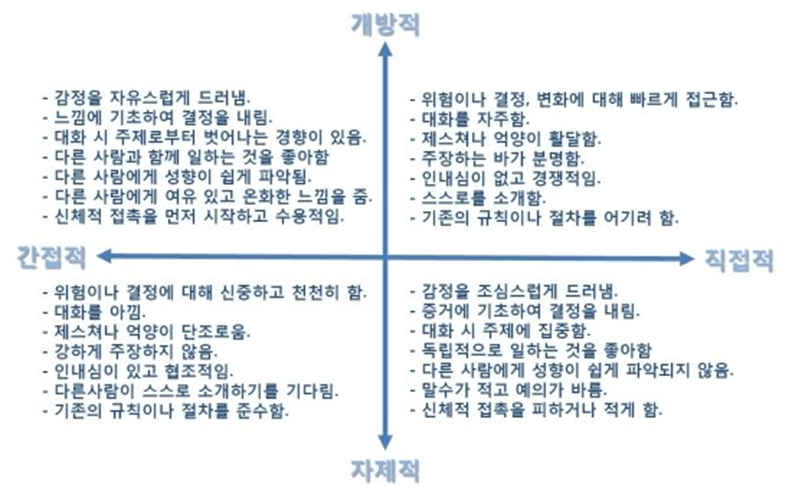
앞에서 설명한 대로 사람들의 행동유형은 본인의 욕구/이성/감정 등을 의사 표현하는 스타일에 따라 다르게 나타난다. 즉, 의사 표현의 직접성과 간접성 및 감정 표현의 개방성과 자제성 측면을 X축과 Y축으로하여 2X2 매트릭스로 만들면, 아래와 같은 사색형, 관계형, 사교형, 지시형의 네가지 행동 유형을 발견할 수 있게 된다.
네가지 유형에 속한 각각의 사람들이 추구하는 가치를 살펴보면 아래와 같은 특성이 있다.
- 사색형: 정확성과 주도면밀한 논리적인 사고를 보유하였으며, 과정을 중시하고 신중하게 의사결정 하는 스타일로서 개인 프라이버시를 중요하게 여긴다. 따라서 위험이나 결정에 대해 신중하고 천천히 행동하며, 대화를 아끼고 제스쳐나 억양이 단조롭고 강하게 주장하지 않는 편이다. 인내심이 있고 협조적이며, 다른 사람을 만났을 때도 자기가 먼저 스스로를 소개하기 보다는 다른 사람이 먼저 소개하기를 기다리는 사람으로서, 기존의 규칙이나 절차를 준수하는 경향이 강하다.
- 관계형: 차분한 페이스로 성실하고 근면하며 비교적 평온하고 안정적인 사람으로서, 상대방에 대해 대응적인 행동을 하고 협의의 의사결정을 하는 관계를 중시한다. 감정을 자유스럽게 드러내고, 느낌에 기초하여 결정을 내리므로, 때론 대화 시 주제로부터 벗어나는 경향도 있다. 다른 사람과 함께 일하는 것을 좋아하고 다른 사람에게 성향이 쉽게 파악되며 신체적 접촉을 먼저 시작하고 수용적인 편이기 때문에, 다른 사람에게 여유 있고 온화한 느낌을 준다.
- 사교형: 낙천적이고 감성적인 사고로 자유스럽고 빠른 의사결정을 하며, 인기와 명성에 민감한 유형으로 사람을 중시한다. 위험이나 결정, 변화에 대해 빠르게 접근하는 타입으로, 사람들과 대화를 자주하고 제스쳐나 억양이 활달하며 주장하는 바가 분명하고, 모르는 사람들에게도 스스로를 먼저 소개하는 등 매우 외향적이지만, 인내심이 없고 경쟁적이며 기존의 규칙이나 절차를 어기려 하는 경향이 강하다.
- 지시형: 강한 의지와 주도적인 행동으로 영향력과 통제권을 선호하며, 의사결정이 빠르고 단호한 유형으로서, 과정보다는 결과를 더욱 중시한다. 말수가 적고 예의가 바르며 신체적 접촉을 피하거나 적게 하는 등, 감정을 조심스럽게 드러내기 때문에, 다른 사람에게 성향이 쉽게 파악되지 않는다. 감정보다는 증거에 기초하여 결정을 내리는 타입으로서, 대화 시 주제에 집중하고 독립적으로 일하는 것을 좋아하는 경향이 있다.
이러한 인간행동 유형을 파악하는 것이 중요한 것은 리더로서 자신의 모든 팀원들에게 똑같은 방법으로 팀을 이끌 경우, 팀원들의 성향에 따라 다른 행동 결과를 초래할 수 있기 때문이다. 지금은 과거처럼 “나를 따르라~!”하는 시대가 아니다. 팀원들의 성향과 행동유형에 맞게 유연하고 탄력적으로 대응해 나가는 리더십이 필요하다.
따라서 리더는 처한 상황이나 상대의 요구에 따른 적절한 대응을 위해, 자신의 행동유형에 맞지 않더라도 상황과 팀원들을 위해, 기꺼이 할 수 있는 의지와 자제 능력, 즉 유연성(Adaptability)이 필요하며, 타인의 행동유형을 모방하는 것이 아니라 나의 행동유형을 유지하면서 리더가 처한 상황과 상대의 기대에 맞춰 감정의 개방성과 표현의 직접성을 맞춰가는 탄력성(Flexibility)도 필요하다.
———————————–
To be an effective coach, it is crucial to understand your team members well. Nowadays, tools like MBTI are widely used from this perspective. In this article, I will introduce a model of human behavior types that has been refined through years of research and study by psychologists.
First, people can be broadly divided into two groups based on their communication style, that is, how they express themselves: those who express themselves indirectly and those who are direct (straightforward) in their expression. People with indirect communication tend to have a calm, relatively soft voice, and a gentle intonation. They are more inclined to listen rather than speak, and when they do speak, they tend to prepare beforehand and give relatively short explanations. They also tend to reduce their speaking when opinions clash. On the other hand, people with direct communication have a comparatively louder and deeper voice, speak more and faster, and express themselves without hesitation using various tones and expressions.
Additionally, based on emotional expression styles, people can be categorized as either open or reserved. People who are open in expressing emotions show changes in facial expressions easily, openly display their emotions, and often respond through gestures. They also enjoy talking, make friendly handshakes, and are warm and approachable, but they can also easily cause misunderstandings due to their clear distinction between “like” and “dislike.” On the other hand, reserved individuals prefer not to reveal their emotions, maintain formality, and dislike having their thoughts easily understood by others. As a result, they rarely respond with gestures, prefer listening over speaking, and often have a poker face with little emotion showing, making them more cautious to approach.
As described above, people’s behavior types differ according to how they express their needs, rationality, and emotions. By creating a 2×2 matrix with the axes of directness versus indirectness in expression and openness versus restraint in emotional expression, we can identify four behavior types: Analytical, Amiable, Expressive, and Driver.
When we examine the values pursued by each of these four types, the following characteristics emerge:
- Analytical: This type values accuracy and logical, methodical thinking, emphasizing process and making decisions carefully. They place high importance on personal privacy, are cautious and slow in taking risks or making decisions, and tend to conserve words. They usually have a monotonous tone with little emphasis and prefer others to introduce themselves first. They are highly likely to follow established rules and procedures.
- Amiable: This type is calm, diligent, relatively peaceful, and stable, valuing responsive behavior and consensus-based decision-making in relationships. They freely express emotions and often base decisions on feelings, which can sometimes lead conversations off-topic. They enjoy working with others, are easy to read, initiate physical contact, and are generally receptive, giving others a sense of ease and warmth.
- Expressive: This type is optimistic, emotional, makes decisions freely and quickly, and is sensitive to popularity and reputation, placing a high value on people. They approach risks, decisions, and changes quickly, often engage in conversations, use lively gestures and intonations, and clearly assert their opinions. They are very extroverted, often introducing themselves to strangers but may lack patience and have a tendency to break rules and procedures.
- Driver: This type is strong-willed, prefers to take initiative, values influence and control, and makes decisions quickly and decisively. They focus more on results than on process, speak little, maintain formality, avoid or minimize physical contact, and carefully control their emotions, making it difficult for others to easily understand them. They base decisions more on evidence than on emotions, stay focused on the topic during conversations, and prefer to work independently.
Understanding these types of human behavior is important because, as a leader, treating all your team members the same way may lead to different outcomes depending on their individual tendencies. The era of “Follow me!” is over. Leadership now requires flexibility and adaptability to respond appropriately to the characteristics and behavior types of your team members.
Therefore, as a leader, you need the willingness and self-control to adjust to the situation and the needs of your team members, even if it doesn’t align with your natural behavior type. This adaptability is key, along with flexibility—not by mimicking others’ behavior types, but by maintaining your own while aligning the openness of your emotions and the directness of your expression to the situation and expectations of those around you.