1) 현생 인류의 어버이, ‘나반’과 ‘아만’
인간은 어떤 종교를 믿고 어느 분야에서 일하든지 인류의 기원에 대한 호기심과 의문을 품고 살아갑니다.
인류가 지구상에 처음 나타난 것은 약 500만 년 전으로 추정이 됩니다. 최초의 인류로 추정되는 오스트랄로피테쿠스가 생존한 연대가 그러하기 때문입니다. 20세기 중엽까지만 해도 인간다운 특징을 가진 최초의 존재로 50~60만 년 전에 생존했던 베이징인이나 자바인 등이 거론 되었습니다. 이들은 불과 도구를 사용하였고, 사냥을 하며, 사회를 이루어 서로 보살피며 살았습니다. 초기에는 이들을 호모(사람)이라는 속명으로 부르지 않고 단지 베이징인, 자바인으로 부르다가 지금은 유럽의 하이델베르크인과 함께 ‘호모 에렉투스(직립인)’라 부릅니다. 생존 연대도 150만 년 전까지 올려 잡고 있습니다.
그런데 1963년 케냐의 계곡에서 오스트랄로피테쿠스보다는 좀 더 발달하고 호모 에렉투스보다는 좀 덜 발달한 새로운 인골 화석이 발굴되었습니다. ‘호모 하빌리스(손재주 있는 사람)’로 명명된 이 인류는 200만 년 전에 생존한 것으로 추정됩니다. 이리하여 호모 에렉투스보다 더 오래된, 돌로써 도구를 만들 줄 아는 또 다른 인류가 지구상에 살았다는 사실이 확인되었습니다.
그렇지만 오스트랄로피테쿠스, 호모 하빌리스, 호모 에렉투스는 모두 현생 인류가 나타나기 전에 멸종하였고, 현생 인류의 직계 조상으로 간주되지도 않습니다. 현생 인류가 속해 있는 ‘호모 사피엔스(슬기로운 인간)’는 20만 년 전에 나타났는데, 그 화석이 독일의 네안데르탈에서 처음 발견되었기 때문에 네안데르탈인이라고도 부릅니다. 두뇌 용적은 오늘의 인류와 비슷하고, 언어를 사용하고, 처음으로 나무를 베어 통나무 배를 만들어 바다를 건너기도 하였습니다.
이때까지 인간이 사용하던 도구는 수준 차이가 거의 없었습니다. 그러다가 약 5만 년 전에 오늘의 인류의 ‘호모 사피엔스 사피엔스가 나타나 지구의 새로운 주인이 되었습니다. 프랑스의 크로마뇽 동굴에서 발견된 인골(남성3, 여성1, 태아1)이 현 인류와 아주 흡사한데, 이들의 생존 연대가 약 5만년 전으로 측정되었습니다. 크로마뇽인의 두뇌 용적은 현대인과 거의 같은 1,500~1600cc이고, 남성 인골의 평균 신장은 180cm가 넘었습니다.
그 후 비슷한 시대에 산 것으로 보이는 다른 인골 화석이 유럽, 아시아, 아프리카 등 여러 곳에서 발견 되었습니다. 그런데 동굴 벽에 훌륭한 그림을 남겨 ‘동굴인’으로 불리기도 하는 그들의 자취가 BCE 2만7천 년 이후에는 보이지 않습니다. 기후 변화로 추정되는 이유 때문에 사라진 것입니다. 그 후 BCE1만1천 년 경에 다시 호모 사피엔스 사피엔스가 나타나 오늘의 인류에 이르고 있습니다.
동양의 순환 시간관인 ‘우주1년’에 의하면, 우주 1년 사계절이 주기적으로 순환하는 가운데 인간은 출현하고 소멸합니다. 약 13만 년을 주기로 하여 변화하는 우주 1년에서 인간은 우주 년의 봄에 태어나 여름과 가을 동안 번성하다가 우주 년의 겨울, 즉 빙하기에 멸절하는 것입니다.
그러므로 크로마뇽인 이전의 인간은 지나간 우주 년의 인간이고, 크로마뇽인부터 시작된 현생 인류는 약 5만 년 전 이번 우주 년의 봄철에 생겨난 것입니다.

그렇다면 [환단고기]는 현생 인류의 탄생을 어떻게 알려 줄까요?
인류학에서 말하는 5만 년 전 호모 사피엔스 사피엔스의 출현을 [환단고기]는 나반과 아만이라는 어버이의 탄생으로 표현 하였습니다. 인류 역사는 나반과 아만으로부터 시작되었고, 두 분은 북극수의 조화로 생겨났다고 합니다.
북극수는 천도의 변화 운동이 시작되는 북극에서 생겨난 생명 창조의 물입니다. 삼신의 조화 손길로 북극수가 인간을 낳는 생명의 씨가 되어 인류의 첫 조상을 낳은 것입니다 ([태백일사]<삼신오제본기>). 이 북극수는 실제로 ‘인류 탄생의 바다’라 불리는 바이칼 호를 가르킵니다. 바이칼 호는 그 주위에서 약 360여 개의 물줄기가 흘러 들어와 이루어졌는데, 그 물은 어머니의 양수와 비슷한 성분을 지녔다고 합니다. 바이칼 호는 인간을 탄생시킨 지구의 자궁입니다.
북극수의 조화로 생겨난 두 분은 꿈에 삼신상제님의 가르침을 받고 스스로 혼례를 올려 인류의 어버이가 되었습니다. 그런데 알타이 산맥과 바이칼 호 주변에서 실제로 2만5천~4만5천 년 전에 인간이 살았던 흔적이 발견되었습니다. [환단고기]의 기록에 비추어 보면, 그들은 나반과 아만의 후손인 것입니다
** 바이칼의 ‘바이’는 신과 인간을 매개하는 샤먼을 뜻하고 ‘칼’은 넓은 계곡지와 호수를 의미한다고 합니다.(정재승-[바이칼, 한민족의 시원을 찾아서]15쪽)
2) 1만 년 전에 벼농사를 짓기 시작한 동북아시아
인간이 동물과 구별되는 특징 중의 하나는 도구를 만들어 사용할 줄 안다는 점입니다. 이에 고고학자들은 도구의 종류에 의거하여 인류 역사를 석기 시대, 청동기 시대, 철기 시대로 구분을 합니다.
석기 시대는 다시 구석기 시대와 신석기 시대로 나누어지는데, 오스트랄로피테쿠스가 출현한 때부터 수백만 년 동안이 모두 구석기 시대입니다. 신석기 시대는, 지난 5만 년 전 현생 인류가 출현한 이후로도 계속 남아 있던 얼음 층이 약 1만 1천년 전에 북쪽으로 완전히 물러가고 따뜻한 기후가 찾아옴으로써 비롯되었습니다.(KBS 1TV,<바다 대기행>4편, “바다의 동맥, 해루”, 2001.8.5.)
온화한 기후는 추운 기후 때문에 한동안 잘 보이지 않던 호모 사피엔스 사피엔스를 지구의 곳곳에 널리 번식시켰습니다. 새롭게 대거 출현한 호모 사피엔스 사피엔스는 지혜가 더욱 발달하여 그 전 인간들이 쓰던 타제석기보다 한결 월등한 마제석기를 만들었습니다. 말 그대로 새로운 석기 시대가 시작된 것입니다.
이들은 또한 음식을 저장하거나 끓여먹고 물을 떠먹을 수 있는 토기를 처음으로 제작하였습니다. 이로써 인간의 경제생활이, 이곳 저곳을 방랑하며 먹이를 찾아 다니던 획득 경제에서 한 곳에 정착하여 농사와 목축을 하는 생산경제로 바뀌었습니다. 농경 생활을 함으로써 주거 양식도 바뀌어, 동굴에서 나와 평지에 움집을 짓고 살게 되었습니다. 농사에 필요한 공동 작업을 하고 수확한 곡식을 지키기 위해 예전과 달리 촌락을 이루어 살게 되었습니다. 농경생활의 시작으로 인류의 생활에 일대 변혁이 일어난 것입니다. 이를 신석기 혁명이라 합니다.
그렇다면 1만 년 전 신석기 혁명을 실현시킨 인류의 농경생활, 즉 벼농사는 어디에서 시작되었을까요?
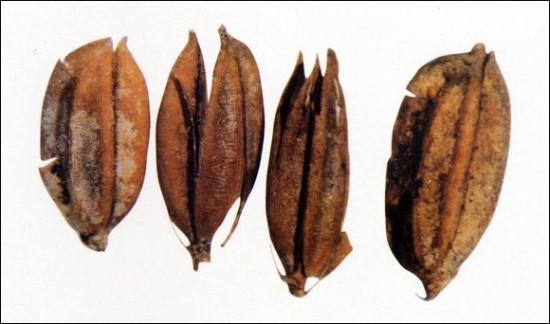
충북 청원군 소로리에서 고대의 볍씨 18개가 출토되었는데, 이것의 토탄층 연대가 BCE 12670~10550년으로 측정이 되었습니다. 같은 토탄층의 아래층에서는 고대형 단립벼가 나왔는데 이 토탄층의 연대와 비슷한 시기인 BCE 11970년 이었습니다. 그리고 가장 늦은 시기의 토탄층에서는 장립벼가 나왔는데 이 토탄층의 연대는 BCE 10550년 이었습니다.
신석기 초기에 재배되던 세 종류의 벼가 한반도에서 출토된 것입니다. 이 연구 결과는 한동안 볍씨 자체의 연대를 측정하지 않았다는 비판을 받았습니다. 하지만 미국 아리조나 대학교에서 토탄과 볍씨를 분리 측정하여 볍씨의 연대를 BCE 10550년 경으로 밝힌 이후, 이 자료는 1만 년 전 벼농사의 명확한 자료로서 세계적으로 인정을 받았습니다.
아직까지 만주와 요동 등에서 이와 유사한 발굴 사례는 없지만, 한반도의 1만 년 전 볍씨는 당시 동북아 전역에 벼농사가 행해졌을 가능성을 강하게 시사합니다. 흔히 농경 문화는 BCE 7000년경 서남 아시아의 오리엔트 지역, 즉 메소포타미아 지역에서 맨 먼저 발생한 것으로 간주되었습니다. 하지만 2004년 청원군 볍씨에 대한 연구 결과가 발표된 이후, 신석기시대를 연 농경 문화의 발원지로 동북아시아를 고려하지 않을 수 없게 되었습니다.
그렇다면 1만 년 전에 농경 문화를 가장 먼저 일군 동북 아시아인은 과연 누구일까요?
그 답이 [환단고기]에 들어 있습니다.
3) 오환건국(吳桓建國)이 가장 오래된 나라
따뜻해진 기후 속에 다시 출현한 인류가 농사를 지으면서 시작된 신석기시대를 대부분의 역사학자들은 선사 시대라고 합니다. 이때는 인간이 문자를 발명하여 기록을 남기기 시작한 역사 시대가 전개되기 전으로 미개한 원시 시대라는 것입니다.
그러나 [환단고기]에 의하면 신석기 시대가 시작된 지 얼마 되지 않은, 지금부터 9천2백 여 년 전(올해의 환기는 9202년)의 동북아에는 이미 사람들의 추대를 받은 통치지가 덕으로 백성을 다스리는 문명집단이 형성되었습니다. 그 집단을 [환단고기]는 환족이 세운 환국이라 전합니다.
환족은 5만 년 전에 화생한 인류의 어버이인 나반과 아만의 후손으로 모두 아홉 종족으로 이루어져 있었습니다[삼성기.하] 환족은 중앙아시아의 천산(일명 파내류산)을 중심으로 인류 최초의 국가인 환국을 세웠습니다. 현 인류가 5만 년 전에 처음 화생한 곳은 바이칼 호이지만, 1만 년 전에 따뜻해진 기후 덕으로 한 곳에 정착하여 농사를 지으면서 문명을 일구기 시작한 곳은 그보다 아래쪽인 중앙아시아 지역인 것입니다.
천산에서 출발한 환국은 동쪽으로 뻗어나가 그 영토가 동서 2만여리, 남북 5만리에 달하였다고 합니다. 중앙아시아에서 시베리아, 만주에 이르는 방대한 영역입니다. BCE 7200년경 천산을 터전으로 하여 ‘우리 환족이 나라를 세운 사실’, 이것을 [삼성기]상은 현 인류의 건국사에서 ‘가장 오래된’ 사실이라 선언합니다.
그런데 인류의 첫 나라 이름이 왜 환국이었을까요?
환국의 ‘환’에 대해 [태백일사]<환국본기>는 이렇게 말합니다.
환(桓)은 온전한 하나됨(全一)이며 광명이다. 온전한 하나 됨이란 삼신의 지혜와 권능이고, 광명은 삼신이 지닌 참된 덕성이니, 곧 우주 만물보다 앞선다. 환은 밝은 桓자로 광명을 상징한다. 특히 ‘하늘에서 내려오는 환하게 빛나는 광명’, 천광명(天光明)을 상징한다. 광명은 삼신의 덕성이니, 환국은 곧 삼신의 덕성이 발현된 나라요, 천상 삼신 상제님의 나라가 인간 세상에 이식된 첫 나라인 것이다.
환국 사람들은 태양을 광명이 모이고 삼신이 머무는 곳으로 여겼다. 그래서 아침에는 동산에 올라 해를 향해 절하였다}-[태백일사]<환국본기>중
환은 단지 나라 이름에 그치지 않습니다. 당시 사람들은 하늘의 광명과 하나된 자신을 ‘환’이라고 불렀습니다. 환국 시대의 인간은 삼신상제님의 신성을 그대로 발현하여 천지의 광명으로 빛나는 존재들이었던 것입니다. 그리고 그 모든 환의 존재들을 다스리는 사람을 ‘인(仁)’이라 불렀고 환국의 통치자를 ‘환인(桓仁)’이라 하였습니다. 그것은 환인이 사람을 구제하고 세상을 다스릴 때 반드시 어진 마음으로 행하였기 때문입니다.
여기서 우리는 유교의 인(仁) 사상의 발원지를 가늠할 수 있습니다. 당시 환인은 오가(五加)의 부족장 중에서 백성의 추대를 받아 선출되었습니다. 환인을 선출하는 목적은 구환족과 12환국이 대동단결하여 한마음이 되게 하기 위함이었습니다. 환인은 정성과 믿음, 공경과 근면, 효도와 순종, 청렴과 의리, 겸손과 화평이라는 오훈(五訓)의 가르침으로 백성을 다스렸습니다.
환국의 초대 통치자는 안파견 환인천제였습니다. 안파견의 뜻을 환단기기는 “하늘을 받들어 아버지의 도를 확립시킨다”([태백일사]<삼신오제본기>)라고 말합니다. 초대 환인을 왜 굳이 안파견이라 불렀는지 알 수 있는 이 설명으로 보건대, 안파견은 언어학적으로 오늘의 ‘아버지’란 말과 관련이 있습니다. 이는 10개 국어를 자유자재로 구사하며 일본에서 활동한 한국의 고대 언어학자 박병식의 연구에서도 드러납니다. 그는 안파견의 ‘안파’를 아빠라고 해석하고, 안파견을 ‘존경하는 태양 같은 자’라고 말합니다.
**안파견 : 안파(아빠)는 차음(借音)이고, 견은 단단하다는 의미의 한국어 ‘구’를 나타내는 차음이다. 아빠 혹은 아바에서 아는 일본어의 ASSA(아침), 한국어의 아구(入口), 아자구(朝)에서 보이듯이 ‘이른, 처음’을 뜻한다. 빠, 바는 태양을 의미하는 ‘하’의 반탁음과 탁음이다. 안파견은 ‘존경하는 태양 같은 자, 최초의 태양인 자’라는 것이다 (박병식 저, 초봉렬 역, [한국상고사]31쪽)
안파견 환인 이후 환국은 7세 환인천제까지 계승되었고 총 3,301년(BCE7197~BCE3897)동안 존속하였습니다.
————
1) The Ancestors of Modern Humans: “Naban” and “Aman”
Regardless of religion or occupation, humans hold a natural curiosity and wonder about the origins of humanity.
It is estimated that humanity first appeared on Earth about 5 million years ago, as suggested by the age of Australopithecus, an early hominid believed to have first existed around this time. Until the mid-20th century, Peking Man and Java Man, dating back to 500,000 to 600,000 years ago, were considered the earliest humans exhibiting human-like traits. These early humans used fire, crafted tools, hunted, and lived in social groups, caring for each other. Originally, they were not given the genus name “Homo” but were simply known as Peking Man and Java Man; today, however, along with Heidelberg Man of Europe, they are referred to as Homo erectus. Their timeline has been extended to around 1.5 million years ago.
In 1963, in a Kenyan valley, a new hominid fossil was discovered—more advanced than Australopithecus but less so than Homo erectus. Named Homo habilis (“handy man”), this hominid is estimated to have lived around 2 million years ago, confirming that other hominid species capable of crafting stone tools existed on Earth well before Homo erectus.
However, Australopithecus, Homo habilis, and Homo erectus all became extinct before the emergence of modern humans and are not considered direct ancestors. Modern humans, classified as Homo sapiens (“wise man”), appeared around 200,000 years ago. Their fossil remains were first discovered in Neander Valley in Germany, leading to the term “Neanderthal.” Their brain volume was similar to that of humans today, they used language, and they were the first to build boats and venture across the seas.
Early human tools showed minimal variation until around 50,000 years ago when Homo sapiens sapiens, essentially modern humans, appeared and became Earth’s new dominant species. The remains of Cro-Magnon people discovered in a French cave (three male skeletons, one female, and one fetus) closely resemble modern humans, dating back around 50,000 years. The Cro-Magnon brain volume was approximately 1,500–1,600 cc, nearly the same as modern humans, and male skeletons averaged a height of over 180 cm.
Similar fossils from this era have been found across Europe, Asia, and Africa. These people, known as “cavemen” for their impressive cave art, seem to have disappeared around 27,000 BCE, likely due to climatic changes. Around 11,000 BCE, Homo sapiens sapiens reappeared, becoming the ancestors of today’s humanity.
In the Eastern cyclical view of time, known as the “cosmic year,” human existence follows a cycle of emergence and extinction. Each cosmic year, spanning approximately 130,000 years, sees humans appear in its “spring” phase, flourish through summer and autumn, and then face extinction in winter, or the Ice Age.
In this context, pre-Cro-Magnon humans belonged to previous cosmic years, while modern humans, starting with Cro-Magnon around 50,000 years ago, represent humanity born in the spring of this cosmic year.
How, then, does the Hwandangogi record the birth of modern humanity? In anthropology, the appearance of Homo sapiens sapiens around 50,000 years ago is conveyed in Hwandangogi through the birth of humanity’s progenitors, Naban and Aman. Human history begins with these two ancestors, said to be born from the “polar waters.”
The polar waters, originating from the North Pole, are described as life-creating waters set into motion by celestial movements. Through the creative power of the Samshin (three divine spirits), this polar water became the seed of life that gave birth to humanity’s first ancestors (Taebaek Ilsa: Samshin Oje Bon-gi). The polar waters represent Lake Baikal, known as the “cradle of humankind.” Lake Baikal, fed by approximately 360 streams, is said to contain water similar in composition to amniotic fluid, symbolizing Earth’s womb for human life.
Through the harmony of polar waters, Naban and Aman came into being. Receiving guidance from Samshin Sangjenim in a dream, they united in marriage, becoming humanity’s first parents. Archaeological evidence shows that humans lived around the Altai Mountains and Lake Baikal between 25,000 and 45,000 years ago. According to Hwandangogi, these people were descendants of Naban and Aman.
Note: In the book “Lake Baikal: Searching for the Origin of the Korean People,” author Jeong Jae-seung notes that “Baikal” derives from “bai,” meaning “shaman” (mediator between gods and humans), and “kal,” meaning a wide valley or lake.
2) Rice Cultivation in Northeast Asia 10,000 Years Ago
One of humanity’s distinguishing features is tool-making. Archaeologists classify human history by the types of tools used, dividing it into the Stone Age, Bronze Age, and Iron Age.
The Stone Age itself is divided into the Paleolithic and Neolithic periods, with the former spanning millions of years, beginning with Australopithecus. The Neolithic began approximately 11,000 years ago when the last Ice Age retreated northward, giving rise to warmer climates (KBS 1TV, Great Ocean Journey episode 4, “The Sea’s Artery,” 2001.8.5).
The warming climate allowed Homo sapiens sapiens, who had been limited in number due to colder conditions, to spread across the globe. Their advanced wisdom led them to craft polished stone tools, marking the beginning of the Neolithic. They also made pottery, which enabled them to store food, cook, and carry water. This shift marked humanity’s transition from a hunter-gatherer economy to an agricultural society, changing life profoundly. With farming, people built dugout homes on flatlands and formed villages for communal farming and food security. This transformation, known as the Neolithic Revolution, brought monumental changes to human life.
So, where did rice farming, a core part of Neolithic agriculture, originate 10,000 years ago?
In Soro-ri, Cheongwon-gun, South Korea, 18 ancient rice grains were found, dating between 12,670 and 10,550 BCE. Below these layers, an older form of rice was found dating to 11,970 BCE, while the upper layers contained long-grain rice dated to 10,550 BCE.
These findings, three types of rice from the early Neolithic, emerged from the Korean Peninsula. Although initially critiqued due to the lack of direct rice-grain dating, later studies by the University of Arizona separated peat and rice samples, confirming a rice-grain date of approximately 10,550 BCE, establishing Korea as a recognized center of rice agriculture.
Although similar findings are yet to appear in Manchuria or Liaodong, these 10,000-year-old rice grains imply the potential for rice farming throughout Northeast Asia. Previously, agricultural civilization was believed to have first arisen in Mesopotamia around 7,000 BCE. However, following the 2004 study on the Soro-ri rice grains, Northeast Asia has also been recognized as a possible origin of Neolithic agricultural culture.
Who were the people who pioneered agriculture in Northeast Asia 10,000 years ago? The answer lies in Hwandangogi.
3) The Oldest Country: Hwan-guk
Most historians consider the Neolithic, marked by agriculture and warmer climates, as part of the prehistoric era, preceding the development of written records. This period is often seen as primitive.
However, according to Hwandangogi, a civilized society led by a virtuous leader emerged in Northeast Asia around 9,200 years ago. This society was formed by the Hwan tribe, establishing the nation of Hwan-guk.
The Hwan people, believed to be descendants of Naban and Aman, comprised nine clans (Samseong-gi ha). Centered around Tian Shan in Central Asia, the Hwan established Hwan-guk, the first human civilization. Although modern humanity may have first appeared near Lake Baikal 50,000 years ago, it was in Central Asia, further south, where humanity settled and began to develop agriculture and civilization 10,000 years ago.
Hwan-guk, originating from Tian Shan, expanded eastward across Siberia and Manchuria, spanning territories up to 20,000 li east to west and 50,000 li north to south. Around 7,200 BCE, the Samseong-gi records that “our Hwan people established a nation”—the oldest known fact in the history of modern human civilization.
Why was humanity’s first nation called “Hwan-guk”?
The Hwan-guk Bon-gi of Taebaek Ilsa explains the meaning of Hwan:
Hwan represents “wholeness” and “brightness.” Wholeness symbolizes the wisdom and power of the Samshin, while brightness represents the virtue of the Samshin that precedes all things. The character 桓 symbolizes divine light, particularly the heavenly light that descends from above, representing the virtue of the Samshin. Thus, Hwan-guk was a nation manifesting the Samshin’s divine virtue, a heavenly realm brought to Earth.
For the people of Hwan-guk, the sun represented a gathering of divine light and the dwelling of Samshin. Every morning, they would climb to a hill to offer reverence to the sun (Hwan-guk Bon-gi, Taebaek Ilsa).
The term “Hwan” was more than a country name; it also described people unified with divine light. The leaders of Hwan-guk were called “In” (仁), and the ruler of Hwan-guk was known as “Hwan-in” (桓仁) because he governed with benevolence.
From this, we can trace the origins of the Confucian concept of “仁” (benevolence). Hwan-in was selected by the people from among the five Bu clan leaders, to unify the nine tribes and twelve Hwan-guks. He ruled with the five teachings: sincerity, faith, respect, diligence, filial piety, and loyalty.
The first leader of Hwan-guk was Anpagyun Hwan-in Cheon-je. According to Samshin Oje Bon-gi in Taebaek Ilsa, the name “Anpagyun” means “to honor Heaven and establish the way of the Father.” This name likely relates to today’s term for “Abuji(father)” and, according to ancient linguist Park Byeong-sik, signifies “honored, bright, like the sun.”
** Anpagyun: “Anpa” is a loan sound representing “Abba(father),” while “gyun” represents the Korean word “gu,” meaning strong or steadfast. Anpa or Abba connects to terms for “early” or “first,” while “pa” or “ba” signifies the sun. Thus, “Anpagyun” implies “honored like the sun, the first sun” (*Park Byeong-sik, translated by Chobong-ryeol, Korean Ancient History, p. 31).
Following Anpagyun Hwan-in, Hwan-guk was ruled by seven generations of Hwan-in Cheon-je and lasted a total of 3,301 years (7,197 BCE to 3,897 BCE).