

고조선은 높은 수준의 청동기뿐 아니라 거석 유적에 속하는 고인돌도 많이 남겼습니다. 고인돌은 신석기 시대와 청동기 시대에 나타난 돌무덤 형식의 하나로 동북아시아와 서유럽 일대에 거쳐 많이 나타납니다. 아시아에서는 특히 고조선의 영역이었던 만주와 한반도에 많이 남아 있습니다. 한반도의 경우 정확한 숫자를 모를 정도로 많은데 대략 4만기 정도로 추정합니다. 전북 고창과 같이 100여 기 이상 밀집된 곳도 있습니다.
고인돌에 사용된 판석의 무게는 적게는 10톤에서 많게 는 300톤에 이릅니다. 거대한 판석을 떼어 무덤까지 옮기려면 수백 명의인력이 필요하기 때문에, 상당히 조직화된 사회를 전제로 합니다.
고인돌의 모양은 음양론에 바탕을 두고 있습니다. 덮게돌은 양으로 하늘(아버지)을 상징하여 1개(天一)이고, 받침돌은 음으로 땅(어머니)을 상징하여 2개(地二)로 이루어졌습니다. 덮게돌, 받침돌, 피장자는 각기 천,지,인을 상징하여 삼재 사상을 나타냅니다. 고인돌에도 신교의 천지 음양과 삼신사상이 녹아 있는 것입니다. 고인돌은 무덤으로 시작되었지만, 제단이나 마을의 상징물 구실도 하였습니다. 제단 고인돌은 주로 독립적으로 나타나는데, 시신을 묻었을 것으로 보이는 무덤 방이 없습니다.
고조선의 주 무대였던 만주와 요서 지역에서 발굴되는, 그 형성 연대가 더오래된 고인돌은 차치하더라도, 한반도에서 발견된 고인돌만 해도 BCE2000년 이전의 것으로 측정됩니다. 고인돌의 출토 범위와 건축 추정 시기 또한 비파형동검과 마찬가지로 환단고기가 전한 고조선의 실존을 증명합니다. 하지만 국내 강단사학자들은 한반도 고인돌의방사능탄소 연대 측정 결과를 받아들이지 않습니다. 단군의 고조선 건국을 신화로 보는 그들로서는 애써 외면해야 할 고고학적 자료인 것입니다.
고인돌에서 보듯이 고조선은 중국과 뚜렷이 구별되는 독자적인 상례문화를 갖고 있었습니다. 정명악은 우리의 상례 문화를 단순히 중국의 유교 문화의 소산으로 보는 것은 큰 잘못이라 지적합니다. 요여腰輿(혼백과 신주를 모시는 작은 상자)안에 혼백상자를 만들어 넣고, 그 혼백상자를 상여 앞에 모시는 것은 신을 그다지 중히 여기지 않는 유교와 전혀 부합하지 않기 때문입니다.
고조선의 상례 문화가 중국과 달랐고 중국보다 더 발달한 것은 공자의 말에서도 분명히 드러납니다. 공자는 ‘소련과 대련은 상례를 잘 치렀다. 사흘 동안 게으르지 않고 석 달 동안 해이하지 않으며, 1년 동안슬퍼하고 3년 동안 근심하였으니 동이의 자손이다’라고 하였습니다. 소련과 대련 형제를 동이족으로 규정하면서 그들을 3년 상을 치른효행의 대명사로 칭찬하였습니다. 환단고기를 위시한 여러 역사 기록을 종합하면, 소련과 대련은 고조선 사람으로 동북아에서 3년 상의 상례를 처음으로실행하였습니다. 상례 문화 또한 고조선에서 가장 먼저 발달하였던 것입니다.
<한국 고인돌의 특징>
우리나라에는 고인돌이 약 4만 기 정도 있는데, 고창을 포함한 전남 지역에 22,000~25,000기가 있습니다. 고창의 고인돌은 무게가 10톤 미만에서 300톤에 이르고,크기와 모양도 다양합니다. 고창 운곡리 고인돌의 경우 덮게돌 무게가 297톤, 높이가 4미터에이르러 세계에서 가장 큽니다.
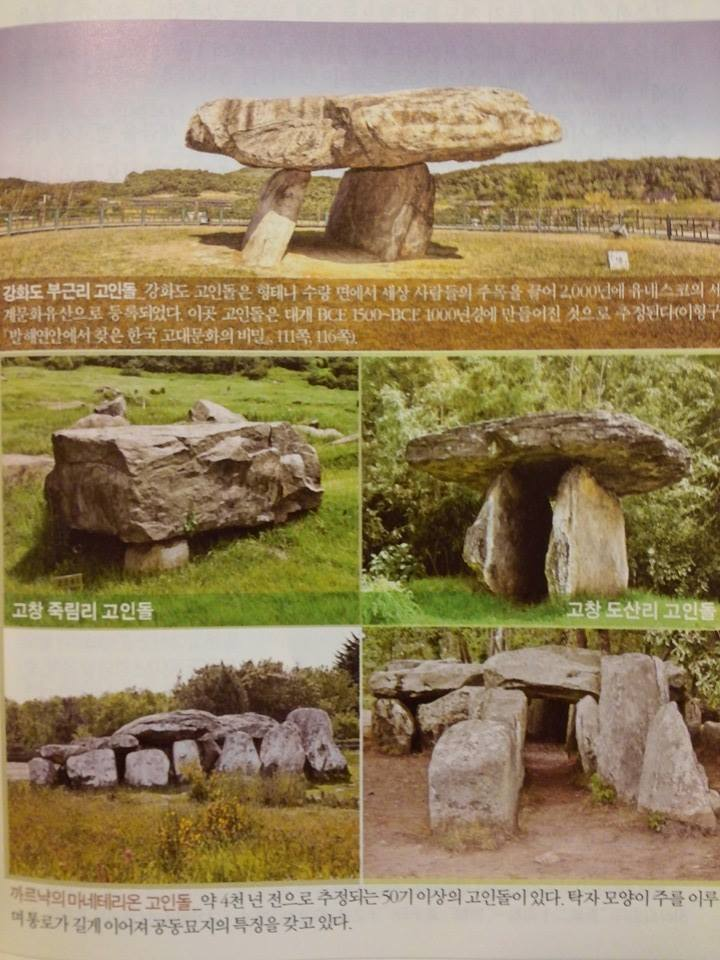
유럽에도 약 6만 기 정도 있다고 하는데 유럽의 고인돌은 선돌이 주류를 이룹니다. 마치 탁자를 터널처럼 길게 연결시켜 놓은 형태이고 돌무덤의 성격을 띱니다. 우리나라의고인돌은 독립적인 무덤 형태로 만들어져 있습니다.
<고인돌의 종류>
고인돌은 모양에 따라서 크게 탁자식(북방식), 바둑판식(남방식또는 기반식), 개석식 세가지로 나뉩니다.
탁자식 고인돌은 지상에 판석을 세워서 무덤방을 만들고 그 위에 덮게돌을 올린 것으로 주로 한강 북부와 만주 지역에서많이 발견됩니다. 남방식 고인돌은 지하에 무덤방을 만들고 땅 위에 받침돌을 놓고 그 위게 덮개돌을 얹은것으로, 주로 한강 남쪽 지역에서 많이 발견됩니다. 개석식고인돌은 지하에 무덤방을 만들었지만 받침돌 없이 무덤방 위에 바로 덮게 돌을 올린 것입니다.
< 고인돌의 기능 >
“바위는 영원하다”는 믿음에서 세워진 고인돌은 대부분 무덤으로 사용되었습니다. 그러나 고인돌이 모두 무덤으로 쓰인 것은 아닙니다. 특히 유럽에서는 하나의 큰 선돌을 세우거나 여러 개의 입석을 대지 위에 둥그렇게 돌려 세웠습니다. 둥글게 돌려 세운 입석을 환상열석이라 합니다. 유럽인들은 환상열석유적지에서 종교 의식을 행한 것으로 추정됩니다. 우리나라에서도 고창 고인돌 박물관 인근 도산리에 있는 탁자식 고인돌은 그 규와 모양을 보아 제단이나 신앙의 대상물이었을 가능성이 높습니다.

——————-
Gojoseon left behind not only advanced bronze artifacts but also numerous dolmens, which are megalithic structures. Dolmens are a type of stone burial mound that appeared during the Neolithic and Bronze Ages and can be found across East Asia and Western Europe. In Asia, they are particularly concentrated in the regions that were once part of Gojoseon, such as Manchuria and the Korean Peninsula. In Korea, the number of dolmens is so vast that it is difficult to estimate the exact figure, though it is roughly estimated to be around 40,000, with places like Gochang in Jeollabuk-do having over 100 dolmens clustered together.
The stones used in dolmens range in weight from 10 tons to as much as 300 tons. Moving these massive stones to the burial sites would have required hundreds of workers, indicating a highly organized society.
The design of the dolmens is based on the principles of Yin and Yang. The capstones symbolize Yang (heaven, or the father) and are represented by a single stone (天一), while the supporting stones symbolize Yin (earth, or the mother) and are represented by two stones (地二). The capstone, the supporting stones, and the deceased each represent the three fundamental elements of Heaven, Earth, and Man, reflecting the Three Realms ideology. This shows that the dolmens are imbued with the cosmological and shamanistic beliefs of Gojoseon, combining elements of Yin-Yang philosophy and the Three Deities of Shamanism. Although initially used as graves, dolmens also served as altars or symbols of villages. Altar dolmens are found independently, often without burial chambers.
While dolmens in Manchuria and the Yeseo region, which are older, are separate from the Korean Peninsula’s dolmens, the dolmens found in Korea have been dated to before 2000 BCE. The distribution and estimated construction periods of the dolmens, like the Bipa-hyeong Donggeom, also support the existence of Gojoseon as described in the Hwando Gogi. However, mainstream Korean historians do not accept the radiocarbon dating results of Korean dolmens, as they view the founding of Gojoseon by Dangun as a myth and prefer to ignore these archaeological findings.
As seen with the dolmens, Gojoseon had a distinctly different burial culture from China. Jeong Myeong-ak criticizes the notion that Korean burial customs are merely a product of Chinese Confucian culture. The practice of placing a spirit box inside a small shrine, which is then carried in front of a funeral procession, does not align with Confucianism, which is not highly focused on spirits.
The burial culture of Gojoseon was not only different from China’s, but also more developed, as evident from Confucius’s words. Confucius praised the rituals of the Soviet Union and Dalian, calling them the descendants of the Dongyi people who performed the three-year mourning period, a practice not seen in other cultures. Combining historical records such as the Hwando Gogi, it appears that the Soviet Union and Dalian were Gojoseon people who first implemented the three-year mourning ritual in East Asia, indicating that Gojoseon’s burial culture was the earliest to develop in the region.
Characteristics of Korean Dolmens
There are approximately 40,000 dolmens in Korea, with around 22,000 to 25,000 found in the Jeollanam-do region, including Gochang. The dolmens in Gochang range in weight from less than 10 tons to 300 tons, and their sizes and shapes vary. For example, the dolmen in Unok-ri, Gochang, has a capstone weighing 297 tons and stands 4 meters high, making it the largest in the world.
Europe also has around 60,000 dolmens, but most of these are standing stones that form long tunnel-like structures or stone circles. In contrast, the dolmens of Korea are independent burial structures.
Types of Dolmens
Dolmens can be classified into three types based on their shape: Table-type (Northern style), Chessboard-type (Southern style or foundational type), and Covered-stone type.
Table-type dolmens consist of upright stones placed on the ground to form a burial chamber, with a capstone placed on top. These are mainly found in the northern Han River area and Manchuria.
Southern-style dolmens are those where a burial chamber is made underground, with supporting stones placed on the ground and a capstone placed on top. These are primarily found in the southern Han River area.
Covered-stone type dolmens have a burial chamber underground, but without supporting stones; the capstone is placed directly on top of the chamber.
Functions of Dolmens
Dolmens, built on the belief that “stones are eternal,” were primarily used as tombs. However, not all dolmens were used as burial sites. In Europe, for example, large standing stones or circles of upright stones, known as “stone circles,” were used in religious rituals. In Korea, some dolmens, like the table-type dolmen near Dosan-ri in Gochang, may have served as altars or symbols of religious belief.