환단고기가 담고 있는 인류 시원사와 한민족의 고대사를 제대로 이해하기 위해서는 역사를 바라보는 새로운 눈, 이른바 대한사관에 대한 뚜렷한 인식이 있어야 합니다. 대한사관이란 말 그대로 대한의 눈으로 역사와 문명을 살피고 해석 하는 것입니다.
그렇다면 ‘대한’이란 어떻게 생겨난 말일까요?
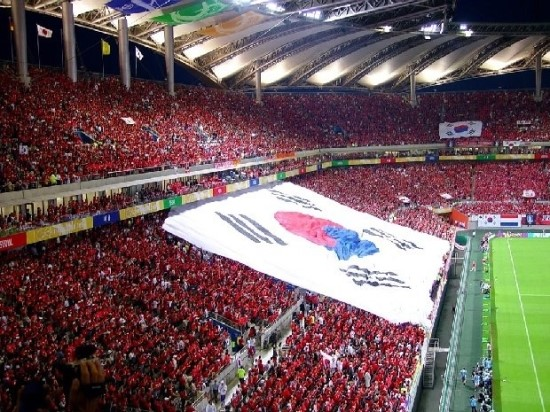
동서양 사람 대다수가 한국이란 명칭은 익히 알고 있었지만, 정작 그 본딧 말이 대한민국이란 사실을 알게 된 것은 2002년 월드컵 때 우리가 외친 “대~~한민국!” 이란 응원 덕분입니다.
우리 국호에 대한이란 말을 처음 쓴 분은 고종 황제였습니다.
조선왕조실록 1897년 10월 11일자의 기록에 따르면, 고종은 “우리 나라는 곧 삼한의 땅인데, 개국초에 천명을 받고 하나의 나라로 통합되었으니 지금 천하의 호칭을 대한으로 정한다고 해서 안 될 것이 없다”라고 하고, 앞으로 “모두 대한으로 쓰도록 하라”라고 명하였습 니다. 우리나라는 본래 삼한이었으므로 그 한을 되살려 국호를 대한으로 정할 것을 명한 것입니다. 그 이틀 후, 고종 황제는 원구단에서 하늘의 삼신상제님께 천제를 올리고 대한제국의 출범을 천하 만방에 선포하였습니다.
대한민국의 대한은 바로 삼한에서 유래한 말입니다. 여기서 삼한은 한강 이남에 움츠려 있던 남삼한이 아니라, 신교의 삼신 사상이 인간 세상의 통치원리로 구현된 지금의 중국 대륙에 자리하고 있던 본래의 북삼한입니다. 고조선 시대에 초대 단군왕검께서 삼신의 원리에 의해 나라를 진한. 번한. 마한으로 나누어 다스린 삼한관경제가 삼한의 시초인 것입니다.
19세기 말 고종 황제가 조선 대신 대한이라는 새로운 국호를 선포한 것은 이 나라가 고조선의 삼한을 계승한 천자국이자 자주독립국으로 재탄생함을 천명한 것입니다.
이러한 대한의 연원은 환단고기에서 보다 구체적으로 확인할 수 있습니다.“吾桓建國이 最高라”라는 삼성기 상의 첫 문장이 그것입니다. “우리 환족이 나라를 세운 것이 가장 오래다”라는 이 선언은 한민족이 원래 환족이었음을 밝히고 있습니다.
환은 하늘의 광명을 뜻합니다. 이 桓에서 탄생한 것이 韓입니다. 즉 한은 하늘의 광명이 인간에게 내려와 깃든[人光明]입니다. 한은 바로 인간을 하늘의 광명을 내려 받은 신성한 존재로 자리매김 하는 말인 것입니다.
이렇게 위대한 우주 사상을 담고 있는 ‘한’이 우리 한민족을 지칭하는 말이 된 것입니다.
———————–
To properly understand the ancient history of the Korean people and the primordial history of humanity contained in the Hwandangogi, one must possess a new perspective on history — a clear understanding of what is known as the “Daehan Historical View.” This perspective refers to interpreting history and civilization from the viewpoint of “Daehan” itself.
So how did the word “Daehan” originate?
Most people in both East and West have long been familiar with the name “Korea.” However, it wasn’t until the 2002 World Cup — when the chant “Dae~~hanminguk!” echoed around the world — that many came to realize the country’s full name is actually Daehanminguk (Republic of Korea).
The first person to use “Daehan” as the name of the nation was Emperor Gojong.
According to the Annals of the Joseon Dynasty dated October 11, 1897, Gojong proclaimed, “Our country is the land of the Three Hans (Samhan). At the founding of the nation, we received Heaven’s mandate and unified as one country. Therefore, there is no reason why the name of the realm should not be Daehan.”
He then commanded that “from now on, all must refer to it as Daehan.” Since the land had originally been Samhan, he revived the name “Han” and designated it as the nation’s new title. Two days later, at Wongudan Altar, Emperor Gojong performed a ritual to the Heavenly Supreme Deity of the Three Divine Beings and declared the founding of the Daehan Empire to the entire world.
The “Daehan” in Daehanminguk thus originates from the ancient Samhan. But this Samhan is not the Southern Samhan that was confined south of the Han River. Rather, it refers to the original Northern Samhan that once existed in what is now the territory of China — where the Three Divine Ideals (Samsin) of Singyo (Divine Teaching) were realized as the governing principles of the human world.
During the Gojoseon era, the founding sovereign Dangun Wanggeom ruled according to the Three Divine Principles by dividing the land into Jinhan, Byeonhan, and Mahan. This Samhan Governance System (Samhan Gwanjeongje) was the origin of the Samhan.
When Emperor Gojong declared a new national title as “Daehan” in the late 19th century, it was a proclamation that Korea was a sovereign, independent nation and a successor of the ancient Samhan under Gojoseon — a legitimate imperial state.
This origin of “Daehan” can be further verified through the Hwandangogi. The very first sentence of the Sang (Upper) part of the Samseonggi states: “吾桓建國이 最高라” — “Among all nations, the country established by our Hwan people is the most ancient.” This statement clarifies that the Korean people originally descended from the Hwan race.
Hwan (桓) means the light of Heaven. From this Hwan came Han (韓). That is, Han signifies the light of Heaven being bestowed upon and dwelling within human beings — [Human Light]. Han thus refers to the sacred nature of humans who have received the divine light of Heaven.
In this way, “Han,” bearing such profound cosmic ideology, became the defining term for the Korean people — the Hanminjok.