우는 모두 꼭 잘 배운 사람들을 통해 배워야만 하는 것만은 아니다. 인간이 떠나버린 자연 속의 동물과 우리가 버러지라고 비하하는 곤충에서도 배움을 찾을 수 있고, 아무 생각도 없는 것 같은 식물에서도 배움이 있으며, 호기심 가득한 어린아이의 시선 속에서도 우리는 배울 것이 있다.
중국법인장 시절에, 나는 중국인 사업자들의 눈높이에 맞춰 긍정과 열정, 그리고 절대 포기하지 않는 끈질김에 대한 강의를 많이 했는데, 그 때 사용하는 사례들 대부분이 동물과 식물, 곤충들 이야기였다.
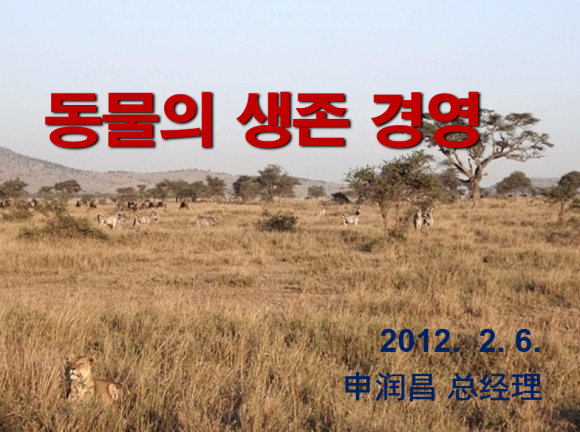
험난한 자연환경 속에서 살아남기 위해 끊임없이 변화하고 적응해 나간 그들의 생존력에서, 우리 인간은 잃어버린 자연의 본성인 야성을 되찾고 인간이 만든 사회라는 험난한 정글에서 생태계 동식물들처럼 생존해 나가야 하기 때문이다.
그래서 나는 자연 다큐멘터리를 보는 것을 매우 즐기는데, 단순히 몰랐던 생태계의 새로운 정보를 쌓아가는 것에 머물지 않고, 동식물들의 생존의 법칙 속에서 인간이 배워야 할 공통분모를 찾아가는 탐구생활 자체를 여전히 즐기고 있다.
우리가 사는 이 지구는 우리들 인간이 지배한다고 착각하고 있지만, 어찌 보면 이 세상을 지배하는 것은 지구의 대부분을 차지하고 있는 식물일지도 모른다. 식물이 있는 곳에 곤충과 동물이 있고, 그 식물이 없다면 생태계가 파괴된 이 지구도 멸망하기 때문이다.
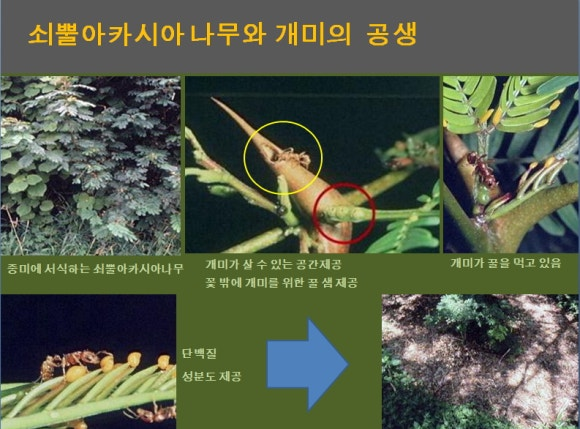
식물은 곤충이 씨를 받아 갈 수 있도록 하기 위해 꿀을 제공하여 곤충을 유인하고 있으며, 곤충이 없으면 때론 그 대상을 작은 새(벌새)로 바꾸기도 하며, 생존과 종족의 번식을 위해 아름다운 꽃을 피워 사람들을 유혹하여 자신을 기르고 가꾸게도 한다. 또한 중미의 아카시아 나무처럼 자신을 갉아먹는 해충을 없애기 위해 개미에게 집과 음식을 제공해주어 크게 번창하기도 한다.
그런 관점에서 보면 우리가 밥을 얻기 위해 재배하고 있는 벼와 밀도 인간이 선택하여 재배함으로서 지구 상에 가장 번창한 식물이 된 것이 아니라, 반대로 벼와 밀이 인간을 선택하여 인간에게 먹을 것을 제공해 주어서, 지구 제일의 식물이 될 수 있었던 것일 지도 모른다. 비단 동식물의 변화, 생존능력뿐만 아니라, 이런 관점의 전환 방식도 우리는 동식물들을 통해 배울 수 있는 것이다.
오래 전 지구의 탄생과 원소들에 대해 EBS의 지식채널e에서 “원소-빈자리”라는 내용이 방영되었다. 그 내용을 보며 내가 느꼈던 것은 인생의 빈자리와 채움이라는 것을 원소를 통해서도 배울 수 있다는 것이었다. 그 내용을 적어보면 다음과 같다.
자연에 존재하는 92개 원소의 가장 기본적인 상태는 원자이나, 자연에 존재하는 원소들 대부분은 원자상태로 존재하지 않는다. 그 이유는 바로 원자가 가지고 있는 빈자리 때문이다.
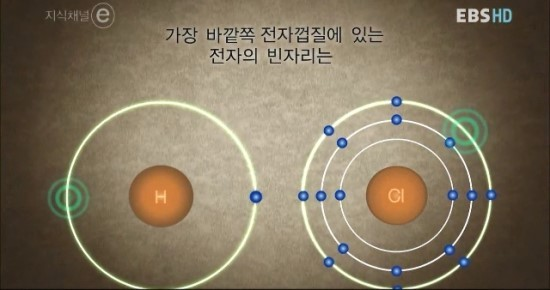
원자 핵의 주위를 전자는 태양계의 위성들처럼 핵을 중심으로 궤도를 돌고 있는데, 가장 바깥쪽 부분에 전자의 빈자리가 있어, 원자를 불안정하게 만든다. 이때 불안정한 원자들이 안정되기 위해 필요한 것은 자신이 아닌 다른 원자들이다.
따라서 원자는 남아있는 전자를 다른 원자에게 주거나, 다른 원자의 전자를 가져오거나 하는 방식으로 서로의 전자를 공유하여 빈자리를 채우려 하는데, 이를 통해 이루어지는 어떤 만남들이 우리에겐 매우 중요하다.
수소와 산소가 만나서 물이 되고, 나트륨과 염소가 만나서 소금이 되며, 규소와 산소가 만나 유리가 된다. 이렇게 안정되고 싶은 욕망은 끊임없는 만남을 만들고, 그 끊임없는 만남과 만남 속에서 원자들은 원래 원소가 가진 성질을 완전히 버리고, 새로운 물질의 일부가 된다.
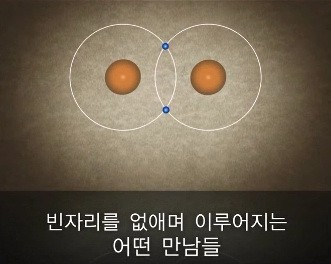
이렇게 서로의 부족함이 채워지자 전혀 다른 새로움이 탄생하듯이 사람들도 인생의 부족함을 채우기 위해 끊임 없는 만남을 통해 부족함을 채우고 점점 더 완전해지려고 하는 것이다. 인간 또한 원자와 전자로 이루어진 존재인 것처럼 빈자리를 채우기 위해 배움을 추구하는 것은 바로 이 세상에 태어난 모든 물질이 추구하는 본질이기 때문이다.
그러나, 자연에 존재하는 92개의 원소 중 빈자리가 없는 6개의 원소들 – 헬륨(He), 네온(Ne), 아르곤(Ar), 크립톤(Kr), 제논(Xe), 라돈(Rn)은 그 무엇도 필요하지 않기에, 그 무엇에도 끌리지 않으며,
그 무엇에 다가가지도 않아, 모두가 새로운 일부가 되어 살아갈 때 홀로 자신의 모습 그대로만 살아간다. 전혀 변하지 않고 오직 태고적 그대로 살아가는 이 여섯 개의 원자들처럼 사람도 어떤 만남들을 통해 정보의 공유나 배움이 없다면, 어떤 변화와 성장도 없이 홀로 독불장군처럼 외롭게 살아가게 될 것이다.
———–
Learning does not only come from well-educated individuals. We can gain insights from animals in the wild, insects often dismissed as mere pests, plants that seem to lack thought, and even the curious gaze of a child.
During my time as the head of a Chinese branch, I frequently gave lectures to local businesspeople about positivity, passion, and perseverance. Interestingly, most of my examples came from animals, plants, and insects.
Survival in the harsh natural world requires constant adaptation and transformation. Observing this, I realized that humans, too, must reclaim their lost instincts—their wild nature—to navigate the challenges of modern society, much like creatures adapting to their ecosystems for survival.
This is why I enjoy watching nature documentaries. For me, it’s not just about accumulating new ecological knowledge, but rather about discovering the universal principles of survival that both nature and humans share.
The Power of Plants
We often assume that humans rule the Earth, but in reality, plants may be the true rulers. They cover most of the planet, sustain ecosystems, and without them, the Earth would face ecological collapse.
Plants do not merely exist; they strategize for survival. For instance:
- Flowers produce nectar to attract insects, ensuring pollination.
- If insects are absent, some plants shift to attracting birds, such as hummingbirds.
- To ensure human care, flowers dazzle with beauty, enticing people to cultivate them.
- Some plants, like the acacia tree, form alliances—offering food and shelter to ants in exchange for protection from harmful pests.
From this perspective, even crops like rice and wheat may not have been “chosen” by humans for cultivation. Instead, they may have “chosen” humans—offering sustenance in exchange for propagation, ensuring their survival as the most dominant plant species on Earth.
Nature doesn’t just teach us about survival; it also teaches us to shift our perspective—a crucial skill for innovation and adaptation in human society.
The Chemistry of Connection
A long time ago, I watched an episode of EBS’s Knowledge Channel e titled “Elements—Empty Spaces.” This documentary, about the 92 naturally occurring elements, taught me a profound lesson about life’s emptiness and fulfillment.
In nature, elements exist in their atomic form, but very few remain stable in isolation. This is because atoms have “empty spaces” in their outermost electron shells, making them unstable.
To achieve stability, atoms must interact with others—either donating, accepting, or sharing electrons to fill their empty spaces.
Through this process:
- Hydrogen and oxygen combine to form water.
- Sodium and chlorine bond to create salt.
- Silicon and oxygen merge to produce glass.
In essence, atoms let go of their original properties and transform into something entirely new. This mirrors the human experience—we meet others, exchange knowledge, and fill our own gaps, evolving into better versions of ourselves.
Just as atoms seek fulfillment through connection, humans are also driven by a fundamental desire to learn and grow.
The Danger of Isolation
Among the 92 natural elements, six possess no empty spaces in their electron shells:
- Helium (He)
- Neon (Ne)
- Argon (Ar)
- Krypton (Kr)
- Xenon (Xe)
- Radon (Rn)
These are known as noble gases—self-sufficient, needing nothing from others. They never bond, never change, and remain as they were since the dawn of time.
Humans who reject new connections and learning risk becoming like these noble gases—unchanging, isolated, and ultimately left behind.
While individuality is important, true growth comes from engagement, adaptation, and continuous learning. To remain static is to resist evolution—and in both nature and society, anything that ceases to evolve eventually fades away.