[춘추필법의 악폐]
일찍이 공자는 노나라 242년의 역사를 편년체로 기록하여 [춘추]라 이름 지었습니다. 이 책은 주나라 왕실을 종주로 삼는 大一通사상과 尊王攘夷 정신을 표방하였습니다. 그 후 중국 사서들은 이 [춘주]를 역사 서술의 표준으로 삼았는데, 중국 사서의 편찬 원칙은 다음 세 가지의 ‘춘추필법’으로 요약됩니다.
첫째, 중국에 영광스러운 일은 한껏 부풀려 쓰면서 수치스런 일은 감춘다(爲國諱恥)
둘째, 중국은 높이면서 주변 나라는 깍아내린다(尊華攘夷)
셋째, 중국사는 상세히 쓰면서 이민족 역사는 간략하게 적는다(詳內略外)
춘추필법은 표면적으로는 대의명분을 밝혀 세우는 역사 서술법이지만, 사실은 중국이 천하의 중심이라는 중화주의에 충실한 필법입니다. 자신들의 역사가 동이족에서 비롯되었다는 역사 콤플렉스를 이 춘추필법으로 덮으려 한 것입니다. 사마천 이하 역대 중국 사가들이 춘추필법에 의거하여 역사를 기록한 결과, 동북아 문명의 주체였던 한민족의 역사는 중국 변방 오랑캐 족속의 하잘것없는 역사로 왜곡하고 말았습니다.
[탁록대전의 진실]
한.중 고대사를 날조한 기록상의 첫 인물은 2,100년 전 한나라 때의 사관인 사마천입니다. 사마천은 동북아의 한민족 강토로 쳐들어간 한무제가 전쟁에 참패하고 돌아온 시기에 [사기]를 저술하였습니다. 사기는 오제본기로 시작합니다. 즉 헌원의 역사가 사기의 첫머리요 중국 역사의 첫머리가 됩니다.
사마천은 오제본기에서 헌원의 출생과 성장 과정을 간략히 적은 다음, 곧바로 헌원과 치우천황 사이에 벌어진 탁록대전을 다음과 같이 서술하였습니다.
“치우가 난을 일으키며 황제의 명을 듣지 않자, 이에 황제가 제후들로 군대를 징집하여 탁록의 들에서 싸워 드디어 치우를 사로잡아 죽였다”
이 기록의 핵심은 ‘금살치우禽殺蚩尤(치우를 사로잡아 죽였다)’ 이 네 글자입니다.
사마천은 사기를 지을 때 [상서], [춘추], [국어] 등 고문헌에만 의존하지 않았습니다.
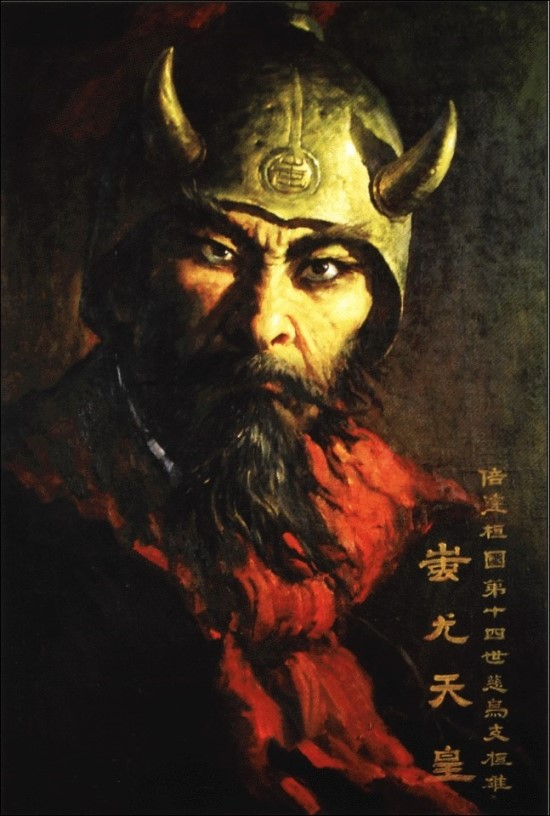
“서쪽으로는 공동까지, 북쪽으로는 탁록까지, 동쪽으로는 바다까지, 남쪽으로는 장강과 회수를 건너서까지”라는 자신의 말처럼 현장 답사를 통해 과거 문헌에 대한 사실 여부를 일일이 확인하였습니다. 그렇다면 사마천의 서술은 신뢰도가 높을 것입니다. 그런데 사기의 삼가 주석에는 치우에 대한 다른 기술이 보입니다. 먼저 사기집해는 “응소가 ‘치우는 옛 천자’라고 말했다”라는 기록이 있습니다. 천하의 지배자는 헌원이 아니라 치우천황이었다는 말입니다. 치우천황에 관해 더 많은 내용을 제공하는 사기 정의는 “치우 군대가 금속 투구를 머리에 쓰고 큰 쇠뇌와 같은 병장기를 갖추고 출전하여 그 위엄을 천하에 떨쳤다”라고 하였습니다.
그렇다면 치우천황과 헌원의 관계에 대한 진실은 무엇일까요? 앞서 배달의 역사에서 이야기하였듯이, 한족의 우두머리인 헌원이 치우천황을 꺽고 자신이 천자가 되려는 욕심으로 군사를 일으키자, 치우천황이 10년 동안의 탁록대전 끝에 헌원의 무릎을 꿇리고 제후로 삼은 것이 이 사건의 진실입니다. 그러므로 사마천이 서술한 ‘금살치우’는 역사적 사실을 정반대로 기록한 것입니다
사마천은 왜 굳이 역사의 진실을 뒤집어 기술해야 했을까요? 그것은 중국 역사의 시조인 헌원을 천자, 즉 동북아의 주도권자로 만들려 했기 때문입니다. 헌원이 천자가 되면 중국은 그 출발부터 천자의 나라가 됩니다. 중국을 원래부터 동북아의 패권자인 것으로 만들기 위해 사마천은 ‘금살치우’가 필요 했던 것입니다. 또한 사마천은 자신의 주군인 한 무제가 고조선 서쪽 땅의 위만 정권을 어렵게 항복시키고 고조선 북쪽 땅의 북부여를 침공하였으나 고두막한 장군에게 무참히 패배하고 만 수치스러운 역사를 숨기고자 하였습니다. (계속)
————
[Malpractices of Chunqiu-style Historiography]
Confucius once compiled the 242-year history of the State of Lu in the form of annals and named it Chunqiu (Spring and Autumn Annals). This book advocated the Great Unification Ideology that placed the Zhou royal family at the center and promoted the spirit of Respecting the King and Expelling the Barbarians. Later, Chinese historical records adopted Chunqiu as the standard of historical writing, and the principles of Chinese historiography came to be summarized in the following three rules of Chunqiu-style historiography.
First, China exaggerates glorious events and conceals disgraceful ones (爲國諱恥).
Second, China elevates itself while disparaging surrounding nations (尊華攘夷).
Third, Chinese history is recorded in detail, while histories of non-Han peoples are written sparsely (詳內略外).
On the surface, Chunqiu-style historiography claims to highlight moral legitimacy, but in reality, it faithfully serves the Sinocentric ideology that places China at the center of the world. This historiographical style was a tool to mask China’s historical inferiority complex rooted in its origin from the Dongyi tribes. As Sima Qian and subsequent Chinese historians wrote history following the Chunqiu method, they distorted the history of the Korean people—who were key players in Northeast Asian civilization—into that of insignificant barbarians living on the periphery of China.
[The Truth About the Battle of Zhuolu]
The first person to falsify ancient Sino-Korean history in writing was Sima Qian, a Han dynasty historian from 2,100 years ago. He authored Records of the Grand Historian (Shiji) during the period when Emperor Wu of Han had been defeated in his military campaign into the Korean territories of Northeast Asia and returned in disgrace.
The Shiji begins with the Basic Annals of the Five Emperors, where the story of the Yellow Emperor (Xuanyuan/Huangdi) is placed at the beginning of Chinese history.
In this section, Sima Qian briefly outlines the birth and growth of the Yellow Emperor and then immediately describes the Battle of Zhuolu between the Yellow Emperor and Chiyou as follows:
“Chiyou rebelled and did not obey the commands of the Yellow Emperor. The Yellow Emperor gathered the lords and raised an army. They fought on the plains of Zhuolu, and finally, Chiyou was captured and killed.”
The key statement here is the four characters: “禽殺蚩尤” (captured and killed Chiyou).
Sima Qian did not rely solely on classical texts such as Shangshu, Chunqiu, or Guoyu in writing the Shiji. As he himself stated—”To the west as far as Gongong, to the north to Zhuolu, to the east to the sea, and to the south across the Yangtze and Huai Rivers”—he conducted field surveys to verify historical sources.
Thus, one would assume Sima Qian’s writings carry high credibility. However, commentaries on Shiji reveal a different account of Chiyou. For example, Shiji Jipai records that the scholar Ying Shao stated, “Chiyou was an ancient Son of Heaven.” In other words, it was Chiyou—not the Yellow Emperor—who held sovereignty over the world.
The Shiji Zhengyi, which offers more details about Chiyou, records that “Chiyou’s army wore metal helmets and wielded large, crossbow-like weapons, spreading their might across the world.”
So, what is the truth of the relationship between Chiyou and the Yellow Emperor? As previously described in Korean historical narratives, Xuanyuan—the leader of the Han—raised an army out of ambition to dethrone Chiyou and become the Son of Heaven himself. However, after ten years of prolonged conflict in the Battle of Zhuolu, Chiyou subdued Xuanyuan and made him one of his subordinate lords. This is the real historical event.
Therefore, the claim in Shiji that “Chiyou was captured and killed” is the exact opposite of historical truth.
Why did Sima Qian intentionally reverse the historical facts? Because he aimed to establish Xuanyuan—the ancestor of the Chinese—as the Son of Heaven and the rightful hegemon of Northeast Asia. By making Xuanyuan the Son of Heaven, China could claim to have been a celestial nation from the very beginning. To portray China as the original power in the region, Sima Qian needed the narrative of “capturing and killing Chiyou.”
Additionally, Sima Qian sought to cover up the shameful military history of Emperor Wu of Han, who, despite managing to subdue the Wiman regime in the western part of Gojoseon, was humiliated by General Godumakhan (Go Dumak Han) of Bukbuyeo during the northern invasion.
(To be continued…)