범죄학자인 제임스 윌슨과 조지 켈링은 1982년에 “깨진 유리창”이란 제목의 글을 발표했다. 이 이론은 깨진 유리창처럼 사소한 것들이 사람들에게 중요한 메시지를 전달한다는 것이다.
그들은 건물 주인이 깨진 유리창에 관심을 기울이지 않고 방치하고 있으면, 지나 가는 사람들은 건물주인이 이곳을 포기했으며, 이곳은 곧 무법천지라는 인식을 하게 되어 결국 이곳에서 절도나 폭력 등과 같은 강력범죄가 발생할 수 있다는 것에 주목하였다. 이는 주인의식, 책임의식, 문제의식을 모두 포함하는 말이다.
1994년 뉴욕 시장으로 선출된 루돌프 줄리아니는 뉴욕을 범죄 없는 도시로 만들기 위해 깨진유리창의 법칙을 응용하여, 지하철 낙서 없애기 등의 경범죄 퇴치 운동을 하였다. 처음에 많은 사람들은 뉴욕 검찰청 출신의 실력 있는 사람이 강력범과 싸울 자신이 없어 경범죄를 선택했다고 그를 비웃었다.
그러나 몇 년 후, 살인, 폭행, 강도 같은 강력범죄에 대한 통계수치가 급감하는 놀라운 사실이 벌어졌다. 이는 사소한 범죄들이 통제되자, 시민들이 주변환경에 만족하게 되고, 스스로 지역행사에 적극 참여하면서 삶의 질도 좋아졌기 때문이다.
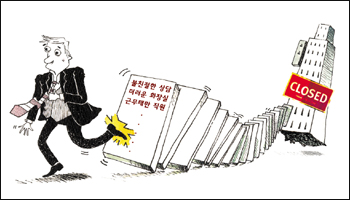
그리고 마이클 레빈은 이런 범죄학 이론을 비지니스에 접목하여, 고객에 대한 한 번의 실수, 한 명의 불친절한 직원, 한 번의 불쾌한 경험 때문에 고객은 회사에 등을 돌릴 수 있다고 지적하며 깨진 유리창의 법칙을 새롭게 발표하였다.
만약 음식이 맛있기로 소문 난 음식점의 화장실에 가봤더니 매우 지저분한 곳이라면 어떻겠는가? 아마도 음식을 만드는 사람들도 청결하지 못할 것이라 생각할 것이고, 다시는 그곳에서 식사를 하고 싶지 않을지도 모른다. 그리고 그런 이유로 다른 고객들도 점차 발길을 끊게 되어 그 식당은 이유도 모른 채 문을 닫게 될 것이다. 즉 직원들이 주인의식과 책임의식이 없었기 때문에, 사소한 문제라도 발견할 수 있는 문제의식도 없게 된 것이다.
따라서 고객을 최접점에서 만나는 영업/마케팅 부서에서 근무하는 사람들은 특히 더 주의해야 한다. 고객을 만날 때 행하는 사소한 언행, 태도 등에서 고객은 깨진 유리창을 발견할 수도 있기 때문이다. 그리고 그것을 인지하지 못하고 계속 방치한다면, 고객은 결국 회사 전체를 이름 값 못하는 회사라 여기고 완전히 떠날 수도 있을 것이다.
그러나 깨진 유리창을 항상 경계의 대상으로만 보면 안 된다. 이를 반대로 생각하면 디테일한 실행의 힘이 나오기 때문이다. 고객은 항상 무언가를 끊임없이 기대하고 있고, 그런 고객의 기대를 만족시키기 위해서 다시 한번 사소한 것이라도 혹시 깨진 유리창이 없는지를 되돌아봐야 한다.
깨진 유리창을 문제로 발견하고 고치면 그 유리창은 더 이상 깨진 것이 아니다. 나의 주변의 사소함이 때론 큰 일이 되는 것처럼, 세세한 작은 실행으로 깨진 유리창을 고쳐 나간다면, 고객은 오히려 더욱 만족하게 되고 회사는 더욱 발전하게 될 것이다.
깨진 유리창의 법칙은 우리 일상에도 모두 적용된다. 예를 들어 연애를 하거나 부부관계에 있어서도 여성들은 거대한 이벤트보다도 끊임없이 가져주는 관심과 배려, 사랑한다는 따뜻한 말 한마디에 감동한다. 남자로써 큰 이벤트 한번을 준비하는 것보다 평상시 여자친구나 아내가 가지고 있는 사소한 불만, 즉 깨진 유리창이 무엇인지를 스스로 인식하고 고쳐보려고 노력해 보아라. 그 유리창을 고치는 순간 관계는 더욱 좋아질 것이다.
직장에서의 인간관계도, 친구들과의 우정도, 그리고 개인의 인생 목표를 실행해 나가는 과정에도 모두 디테일한 실행의 법칙이 작용한다. 작은 실행으로 사소한 나쁜 습관을 고치고, 작은 실행으로 사소한 성공을 이루고, 작은 실행으로 주변 사람들에게 사소한 만족과 행복을 주게 된다면, 그 작은 것들이 모여 상상할 수 없는 거대한 성과를 만들어 낼 것이다.
————————-
The “Broken Windows” principle applies equally to everyday life. In romantic or marital relationships, for example, women are often more touched by consistent attention, care, and kind words of affection than by grand gestures or one-time events. Instead of planning an extravagant surprise, a man should identify and address his partner’s small dissatisfactions — her “broken windows.” The moment those are fixed, the relationship will improve.
The “Broken Windows” principle applies equally to everyday life. In romantic or marital relationships, for example, women are often more touched by consistent attention, care, and kind words of affection than by grand gestures or one-time events. Instead of planning an extravagant surprise, a man should identify and address his partner’s small dissatisfactions — her “broken windows.” The moment those are fixed, the relationship will improve.
In 1982, criminologists James Wilson and George Kelling published an article titled “Broken Windows.” Their theory argued that small signs of disorder — like a broken window — send powerful messages to people. If the owner of a building ignores a broken window and leaves it unrepaired, passersby begin to assume that the owner has given up on the property and that the area is lawless. Eventually, serious crimes such as theft and violence are likely to occur there. This concept embodies a sense of ownership, responsibility, and awareness of problems.
In 1994, when Rudolph Giuliani was elected mayor of New York City, he applied the “Broken Windows” principle to his campaign to make New York a crime-free city. He began by eliminating minor offenses such as graffiti in the subway. Many people mocked him at first, saying that a former prosecutor who once battled organized crime was now wasting his time chasing small offenders because he lacked the courage to confront major crimes.
However, a few years later, statistics revealed a dramatic decline in serious crimes such as murder, assault, and robbery. Once minor offenses were brought under control, citizens became more satisfied with their environment, actively participated in community activities, and their overall quality of life improved.
Michael Levine later adapted this criminological theory to the world of business. He pointed out that just one mistake, one rude employee, or one unpleasant experience could make a customer turn away from a company forever. He reintroduced this as the “Broken Windows in Business” principle.
Imagine visiting a restaurant famous for its delicious food, only to find the restroom filthy. You would likely assume that the kitchen must be unhygienic as well, and you would probably never want to eat there again. Gradually, other customers would feel the same, and the restaurant would eventually close without even realizing the cause. In this case, the employees’ lack of ownership and responsibility led to a lack of awareness — they failed to notice small but significant problems.
Therefore, people working in sales and marketing — who directly interact with customers — must be especially careful. Even minor actions, words, or attitudes can appear as “broken windows” to customers. If such signals are ignored, customers may eventually view the entire company as untrustworthy and decide to leave completely.
However, the concept of broken windows should not only be regarded as something to avoid. When viewed from the opposite perspective, it becomes a source of powerful executional detail. Customers are always expecting something, and to meet those expectations, one must continually check for even the smallest “broken windows.” Once a broken window is identified and fixed, it is no longer broken. Just as small details can lead to big outcomes, fixing small issues through meticulous execution can increase customer satisfaction and drive a company’s growth.
The “Broken Windows” principle applies equally to everyday life. In romantic or marital relationships, for example, women are often more touched by consistent attention, care, and kind words of affection than by grand gestures or one-time events. Instead of planning an extravagant surprise, a man should identify and address his partner’s small dissatisfactions — her “broken windows.” The moment those are fixed, the relationship will improve.
The same rule applies to workplace relationships, friendships, and the pursuit of personal goals. The law of detailed execution governs all. Through small actions, one can correct bad habits; through small actions, one can achieve small successes; and through small actions, one can bring small moments of satisfaction and happiness to others. When these small actions accumulate, they create unimaginable and extraordinary results.