Episode 28: 대출금은 남의 돈이다?
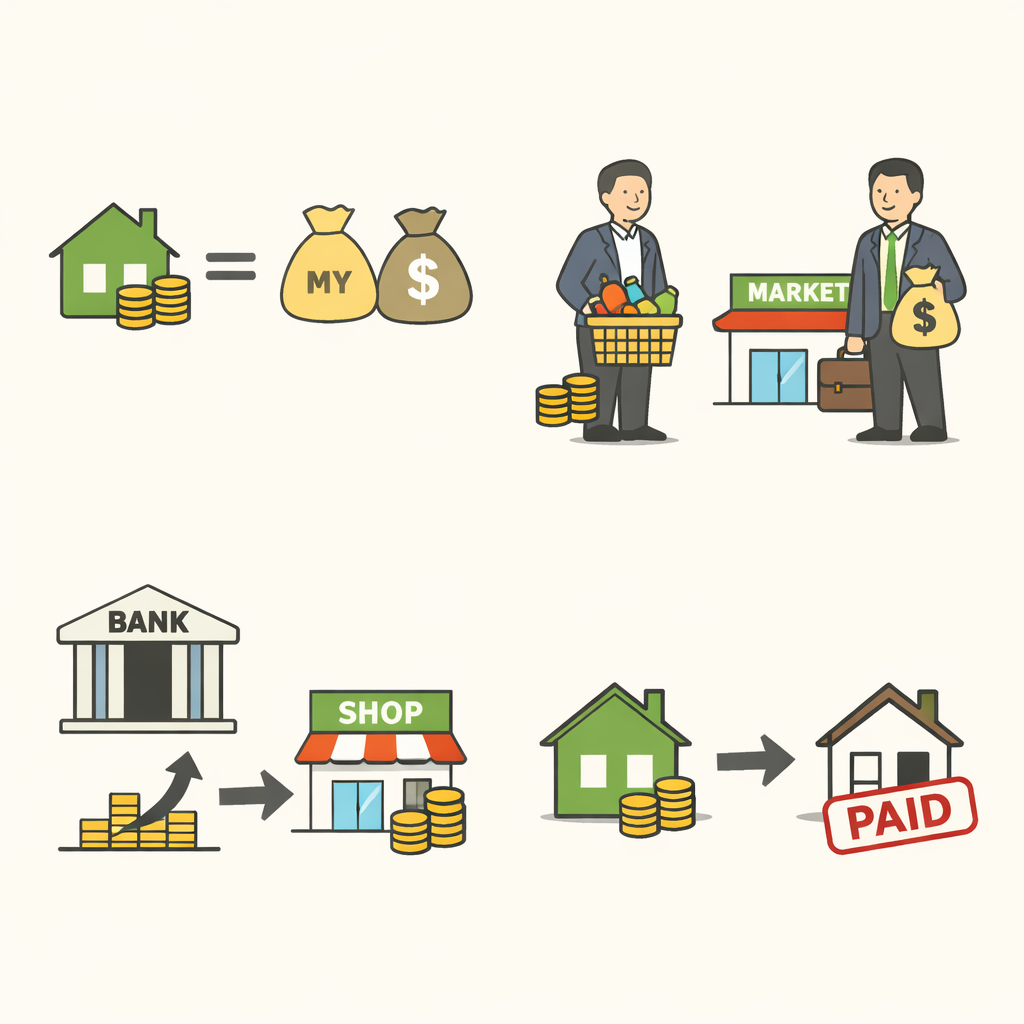
경영학원론 일 페이지에 항상 나오는 공식이 있습니다. 바로 “자산 = 자기자본 + 타인자본”이라는 공식인데요, 여기서 말하는 타인자본이 바로 대출금을 의미합니다.
남의 돈을 빌려서 만들어 둔 재산이 내 재산이란 것이지요? 돈을 빌려서 집을 사면 빌린 돈을 갚아야 할 책임은 있지만 집은 내 명의인 것이지요.
실제로 사업을 하는 분들은 필연적으로 남의 돈을 빌려 부족한 사업자금을 보충하여 유동성을 확보하고 이를 통해 사업을 확장하고 수익성을 높이는 데 중요하게 사용하고 있음에도 불구하고 대출에 대해서는 여전히 부정적인 인식을 갖고 있습니다.
예를 들어보지요.
1억을 가진 두 분이 있습니다. 두 분 다 슈퍼마켓을 하려고 하지요. 슈퍼마켓 사업은 돈을 투자하면 연 15%의 수익을 낼 수 있는 사업이라고 가정하지요.
한 분은 자기 돈 1억으로 슈퍼마켓을 차리고 1년에 1,500만원을 법니다. 또 한 분은 은행에서 1억 원을 더 빌려서 2억 원을 투자하여 3,000만원을 벌었답니다. 물론 빌린 돈의 이자는 갚아 줘야겠지요? 은행에서 대출금에 대해 1년에 5%의 이자를 받기로 해서 500만원은 이자로 줘야 하지만 결국 이 분은 2,500만원을 벌었네요.
대출이자를 꼬박꼬박 잘 갚고 있는 동안은 은행은 원금을 돌려 달라고 하지는 않을 테고 혹시라도 원금을 돌려 달라고 하면 장사가 잘되는 슈퍼마켓을 담보로 다른 은행에서 대출을 받아 갚든가, 아니면 그 동안 더 많이 번 돈을 모아서 갚든가, 이도 저도 안되면 슈퍼마켓을 더 비싸게 팔아서 갚아주면 되겠지요? (아마도 연 3,000만원의 수익이 나는 가게라면 3억 원은 받을 수 있을 겁니다.)
자기 돈으로만 사업을 한 분은 1,500만원을, 대출받은 분은 2,500만원을 지속적으로 버는 상황이겠지요. 대출의 긍정적인 효과이겠지요?
다만, 대출은 상환에 대한 부분을 고려해야 하기 때문에 부채비율에 대해서는 세심한 통제가 필요합니다. 자산(재산)에 비해 너무 많은 대출을 받아서 갚을 수 없는 일이 발생하면 안 되겠지요.
분명한 것은 대출은 잘만 통제한다면 아주 중요한 경제활동이라는 것입니다. 이자를 제 때에 제대로 갚아주기만 한다면, 대출받은 돈은 불가피하고 부도덕하게 쓰는 남의 돈이 아니라 떳떳하게 쓸 수 있는 내 돈입니다. 예금이 내 돈이 아니라면 대출금은 내 돈인 것이지요.
많은 분들이 대출을 받고 이자를 갚는 것을 부담스러워합니다. 남의 돈을 얻어 쓰느라 아까운 내 돈을 적지 않게 버리고 있다고 생각하는 것이지요. 하지만 미리 당겨쓴 대출금을 통해 나는 재산을 늘리거나 부족한 돈을 채워두었고, 이자를 지급하는 동안은 이 돈을 합법적으로 내 돈처럼 쓸 수 있으니 대출이자는 이 돈의 사용료 역할을 하는 것이지요.
대출의 만기 동안 꾸준히 지불하는 대출 이자와 대출금은 결국 내 재산을 불리는 데 쓰이는 것이란 말입니다.
집을 사느라 대출을 받았지만 원금을 다 갚고 나면 집은 온전한 내 재산이 되는 것이니 실제로 대출금을 갚기 위해 낸 이자와 원금은 저축으로 보는 것이 현명합니다.
그러니 대출을 받고 이를 상환하는 것에도 저축과 같은 전략이 필요합니다. 남의 돈을 쓰고 있는 불안한 상황이 아니라 효율적인 저축을 하기 위한 올바른 관리 방안을 수립해야 하는 상황이란 말입니다.
앞서 이야기한 것처럼 실상 금본위주의가 해체된 후 세계의 자본시장은 달러화를 중심으로 한 달러본위주의가 되었습니다. 그런데 이 달러라는 것이 대출을 바탕으로 만들어 낸 가상의 자본이라는 것입니다.
미국정부는 정부에서 발행한 채권을 민간은행장들의 모임인 FRB(연방준비위원회)에 담보로 맡기고 FRB는 이 채권을 담보로 달러를 발행하기 때문이지요. 세계의 모든 나라가 바로 이렇게 발행된 달러를 기준으로 돈의 가치를 결정하고 있는 현실, 즉 이미 자산의 가장 윗 단계에 부채라는 것이 포함되어 있는 세계에 살면서 부채(대출)없이 살아간다는 것은 많은 문제를 일으킵니다.
특히 자산의 효율성이라는 측면에서 부채는 매우 큰 영향력을 보이는 것이므로 이미 우리는 부채라는 것에서 자유로울 수 없습니다. 그렇다면 빚이라고 하는 것을 부도덕한 남의 돈이라고 생각하고 무조건 배척하기 보다는 이것을 효과적으로 활용할 능력을 키우는 것이 바람직한 태도일 것입니다.
수 십 년 전에는 진리로 받아들여졌던 것들이 이제는 아닐 수도 있는 세상에서 우리는 조금 더 진실에 가까운 것을 추구하는 자세를 취해야 합니다. 그렇지 않다면 백전백패 할 수밖에 없습니다.
——————
Episode 28: Is Loan Money Someone Else’s Money?
There is a formula that always appears on the first page of introductory business administration textbooks:
Assets (my wealth) = Equity (my money) + Liabilities (other people’s money)
Here, “liabilities” refer to borrowed money—loans.
This means that assets created using borrowed money are still considered my assets. If I borrow money to buy a house, I am responsible for repaying the loan, but the house itself is registered under my name.
In reality, business operators inevitably borrow money to supplement insufficient capital, secure liquidity, expand operations, and improve profitability. Despite this, many still hold negative perceptions about borrowing.
Let us consider an example.
There are two individuals, each with 100 million won. Both decide to start a supermarket business. Assume that this business yields a 15% annual return on investment.
One person invests only their own 100 million won and earns 15 million won per year. The other person borrows an additional 100 million won from a bank, invests a total of 200 million won, and earns 30 million won annually. Of course, the borrowed money incurs interest. If the loan interest rate is 5% per year, they must pay 5 million won in interest. Even so, this person still earns 25 million won.
As long as the borrower continues to pay interest regularly, the bank will not demand immediate repayment of the principal. If the bank does request repayment, the borrower can either take out another loan using the profitable supermarket as collateral, repay it with accumulated profits, or, if necessary, sell the business at a higher price. (A store generating 30 million won annually could likely be sold for around 300 million won.)
Thus, the person who used only their own capital earns 15 million won, while the person who utilized borrowed funds earns 25 million won. This demonstrates the positive effect of leverage.
However, loans must be managed carefully, particularly with regard to repayment capacity. Excessive borrowing relative to assets can lead to situations where repayment becomes impossible, which must be avoided.
What is clear is that loans, when properly controlled, are a crucial component of economic activity. As long as interest payments are made properly and on time, borrowed money is not unethical or improperly used “someone else’s money,” but rather money that can be used legitimately as if it were one’s own. If deposits are not truly “my money,” then loans, in a sense, become “my money.”
Many people feel burdened by borrowing and paying interest. They believe they are wasting their hard-earned money by paying for the use of someone else’s funds. However, through borrowing, they are effectively advancing future capital to increase their assets or fill financial gaps. The interest paid is simply the cost of using that money.
The principal and interest payments made over the life of a loan ultimately contribute to building one’s own wealth.
For example, if you take out a loan to purchase a house, once the principal is fully repaid, the house becomes entirely your asset. Therefore, the principal and interest paid can be viewed as a form of forced savings.
Thus, borrowing and repayment require strategies similar to saving. Rather than viewing loans as a risky situation involving someone else’s money, they should be managed as part of an effective financial strategy.
As mentioned earlier, after the collapse of the gold standard, the global capital market transitioned to a dollar-based system. The U.S. dollar itself is a form of virtual capital created through lending mechanisms.
The U.S. government issues bonds and uses them as collateral with the Federal Reserve (FRB), which then issues currency based on those bonds. The entire world determines the value of money based on this system. In other words, we live in a financial system where debt already exists at the highest level of assets.
In such a world, trying to live entirely without debt can create significant limitations.
From the perspective of asset efficiency, debt plays a critical role. Therefore, rather than viewing debt as unethical “someone else’s money” to be avoided at all costs, it is more rational to develop the ability to use it effectively.
In a world where ideas once considered absolute truths may no longer hold, we must strive to pursue a more accurate understanding of reality. Otherwise, we will inevitably continue to lose in every financial decision.