따라서 이제부터는 D급에 쏟아 부었던 노력을 A, B급에 집중하며, C급은 B급으로, B급은 A급으로 육성하는 한편, D급을 대체할 신규를 개발하기 위해, 각 등급별로 정확한 대상 고객을 설정(Right Targeting)하여 고객 등급에 맞게 차등화 된 영업활동을 해야 할 것이다.
- A급(Project): 가장 많이 판매하고 있고 앞으로도 매출이 증가할 고객은 각종 서비스 제공 및 후원, 장려금 등을 제공하고, 때론 고급 고가의 판촉 또는 해외여행 등 프로모션을 통해 자발적으로 매출이 지속적으로 증가할 수 있도록 유도하며, 고객을 만나는 영업활동 빈도는 중상 정도로 유지한다.
- B급(Increase): 더 많이 판매할 가능성이 있는 고객으로 현재의 매출 수준보다 충분히 증가할 수 있는 잠재력이 있어 A급으로 성장하도록 지원하기 위해 영업활동 빈도를 가장 많이 한다. 매출증대를 위한 다양한 프로모션과 이벤트 지원 등을 한다. 작은 기업에서 이런 현금성 지원이 어렵다면, 공급가 조절을 통해 바이어가 적극적으로 매출을 확대할 수 있도록 하고, 해외 출장을 통해 자누 만나며 커뮤니케이션을 하는 한편 현장직원들에 대한 제품교육을 강화해도 좋다.
- C급(Switch): 자사 제품을 취급하지만 경쟁사 제품을 더 많이 취급하여, 앞으로 자사 제품을 사용할 가능성이 있는 고객이다. 그러나 자사 제품으로 전환(Switch)시키기 쉽지 않으므로, B급과 마찬가지로 중점을 두어 상대적으로 높은 수준의 방문 활동을 해야 한다. 특히 경쟁사와의 만족도를 평가하기 위하여 모니터링을 하고, 자사 제품의 우수성 및 비젼의 제공, 견본품 제공, 자사 취급 고객의 성공사례 공유, 직원들의 영업활동 지원 등을 통해 자사제품 취급을 늘리도록 한다.
- D급(Stop): 미래에 가치가 없는 고객으로서, 영업활동을 감소 또는 중지한다. 즉, 자연 발생하는 매출 수준을 유지하거나, 매출이 감소하면 거래를 중지하는 편이 좋다.
- 신규(Trial): 경쟁사의 제품만 판매하거나 바이어가 화장품 비사업자로서, D급으로 분류된 고객들은 영업활동을 하지 않는 여유 시간을 활용하여, 신규 고객을 개발하기 위한 노력이 필요하다. 신규시장 개척 및 교통비 지원, 신규개설 프로모션, 신규 영입 인센티브 등을 통해 신규 영업을 늘린다.
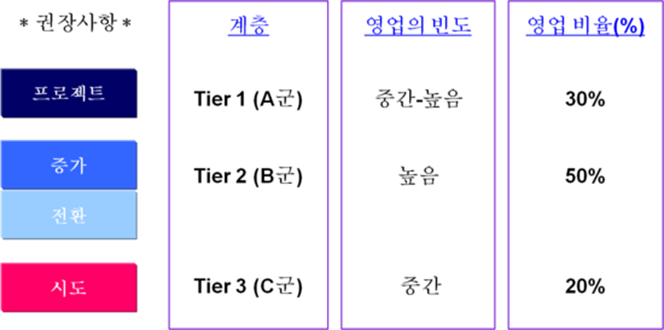
영업활동 빈도에 대해 각 등급별로 아래와 같이 요약 정리해봤다. 하지만 이건 개인적 경험에 의한 사례일 뿐이므로, 속한 회사나 산업의 특성에 맞게 각자 조정해서 매출 증대 가능성에 집중된 정확한 고객 설정을 해보기 바란다. 이는 또한 매출을 늘리거나 높은 매출 수준을 계속 유지하기 위한, 목표설정에도 잠재력이 높은 고객들에게 영업력과 마케팅 활동의 우선 순위를 정하도록 해준다.
영업전략은 어쩌면 마케팅 전략이나 경영전략에 비해 단순해 보일지도 모르겠다. 하지만 그 때문에 더 어려운 것이다. 왜냐하면 영업전략에서 가장 중요한 것은 번뜩이는 아이디어보다 고객에 대한 “정확한 등급분류와 타깃팅”에 대한 확신과 꾸준한 실행이기 때문이다.
고객에 대한 DB와 매핑(Mapping), 그리고 등급분류 작업은 매우 지루하고 힘든 자신과의 싸움이 될 것이다. 이를 극복하는 것이 바로 습관의 힘이다. 지루하게 반복되는 어려운 일은 습관으로 자리잡아야만 정복할 수 있기 때문이다. 결국 지금까지 설명한 영업전략의 실행 습관이 영업의 성공과 실패를 가름하게 될 것이다.
————————————-
Therefore, from now on, we should focus our efforts on A and B grade customers instead of D grade ones. We should develop C grade customers into B grade, B grade into A grade, and find new customers to replace the D grade ones. This requires setting precise target customers for each grade (Right Targeting) and conducting differentiated sales activities accordingly.
A Grade (Project): For customers who have high current sales and potential for future growth, provide various services, support, and incentives. Sometimes offer high-end promotional items or overseas trips to encourage continuous sales growth. Maintain a moderate to high frequency of sales activities with these customers.
B Grade (Increase): These customers have the potential to increase their sales significantly and grow into A grade. Conduct the highest frequency of sales activities to support their growth. Provide various promotions and event support for sales growth. If cash support is challenging for small companies, adjust supply prices to encourage buyers to actively increase sales. Frequent communication through overseas visits and enhanced product education for on-site staff are also beneficial.
C Grade (Switch): These customers handle our products but mainly deal with competitors’ products. They have the potential to switch to our products, although it may not be easy. Therefore, like B grade, focus on high levels of visitation and monitoring their satisfaction with competitors. Promote the superiority and vision of our products, provide samples, share success stories of customers who use our products, and support sales activities of their staff to increase the handling of our products.
D Grade (Stop): For customers with no future value, reduce or stop sales activities. Maintain the natural sales level or stop transactions if sales decline.
New (Trial): These are customers who only sell competitors’ products or buyers who are not in the cosmetics business. Use the time saved from reduced activities for D grade customers to develop new customers. Increase new sales through new market development, transportation support, new store promotions, and new customer incentives.
Here is a summary of the frequency of sales activities for each grade. This is based on personal experience, so please adjust according to the characteristics of your company or industry to set accurate customer targets focused on the possibility of sales growth. This approach helps prioritize sales and marketing activities for customers with high potential to either increase or maintain high sales levels.
Sales strategy may seem simpler compared to marketing or management strategies, but it is more challenging for that reason. The most important aspect of a sales strategy is not a brilliant idea but the “accurate classification and targeting” of customers and consistent execution.
The process of creating a customer database, mapping, and classification is a tedious and challenging task. Overcoming this requires the power of habit. Difficult tasks that are repetitive and tedious can only be conquered by making them habitual. Ultimately, the habit of executing the sales strategies explained so far will determine the success or failure of sales.