
팀 단위의 목표까지 설정되었으면 무엇보다도 먼저 목표를 팀원들과 공유한 후, 팀의 목표에 의거하여 각 팀원들의 업무를 분장해야 한다.
이때 유의할 점은 팀의 반복적인 일상업무를 반드시 포함해야 하며, 팀의 실행계획 수행에 필요한 자원과 능력 등을 검토한 후, 팀원의 기대치와 능력 등을 고려해서 실행과제를 할당해야 한다.
이렇게 할당된 업무에 의거하여 개별 팀원들이 직접 자신의 목표와 실행계획을 TSSW에 맞춰 수립해야 하는데, 과제별 비중과 성과지표(KRA/KPI)를 명확히 해서 실행방안이 구체화되도록 작성해야 한다.
그런 다음, 개별 팀원들이 수립한 TSSW 목표는 팀장과 1:1 개별 면담을 통해서 합의 과정을 거쳐, 수정 보완 작업 후에 최종 확정을 한다. 이때 팀장은 아래와 같은 질문들을 유의해서 팀원들의 목표를 수정, 보완, 피드백 하여 최종 합의한다.
– 개인 업무의 목표는 무엇인가?
– 목표를 달성하기 위한 지식과 스킬은 어떠한가?
– 목표가 조직의 목표달성에 기여하는가?
– 목표달성 여부는 어떤 판단 기준으로 평가되어야 하는가?
그리하여 합의된 TSSW 목표에 의해 개별 팀원들은 더욱 세부적이고 구체적인 실행 계획을 수립하고 업무를 수행하면서 자기계발도 하게 되는데, 팀장은 지속적이고 수시적으로 팀원들의 진행현황 및 성과에 대해 커뮤니케이션하고 진단하여 올바른 방향으로 TSSW가 수행되도록 코칭을 해주어야 한다.
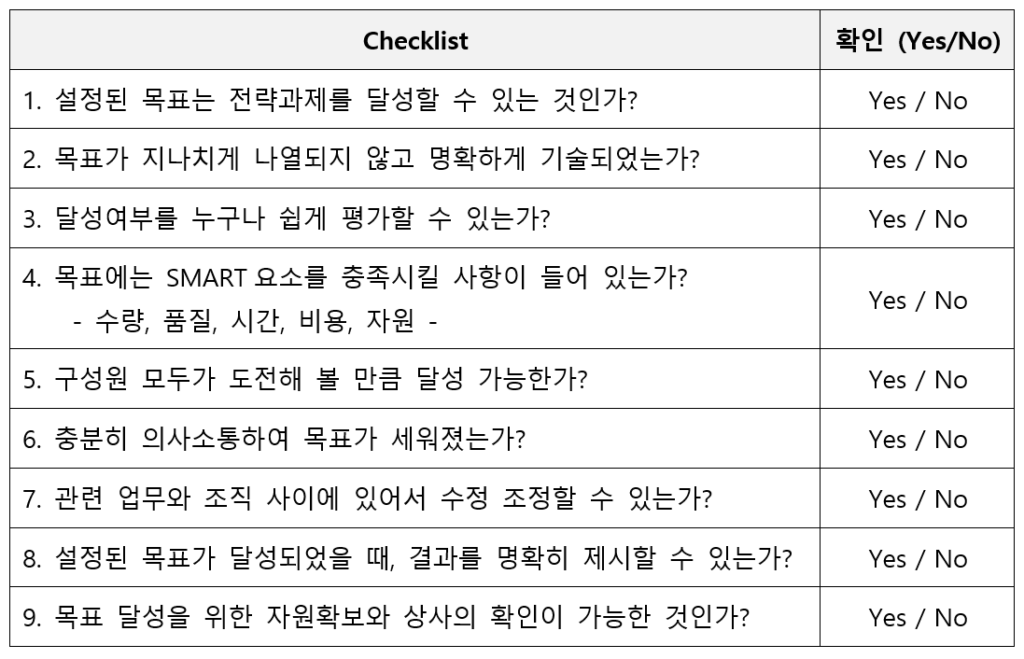
참고로 팀원들이 설정한 목표를 점검하기 위한 Check List를 아래에 첨부한다. 아래 9가지 항목을 기준으로 팀원들이 설정한 목표가 올바르게 설정되었는지를 점검해 보기 바란다.
그리고 각 개인들은 목표의 밸런스에 맞게 아래와 같은 개인별 TSSW 목표를 작성하는데, 이해와 활용을 돕기 위해 과거 나의 영업팀장이 작성했던 사례를 소개한다.
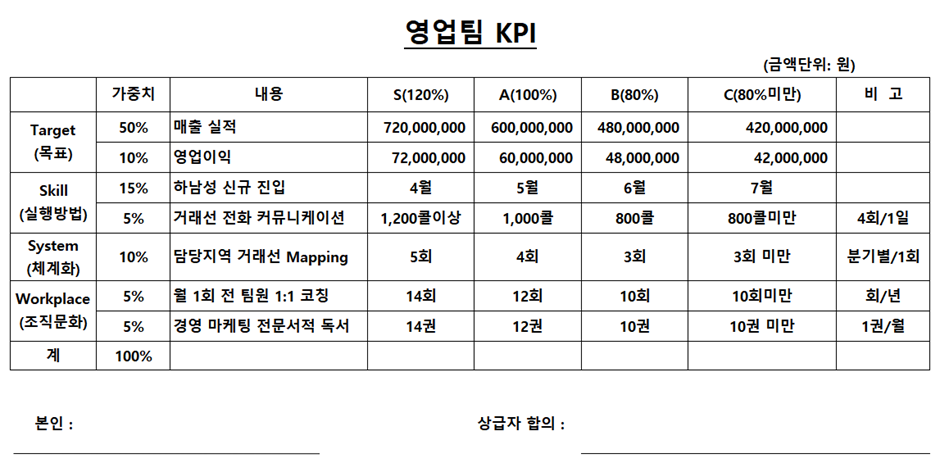
윗사례에서 보듯이 영업팀인데도 목표가 단순히 매출만이 아니다. 심지어는 영업이익 목표도 있다. 이는 영업에서 사용하는 판촉비도 효율적으로 사용해서 전사적으로 목표 영업이익율 10%를 달성해야 한다는 것이다. 물론 매출목표의 비중이 50%로 가장 크지만, 그외에도 매출 목표를 달성하기 위해 어떻게 해야 하는가(Skill, System)도 명시되어 있으며, 리더십과 자기계발에 대한 목표도 포함되어 있다. 이렇게 팀장이 목표를 수립했으면, 이에 맞게 팀원들도 각자 TSSW 목표를 작성해서 팀장과 합의를 하면, 1년 KPI 수립이 완성되는 것이다.
그런데 사업계획이란 것이 한번 정하면 1년 간 변함없을 수는 없다. 기업의 내외부 환경이 수시로 변하기 때문에, 사업계획도 수정될 수 있고 KPI 또한 변경되어야 한다. 그래서 상반기가 지난 7월에 변화된 환경에 맞게 KPI도 한번 수정해주는 것이 좋다. 같은 방법으로 7월에 수정된 KPI가 연말까지 최종 확정된 것으로써, 각 개인의 목표이자 평가지표가 되는 것이다.
—————————-
Once the team’s objectives have been set, the first and foremost step is to share these goals with the team members. After that, based on the team’s objectives, you should allocate tasks to each team member.
At this point, it’s important to ensure that the team’s repetitive routine tasks are included. After reviewing the resources and capabilities required for executing the team’s action plan, tasks should be assigned considering each team member’s expectations and abilities.
Based on the allocated tasks, individual team members should then establish their own objectives and action plans in alignment with the TSSW framework. They should clearly define the weight of each task and the performance indicators (KRA/KPI) to make their action plans concrete.
Next, the TSSW objectives established by each team member should be finalized through a process of mutual agreement during one-on-one meetings with the team leader. After this, the team leader should carefully consider the following questions to provide feedback, make necessary adjustments, and reach a final agreement on the objectives:
- What are the objectives of the individual tasks?
- What knowledge and skills are required to achieve these objectives?
- Do the objectives contribute to the overall goals of the organization?
- By what criteria should the achievement of the objectives be evaluated?
Once the TSSW objectives have been agreed upon, individual team members will develop more detailed and specific action plans. As they carry out their tasks, they will also engage in self-development. The team leader should continuously and regularly communicate with and assess the team members’ progress and performance, providing coaching to ensure that the TSSW is being carried out in the right direction.
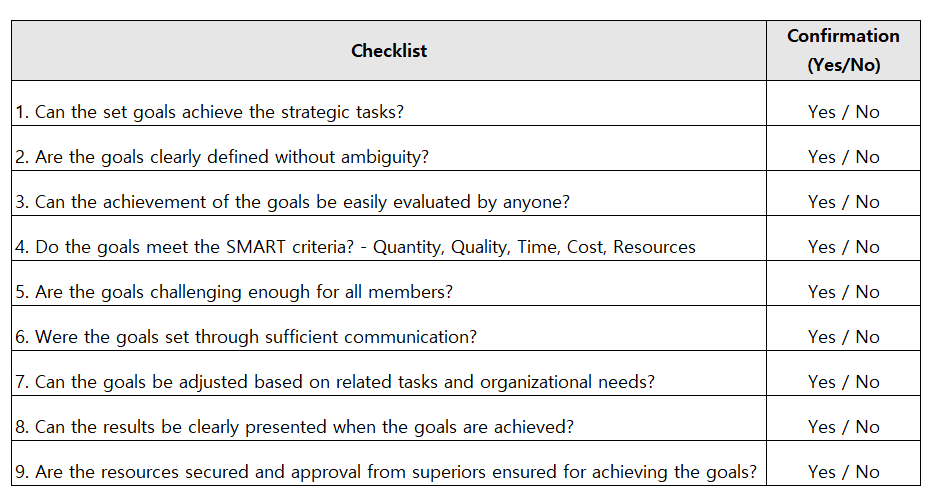
For reference, a Check List to assess the goals set by team members is attached below. Please use the following nine criteria to evaluate whether the objectives set by team members are appropriately defined.
And each individual writes their own TSSW goals according to the balance of objectives. To aid understanding and utilization, I will introduce an example written by my former sales team leader.
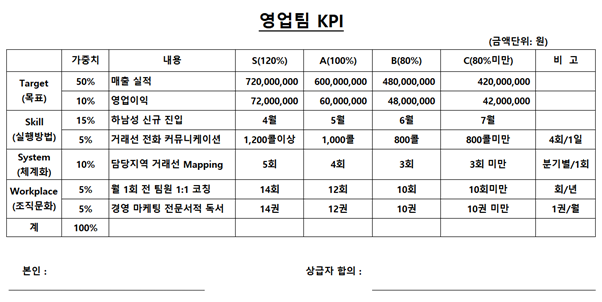
As seen in the example above, even though it’s a sales team, the goals are not just about revenue. There is even a target for operating profit. This means that promotional expenses used in sales must be utilized efficiently to achieve the company’s overall target operating profit margin of 10%. Although the revenue target has the largest proportion at 50%, there are also clear objectives related to how to achieve the sales goals (Skill, System), as well as goals for leadership and personal development. Once the team leader has established the goals, team members also write their own TSSW goals in alignment and agree with the team leader, completing the annual KPI formulation.
However, a business plan cannot remain unchanged throughout the year. Since both internal and external environments of a company can change frequently, the business plan may need to be revised, and the KPIs may need to be adjusted as well. Therefore, it is recommended to revise the KPIs once in July to reflect the changed environment after the first half of the year. In the same way, the revised KPIs in July are finalized by the end of the year, becoming each individual’s goals and evaluation indicators.