변화는 언제나 아픔이 따른다. 그래서 변화가 두렵다.
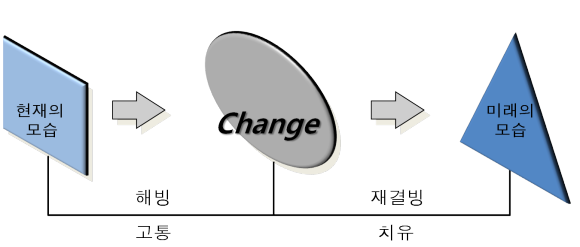
커트 레빈(Kurt Lewin)은 변화관리의 3단계 모델을 설명하기 위해 사각형의 얼음을 원뿔형으로 만들기 위해서는 얼음을 녹여(해빙, Unfreeze), 새로운 모양으로 변화(Change)시킨 후, 다시 얼리는(재결빙, Refreeze) 세 단계를 거쳐야 한다고 했다.
그는 얼음을 녹일 때는 변화에 대한 불확실성에 대한 두려움이 따르고, 이를 극복하여 변화를 시도할 때는 고통의 과정이 따르지만, 다시 단단하게 얼음으로 재결빙 되는 것은 그 아픔이 치유되어 변화가 정착되는 것이라 설명하였다.
이처럼 조직에서의 변화는 아픔과 치유의 반복과정을 거치며 더욱 단단하게 영글어 가는 것이다.
고통은 짧고 그 후에 따르는 기쁨은 영원하다. 변화하려면 먼저 두려움을 떨쳐 버리고 고통을 받아들일 자세가 되어야 한다. 비 온 뒤에 땅이 더 굳는다는 속담처럼 썩은 살을 도려내는 일은 한 순간의 고통이지만 새 살이 돋아나면 영원한 아름다움을 간직할 수 있을 것이다.
하지만 나 혼자 변화하고 잘났다고 떠들어봤자 소용없다. 청나라 때 문장가인 황소배(黃小配)는 ‘유복동향, 유난동당(有福同享, 有難同當)’이란 말을 했다. 좋은 일은 함께 누리고 어려운 일도 함께 해결하자는 의미이다.
행복은 함께하면 두 배가 되고, 어려운 일은 함께 하면 반으로 줄어든다는 옛 말처럼, 조직에서의 변화는 혼자만이 짊어질 수 있는 일이 아니라, 조직원 전체가 함께 해야 할 일이다. 그러니 세상 나 혼자인 양 독불장군이 되어서도 안 된다. 세상의 변화를 감지하고 두려움을 떨치고 먼저 나의 작은 변화를 이룬 후에, 조직원들과 함께 변화의 흐름을 타고 가야할 것이다.
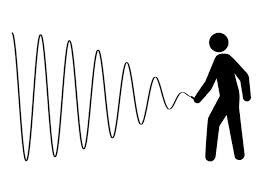
유통물류 분야에서는 채찍효과(Bullwhip Effect)라는 말이 있다. 긴 채찍을 잡은 자가 손잡이를 작게 흔들기만 하여도 채찍의 끝은 크게 흔들린다는 것이다.
제품의 공급망 사슬에서의 채찍효과는 고객의 정보가 여러 단계를 거치는 과정에서 과장되고 왜곡되게 전달되어, 나중에 생산단계에 가서는 문제가 발생할 수 있다는 경고를 말하는 것이지만 , 변화의 주도자라는 측면에서 나는 개인의 작은 변화가 조직의 큰 변화를 이끌 수 있다는 점에서 채찍효과를 강조하고 싶다.
과거 나는 애경산업을 비롯해 LG생명과학, 세라젬 등 여러 회사에서 먼저 나의 작은 변화를 만들고 채찍효과처럼 조직의 변화를 주도하였다. 그리고 그 결과 회사의 실적은 엄청난 규모로 성장하게된 시발점이 된 경험을 가지고 있다. (계속)
——————
Change is always accompanied by pain, which is why it is often feared.
Kurt Lewin explained the process of change through his three-step model of change management: in order to transform a block of ice into a cone shape, you must first melt the ice (Unfreeze), reshape it (Change), and then freeze it again (Refreeze).
He described how unfreezing the ice comes with fear and uncertainty about change, how the attempt to reshape it involves a painful process, and how refreezing represents the healing of that pain and the establishment of the change.
Similarly, organizational change follows a cycle of pain and healing, growing stronger through these repeated processes.
Pain is brief, but the joy that follows is eternal. To embrace change, we must first cast away fear and be prepared to endure pain. Like the saying, “The ground becomes firmer after rain,” the act of cutting away decayed flesh brings temporary pain, but once new skin grows, it will hold lasting beauty.
However, boasting about one’s personal growth and change means little if done alone. During the Qing Dynasty, the writer Huang Xiaopei said, “Share blessings together, endure hardships together.” This phrase means that we should enjoy good times together and solve difficult problems together.
Just as happiness multiplies when shared, and burdens are halved when carried together, change in an organization is not something one person can bear alone—it must be undertaken by the entire team. Therefore, one must avoid becoming a lone wolf, acting as if they alone carry the world. After sensing changes in the world, overcoming fears, and first making small personal changes, we should ride the wave of change with our colleagues.
In the logistics and distribution sector, there’s a term known as the Bullwhip Effect. It describes how a small movement at the handle of a long whip can cause a large movement at the tip.
In the context of supply chains, the Bullwhip Effect refers to how information from customers can be distorted and exaggerated as it passes through several stages, leading to issues during production. However, in the context of being a change leader, I would like to emphasize that a small personal change can lead to significant organizational change, much like the Bullwhip Effect.
In the past, I worked at several companies, including Aekyung Industrial, LG Life Sciences, and Ceragem, where I initiated small personal changes and, like the Bullwhip Effect, led organizational changes. As a result, I witnessed tremendous growth in the company’s performance, marking the starting point of remarkable success. (To be continued)