1. 인류의 창세문명과 한민족의 뿌리 역사의 진실을 밝혀주는 유일한 사서.
환단고기는 한민족의 뿌리 역사를 삼성조三聖祖 시대로 묶어 전합니다. 삼성조시대는 환국(BCE7197~BEC3897)에서 배달(BCE3897~BEC2333)로, 배달에서 고조선(BCE2333~BCE238)으로 전개되었습니다. 이 7천 년 삼성조시대를 다스린 역대 임금의 이름 재위 연수, 그 치적 등을 기록하여 한민족 시원 역사의 진실을 밝혀 주는 책이 환단고기입니다.
2. 한민족사의 국통(國統) 맥을 최초로 명확하고 바르게 잡아 준다.
환단고기에 들어 있는 5대 사서 가운데 북부여기는 특히 삼성조로부터 고려.조선에 이르는 우리 국통 맥을 바로 세우는 데 결정적인 구실을 합니다. 국통 맥을 파악하기 어렵게 하는, 잃어버린 고리인 부여사의 전모를 밝혀 고조선 이후의 단절된 역사를 이어 주기 때문입니다.
3. 천지와 인간의 광명정신인 환(桓) 단(檀) 한(韓)의 원뜻을 밝혀 줄 뿐만 아니라 환.단.한 사상이 실현된 역사의 전체 과정을 기록하고 있다.
환 – 하늘의 광명, 우주를 가득 채우고 있는 하늘의 광명
단 – 땅의 광명, 단(檀:박달나무 단) 박달은 밝은 땅을 이름
한 – 사람의 광명. 천지의 광명이 내재되어 있음
광명정신은 동방 한민족의 9천년 역사에 그대로 실현이 되어 왔습니다. 그래서 환국에서 근세 조선에 이르기 까지 나라 이름과 창업자의 호칭이 모두 광명 사상을 담고 있습니다.
4. 하늘.땅.사람. 즉 천지인(天地人) 삼재에 관한 가르침을 통해 사람이 이 우주에서 어떤 존재인지 철학적으로 밝혀 준다
삼신이라는 하나의 근원에서 나온 천지인을 환단고기는 천일, 지일, 태일(太一)이라 부릅니다. 인간은 하늘과 땅의 손발이 되어 천지의 뜻과 소망을 이루기 때문에 하늘땅보다 더 큰 태일이 됩니다. 인간을 태일이라 한 것은 인간에 대한 극치의 정의라 할 수 있습니다.
5. 동방 한민족이 천자(天子) 문화의 주인공이요 책력(冊曆) 문화의 시조로서 수(數)를 최초로 발명하였음을 밝히고 있다.
천자는 천제지자(天帝之子)의 준말입니다. 천제는 상제의 다른 말이므로 천자는 곧 상제님의 아들입니다. 천자는 상제님을 대신하여 땅 위의 백성을 다스리는 통치자요, 하늘에 계신 상제님께 천제를 올리는 제사장입니다. 한마디로 인간과 신을 연결하는 다리와 같은 존재 입니다. 환국, 배달, 고조선 이래로 이 땅은 원래 천제의 아들이 다스리는 천자국이었습니다. [단군세기]에서 행촌 이암이 단군을 줄곧 제(帝)라고 부른 이유가 여기에 있습니다.
천자의 가장 근본적인 소명이 자연의 법칙을 드러내어 백성들이 춘하추동(春夏秋冬) 제때에 맞춰 농사를 지을 수 있도록 책력을 만드는 것입니다. 배달 시대에 지어진 한민족 최초의 책력인 칠회제신력<태백일사-신시본기> 또는 칠정운천도<태백일사-소도경전본훈>는 인류의 가장 오래된 달력입니다.
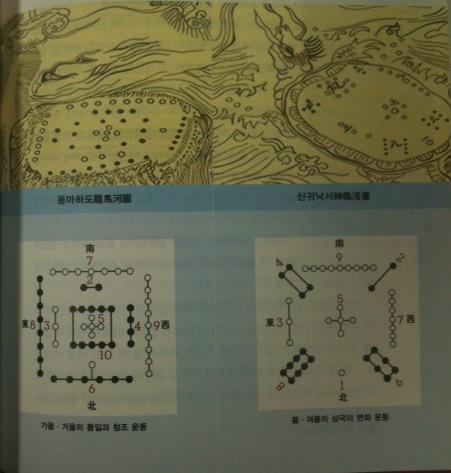
그런데 역법에는 숫자가 사용됩니다 1에서 10까지의 자연수는 9천 년 전 환국 시절의 우주론 경전인 [천부경(天符經)]에 최초로 기록되어 있습니다. 5,500여년 전의 성황인 태호 복희씨는 동서남국 사방과 춘하추동 사시의 시공간 법칙 속에서 수의 원리를 찾아내어 하도를 그렸습니다. 인류의 책력과 수는 동북아에서 가장 먼저 발명된 것입니다.
6. 삼성조 시대의 국가 경영 제도를 전하는 사서로서 만고 불변의 나라 다스림의 지침을 담고 있다.
배달의 환웅천황은 신교의 삼신오제(三神五帝) 사상을 통치 원리로 삼아 삼백(풍백, 우사, 운사)제도와 오사(五事, 주곡, 주명, 주형, 주병, 주선악)제도를 만들어 국가를 경영하였습니다.
삼백은 조선 시대의 삼정승(영의정, 좌의정,우의정), 근현대 삼권분립(입법, 행정, 사법부)제도와 완전히 맞습니다. 풍백, 우사, 운사는 흔히 말하듯 바람신, 비신, 구름신이라는 신화 속 주인공이 아니라, 오늘날 민주주의 정치 체제의 원형인 것입니다. 이런 배달의 오사는 고조선과 북부여, 고구려, 백제 등에 그대로 계승되었습니다.
신교의 삼신문화가 국가 경영 원리로 정착된 가장 결정적인 제도는 바로 고조선의 삼한관경제(三韓管境制) 입니다. 단군이 중앙의 진한을 다스리면서 두 명의 부단군을 두어 번한과 마한을 다스리게 한 이 제도는, 고조선이 국정을 운영하는 근간이 되는 제도였습니다. 고조선은 삼한관경제의 성쇠와 운명을 같이 하였습니다. 환단고기는 오늘날 국가 경영을 연구하는 데에도 훌륭한 지침서가 될 것입니다.
7. 배달과 고조선이 창제한 문자를 기록하여, 한국이 문자 문명의 발원처임을 밝혀 준다.
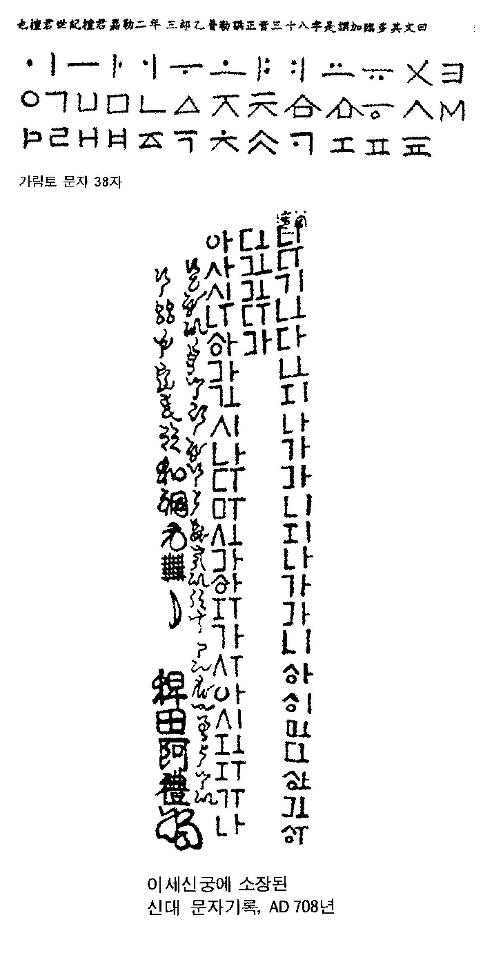
한민족의 배달 시대부터 이미 문자생활을 영위하였습니다. 초대 환웅이 신지 혁덕에게 명하여 녹도문을 창제하게 하신 기록이 나옵니다. 이것은 가장 오래된 문자로 알려진 BCE3000년경의 쐐기문자(수메르)와 상형문자(이집트)보다 더 오래된 세계 최초의 문자입니다. 고조선 3세 가륵단군은 이 문자를 수정 보완하여 가림토 문자를 만들었습니다. 가림토의 모습은 조선 세종대왕 때 만든 한글과 매우 흡사합니다.(세종실록, 세종 25년 12월조에 의하면 “훈민정음은 옛글자를 응용하여 만들어졌다”라는 기록이 나옵니다)
8. 상고시대 한민족의 대외 교섭사와 함께 중국과 일본 및 몽고, 흉노 등의 왕조 개척사가 밝혀져 있다.
고조선은 무려 1500년(BCE2205 하나라 건국~BCE770 주의 東遷)동안 중국의 고대 왕조인 하.상.주의 출현과 성립에 깊이 관여하였습니다. 그 한 예가 중국 5천년 역사에서 처음으로 맞은, 국가를 존망의 위기에 빠트린 9년 홍수 때, 단군왕검은 우(禹)왕에게 치수법을 가르쳐 주어 그로 하여금 홍수를 무사히 해결하고 그 공덕으로 나중에 하나라를 열게 한 일입니다. 그리고 [태백일사]에는 아직도 미스터리에 싸여 있는 일본의 개국 과정을 밝힐 수 있는 단서들이 실려 있습니다.
한마디로 말해 환단고기는 왜곡된 한.중.일의 고대사를 바로 잡을 수 있는 유일한 나침반입니다.
——————-
- The only historical record that reveals the truth about the origins of humanity’s ancient civilizations and the root history of the Korean people.
Hwandan Gogi conveys the root history of the Korean people through the era of the Three Sacred Ancestors (Samseongjo). The era spans from Hwan-guk (BCE 7197–BCE 3897) to Baedal (BCE 3897–BCE 2333) and then to Gojoseon (BCE 2333–BCE 238). This book reveals the truth of the early Korean history by documenting the names, reign periods, and accomplishments of the kings who ruled during these 7,000 years of the Samseongjo era.
- It is the first historical record to clearly and accurately define the royal lineage of Korean history.
Among the five historical texts included in Hwandan Gogi, the Bukbuyeogi is particularly crucial in establishing the royal lineage from the Three Sacred Ancestors era to Goryeo and Joseon. It reveals the full picture of the Buyeo dynasty, the missing link that makes it difficult to understand the lineage, thus bridging the gaps in Korean history after Gojoseon.
- It explains the original meanings of the light of heaven, earth, and humanity—Hwan (桓), Dan (檀), and Han (韓)—and records the historical process of how these ideas were realized.
- Hwan: The light of heaven, the bright light that fills the universe.
- Dan: The light of the earth, meaning “bright land,” as seen in the term parkdal (박달), derived from the word for the bright earth.
- Han: The light of humanity, embodying the light of heaven and earth within.
This spirit of light has been realized throughout the 9,000-year history of the Korean people. From the Hwan-guk era to the late Joseon dynasty, the names of countries and the titles of their founders all reflect this light ideology.
- It philosophically explains the existence of humans in the universe through the teachings of heaven, earth, and humanity, or the concept of cheonjijin (天地人).
The Hwandan Gogi refers to cheonjijin, heaven, earth, and humanity, as Cheonil (天一), Jiil (地一), and Taeil (太一). Humans become Taeil, greater than heaven and earth, as they are the hands and feet of heaven and earth, fulfilling their will and desires. Referring to humans as Taeil represents the highest definition of human existence.
- It reveals that the Korean people were the pioneers of celestial calendars and the inventors of numerals.
The term “Cheonja” (天子) is short for “the son of the Heavenly Emperor.” Since “Heavenly Emperor” is another name for Sangje, the Cheonja is the ruler who governs the people on Earth on behalf of Sangje, as well as the priest who offers heavenly rites to Sangje. In essence, they serve as the bridge connecting humans and the divine. The land of Hwan-guk, Baedal, and Gojoseon was originally ruled by these sons of the Heavenly Emperor.
The primary mission of the Cheonja was to create a calendar that revealed the natural laws, allowing people to farm according to the seasons. The oldest calendar made during the Baedal era, called the Chilhoejesinryeok or Chiljeonguncheondo in the Taebaek Ilsa, is the world’s oldest calendar.
Moreover, the numbers in the calendar date back to the Cheonbugyeong (천부경), a cosmological scripture from 9,000 years ago that records the first use of numerals from 1 to 10. Taegoh Bokhee from 5,500 years ago discovered the principles of numbers through the spatial laws of time and seasons, later creating the diagram called Hado. This shows that numbers and calendars were first invented in Northeast Asia.
- As a historical text, it conveys the state governance system of the Samseongjo era, containing timeless principles for ruling a nation.
In the Baedal era, King Hwanung ruled based on the philosophy of the Three Gods and Five Emperors (Samshin Oje), establishing the Three Departments (Wind, Rain, and Cloud) and the Five Ministries (agriculture, life, form, military, and good and evil). These became the foundation for governing the nation.
The Samguk Samjeongseung (three prime ministers) system from the Joseon era and the separation of powers (legislative, executive, judicial) in modern times align with these principles. The Five Ministries system was passed down to Gojoseon, Buyeo, Goguryeo, and Baekje.
The most decisive system where the governance principle of the Three Gods was established was Gojoseon’s Samhan Gwangyeongje (Three Han State Management System). This system became the backbone of Gojoseon’s national governance, where the Dangun ruled the central Jinhan while two deputy Danguns ruled Beonhan and Mahan. Gojoseon’s fate was tied to the rise and fall of the Samhan Gwangyeongje. The Hwandan Gogi remains a valuable reference for studying modern state governance.
- It records the creation of letters by Baedal and Gojoseon, showing that Korea was the birthplace of written civilization.
The Korean people were already living a literate life during the Baedal era. It is recorded that the first Hwanung ordered the shaman Shinji Hyeokdeok to create Nokdomun characters. These are the oldest known characters, predating the cuneiform script of Sumer and the hieroglyphics of Egypt, which are thought to have appeared around 3000 BCE. The third Dangun of Gojoseon, Gareuk, refined and expanded upon these characters, creating the Garimto script, which resembles Hangul created by King Sejong (Sejong Annals, Year 25, December: “Hunminjeongeum was made by applying ancient characters”).
- It reveals the foreign relations of ancient Korea and the history of founding dynasties in China, Japan, Mongolia, and the Xiongnu.
For 1,500 years (from BCE 2205, the founding of the Xia dynasty, to BCE 770, the eastern relocation of the Zhou dynasty), Gojoseon played a significant role in the emergence and establishment of China’s ancient dynasties of Xia, Shang, and Zhou. One example is when Dangun Wanggeom taught flood control methods to King Yu during the nine-year flood crisis that threatened China’s survival. Yu used these methods to successfully resolve the floods and later founded the Xia dynasty as a result of his achievements. Furthermore, the Taebaek Ilsa provides clues that could shed light on the mysterious founding of Japan.
In short, Hwandan Gogi is the only compass that can correct the distorted ancient history of Korea, China, and Japan.