한국인의 진정한 조선은 국조인 단군왕검이 고유문화인 神敎의 가르침을 받들어서 세운 단군조선입니다. 그런데도 불구하고 정작 단군조선의 실체를 제대로 모르고 있습니다.
단군조선의 역사를 오롯이 전하는 유일한 사서인 [환단고기]에 따르면, 단군조선은 2,096년에 걸쳐 마흔 일곱 분 단군이 다스린 나라입니다. 초대 단군왕검은 신교의 三神(삼신) 사상에 따라 하나의 나라 조선을 셋으로 나누어 다스렸습니다.
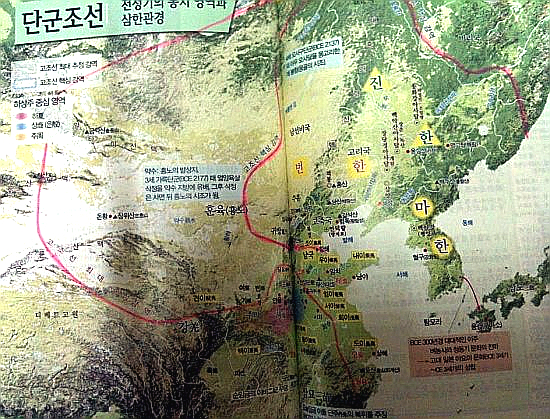
** 삼한관경제(하나의 조선을 셋으로 나누어 다스림) **
辰韓(진한) – 대단군이 다스림
番韓(번한) – 부단군이 다스림
馬韓(마한) – 부단군이 다스림
단군조선은 삼한관경제의 흥망성쇠와 그 운명을 같이 하였습니다. 초대 단군 때부터 시작된 삼한관경제는 무력으로 정권을 답은 22세 색불루단군 때 크게 흔들리게 되었습니다. 천도遷都와 더불어 단군조선의 삼한 체제가 삼조선 체제로 바뀌었기(BCE128)때문입니다. 삼한관경제는 44세 구물단군에 이르러서는 완전히 무너지고 말았습니다. 대단군만 가지던 병권을 부단군들도 동등하게 가지게 되어 삼조선은 독립적인 세 나라가 되었기(BCE425)때문입니다.
이때 구물단군은 국호를 조선에서 대부여로 고치고 국가 재건을 도모하였으나, 그 후 2백년을 넘기지 못하고 47세 고열가단군을 마지막으로 역사의 막을 내리게 됩니다. 그런데 이 땅의 역사 교과서는 하나같이 단군조선의 건국 사실만 말할 뿐 마흔 일곱 분 단군의 치세에 대해서는 일언반구도 없습니다.
초대 단군인 단군왕검, 고조선 말기 번조선의 준왕, 그리고 준왕을 쫓아낸 위만, 이 세 사람만 고조선의 왕으로 거론되고 있습니다. 광복 70년이 다 되도록 우리는 아직 빈껍데기 역사만을 가르치고 배울 따름입니다. 유교사관으로 쓴 국내 사서들은 한민족의 국통 맥을 단군조선->기자조선->위만조선으로 이야기 합니다. 그에 따라서 한국의 교과서는 기자조선과 위만조선을 우리 역사의 정통 맥으로 잡고 있습니다.
바른 한국사 체계
환국->배달(신시)->조선(단군)->북부여(열국시대)->고구려(오국시대)
이러한 교과서를 만들고 가르치는 강단사학자들은 한국사의 계보가 단군조선에서 기자조선으로 기자조선에서 위만조선으로, 위만조선에서 한사군으로 이어졌다고 말합니다. 그 한사군의 꼬리에 고구려, 백제, 신라의 삼국 시대를 붙여 말합니다. 이것이 한국 고대사 교육의 현실입니다. 오늘의 한국인은 한국의 역사를 모르고 있습니다. 한국사가 언제 어디에서 어떻게 시작되었는지 모르고 있습니다.
이 얼마나 엄청난 문제인지요.
이제까지 우리가 듣고 배운 한국 역사는 모두 뿌리가 거세된 역사, 왜곡된 역사입니다. 그런데도 이러한 그릇된 한국사를 대부분의 한국인은 진실된 것으로 믿고 있습니다. 학문적으로 한 번 굳어지고 나면 이것이 회복되는 100년, 200년이 걸린다고 합니다. 식민사학의 도그마에 빠져 역사의 진실을 제대로 볼 수 없는 현실이니, 민족사의 혼령이 통곡할 지경입니다. 때문에 오늘날 한국사가 안고 있는 대명제는 무엇보다 먼저 왜곡된 한국사의 면모를 바로잡는 것입니다.
그리하여 오늘의 우리가 누구인지 어떤 민족인지 바르게 알아야 합니다.
————–
For Koreans, the true Joseon is Dangun Joseon, the nation established by the founding ancestor Dangun Wanggeom, who upheld the teachings of Singyo (the indigenous Korean spiritual tradition). Yet, in reality, we still lack a clear understanding of Dangun Joseon.
According to Hwandangogi, the only historical text that fully preserves the history of Dangun Joseon, it was a kingdom that endured for 2,096 years, ruled by forty-seven generations of Dangun kings. The first Dangun Wanggeom governed Joseon according to Samshin (Three Spirits) ideology, dividing it into three regions under a unified rule.
The Samhan Gwan Gye System (One Joseon governed as three territories):
- Jinhan (辰韓) – ruled by the Grand Dangun
- Beonhan (番韓) – ruled by a Deputy Dangun
- Mahan (馬韓) – ruled by a Deputy Dangun
Dangun Joseon’s rise and fall were closely tied to the Samhan Gwan Gye system. However, by the time of the 22nd Dangun, Saekbulnu, who seized power by force, this governance structure began to crumble. This led to a change from the Samhan system to the Sam Joseon (Three Joseon) system around 128 BCE, accompanied by a capital relocation. By the reign of the 44th Dangun, Gumul, the Samhan Gwan Gye system collapsed entirely. The military power that had previously been centralized under the Grand Dangun was now distributed equally to the Deputy Danguns, effectively dividing Sam Joseon into three independent states (425 BCE).
At this time, Dangun Gumul renamed the nation from Joseon to Daebuyeo, attempting a national restoration. However, this Daebuyeo dynasty lasted less than two centuries, ending with the 47th Dangun, Goyeolga, who closed this chapter of history. Yet in Korean history textbooks today, only the foundation of Dangun Joseon is mentioned, with no reference to the reigns of the forty-seven Dangun rulers.
Instead, only three figures are typically noted as kings of Gojoseon: the first Dangun Wanggeom, King Jun of Beonjoseon in late Gojoseon, and Wiman, who usurped King Jun. Nearly seventy years after Korea’s liberation, we are still taught and learning an incomplete version of history. Korea’s history books, influenced by the Confucian historiographical perspective, trace Korean history as moving from Dangun Joseon to Gija Joseon to Wiman Joseon. As such, Korean textbooks have long regarded Gija Joseon and Wiman Joseon as integral parts of Korea’s historical lineage.
The Correct Korean History Sequence
Hwan-guk → Baedal (Shinsi) → Joseon (Dangun) → Northern Buyeo (Era of States) → Goguryeo (Era of Five Nations)
Today’s mainstream historians and textbook writers claim that the historical lineage of Korean history moved from Dangun Joseon to Gija Joseon to Wiman Joseon and, subsequently, to the Four Han Commanderies. They append the period of the Three Kingdoms—Goguryeo, Baekje, and Silla—to this progression. This is the current state of ancient Korean history education. Many modern Koreans remain unaware of the origins and development of Korean history.
This lack of awareness is a grave problem.
The Korean history we have learned is severed from its roots and distorted, yet most Koreans still believe it to be true. Once academic conventions solidify, it can take 100 or even 200 years to undo the damage. Trapped in the dogma of colonial historiography, we remain unable to grasp the true narrative of our history—a reality that might well make the spirits of our ancestors weep. Thus, the foremost task in addressing today’s Korean historical narrative is to correct the distortions that still persist.
Only then can we accurately understand who we are today and what kind of people we belong to.