환국의 환족은 배링 해협을 건너 남북 아메리카 대륙으로도 이주하였습니다. 이것은 인디언의 언어, 혈액형, 체질, 치아, 문화 등을 연구한 고고학자와 인류학자들의 주장과도 일치합니다. 독일의 고고학자 알렉산더 훔볼트(1769~1859)는 ‘아메리카의 많은 신화, 기념물, 우주 발생에 관한 사고는 동아시아의 것과 놀랄 만큼 흡사하다. 이것은 태고 시대에는 서로 어떤 연관성이 있음을 말해준다“라고 주장합니다. 외모만 보아도 아시아인에 가까운 인디언은 사실은 동북아에서 건너 간 사람들의 후예입니다.
최근에는 또 다른 과학 분야가 이 같은 사실을 입증합니다. 그것은 우리 몸 속에 있는 유전자를 이용하는 유전학적 연구입니다. 인간의 세포 속 DNA는 그 조상의 발자취가 남아 있습니다. 유전학적 연구의 결과로, 아메리카 원주민의 조상이 시베리아에서 건너 온 것이 분명한 것으로 밝혀졌습니다.
인디언과 동북아인의 연관성은 인디언의 생활 도구와 풍습에서도 확인됩니다. 미국 오리건 주에서 발굴된 짚신 75켤레는 동북아의 짚신과 흡사한데 약 9천 년 전의 것이라 합니다. 9천 년 전, 그때는 환국 시대였습니다.
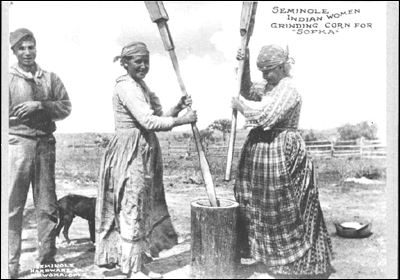
필자가 수년 전 미국 워싱턴의 스미소니언 박물관을 들렀을 때 1층 인디언관에서 본 절구, 소쿠리, 베틀, 어망 등은 우리네 것과 너무나 흡사하였습니다. 그곳 전시장의 모습은 마치 한국의 시골 풍경 같았습니다. 북미 인디언 마을 입구의 장승과 토템 또한 한국의 그것과 유사합니다. 그곳 여인들은 우리와 마찬가지로 아이를 업어서 키우고, 어린이들은 우리 아이들이 하는 것과 똑같이 실뜨기 놀이를 합니다.
중남미에 아즈텍 문명과 잉카 문명을 건설한 인디언 또한 환족과 깊은 연관성이 있습니다. 환족은 하늘의 광명을 숭상하여 흰옷을 즐겨 입었는데, 아즈텍 사람도 흰옷을 즐겨 입고 사원 건물을 희색으로 칠하였습니다. 그들은 또한 아이가 태어날 때 금줄을 치고, 아이를 포대기에 싸서 업고 다녔습니다. 죽은 사람의 입에 저승 길의 노잣돈으로 옥구슬을 넣어 주고, 자정에 제사를 지냈습니다. 제사를 마친 후에는 사용한 종이를 불태우고 음식을 나눠 먹는 풍습이 있습니다.
남북 아메리카 대륙의 인디언 문화와 한韓문화의 관계에 대해 배재대 손성태 교수는 “직접적인 관련 없이 이처럼 공통점이 많기란 불가능하다”라고 말합니다. 결론적으로 인디언 문명은 환족의 한 갈래가 베링 해협을 넘어 가서 개척하기 시작한 것으로 보지 않을 수 없습니다. 환국시대부터 시작된 아메리카 대륙으로의 이주는 이후에도 계속되었습니다.
이상을 정리하면, 환국의 문명은 서쪽으로 전파되어 수메르 문명, 메소포타미아 문명, 이집트 문명, 그리스 문명을 낳았고, 동쪽으로는 아메리카 대륙의 아즈텍 문명, 잉카 문명 등을 개척하였고, 남쪽으로는 인더스 문명에까지 그 영향을 미쳤습니다. 즉 환국은 전 세계 고대 문명의 모체이자 근원인 것입니다.
동북아에서 환국 탄생 이후, 서남아시아에서도 원시 문명 집단이 출현하였습니다. 요르단의 영토였다가 현재 이스라엘 영토가 된 여리고에서 출토된, 1만 년 전의 망대와 성벽을 갖춘 도시 형태의 주거지가 그 증거입니다. 그것은 1868년 발굴이 시작된 여리고에서 영국의 여성 고고학자 케슬린 케넌 1952년부터 6년 동안 집중 탐사한 결과 밝혀진 것입니다. 지금 현지에서는 여리고를 ‘세계에서 가장 오래된 도시’라 소개하고 있습니다.
하지만 환국은 세계 고대 문명 발생의 밑거름이 되었기 때문에 다른 태곳적 주거문명과 구별 짓지 않을 수 없습니다. 현 인류의 시원 문명이요 뿌리 문명인 것입니다.
그렇다면 환국의 국통 맥은 과연 어디로 계승된 것일까요?
[환단고기]에서는 환국을 떠나 ‘해가 뜨는 곳’, 즉 광명의 동방으로 이동한 환족이 세운 배달倍達이라 밝히고 있습니다. 서쪽으로 수메르 문명이 개척될 때, 환국의 정통 장자족이 해가 뜨는 곳, 즉 광명의 동방으로 이동하여 새 시대 새 역사를 시작한 것입니다. 이로써 환국에서 구환족이 하나 되어 살던 九桓一統의 시대가 끝나고, 인류 문명은 나비의 두 날개처럼 동서로 분화되어 발전하게 되었습니다.
———–
The Hwan people of the ancient Hwan-guk (환국) civilization crossed the Bering Strait and migrated to the Americas, both North and South. This theory aligns with the findings of archaeologists and anthropologists who have studied the language, blood type, physical characteristics, teeth, and cultural practices of Native Americans.
German archaeologist Alexander Humboldt (1769–1859) claimed, “Many myths, monuments, and cosmological concepts in the Americas are strikingly similar to those of East Asia. This suggests that there was some connection between the two in ancient times.” The physical resemblance between Native Americans and East Asians further supports the idea that they are descendants of people who migrated from Northeast Asia.
Recent developments in genetic research also substantiate this connection. DNA research has shown that the ancestors of Native Americans clearly came from Siberia. The trace of this migration is present in our cells, reflecting the path taken by our ancestors.
The connection between Native Americans and Northeast Asians is also visible in their tools and customs. For example, 75 pairs of straw sandals found in Oregon, USA, are nearly identical to those from Northeast Asia, and these sandals are about 9,000 years old, coinciding with the time of the Hwan-guk civilization.
Several years ago, when the author visited the Smithsonian Museum in Washington, D.C., the exhibits in the Native American section—including mortars, baskets, looms, and fishing nets—were strikingly similar to those in traditional Korean culture. The display resembled a rural Korean village. The totems and stone guardians at the entrances of Native American villages were also similar to those found in Korea. Native American women carry their children in the same way as Koreans, and children play the same games, such as string games (aka “cat’s cradle”).
The indigenous peoples of Central and South America, such as the Aztecs and the Incas, also have deep connections to the Hwan tribe. The Hwan people revered the light of the sky and often wore white clothing, a practice shared by the Aztecs, who painted their temples white. They also performed similar rituals, such as creating a protective barrier when a child was born, wrapping the child in cloth, and carrying them. Additionally, they placed jade beads in the mouths of the deceased to serve as money for the afterlife, held ceremonies at midnight, and burned paper and shared food after rituals.
Professor Son Seong-tae of Pai Chai University comments, “It is impossible to have so many commonalities without a direct connection.” In conclusion, it seems that the civilizations of the Americas, including the Aztecs and Incas, were founded by branches of the Hwan people who crossed the Bering Strait. This migration from the Hwan-guk civilization began in the ancient times and continued thereafter.
In summary, the civilization of Hwan-guk spread westward, giving rise to the Sumerian, Mesopotamian, Egyptian, and Greek civilizations, and eastward, where it influenced the Aztec and Inca civilizations in the Americas. To the south, its impact also reached the Indus Valley civilization. In other words, the Hwan-guk civilization is the origin and foundation of many ancient civilizations around the world.
After the emergence of Hwan-guk in Northeast Asia, primitive civilizations also arose in Southwest Asia. One such evidence is the city with towers and walls, dating back 10,000 years, discovered in Jericho, now part of Israel. This site was first excavated in 1868, and later, from 1952, English archaeologist Kathleen Kenyon spent six years investigating it. Today, Jericho is referred to as “the oldest city in the world.”
However, Hwan-guk stands apart as the origin of all ancient civilizations. It is considered the root and foundation of human civilization.
So, where did the lineage of Hwan-guk pass down to? According to the Hwandangogi (환단고기), after leaving Hwan-guk, the Hwan tribe moved to the “east where the sun rises,” to the land of light, and established the Baedal (배달) kingdom. While the Sumerian civilization developed in the west, the legitimate descendants of the Hwan tribe moved east to begin a new era and a new history. This marked the end of the period when the Hwan tribe lived together in the unified state of Guhwan (九桓一統), and human civilization began to develop in two branches, like the two wings of a butterfly, spreading east and west.