백두산의 신시에서 출발한 배달국은 점차 도시국가의 틀을 벗고 동북아의 대국으로 성장하였습니다. 그 과정에서 특히 세 분 성황의 지대한 공덕이 있었습니다. 그 세분은 태호복희씨, 염제신농씨, 그리고 치우천황입니다.
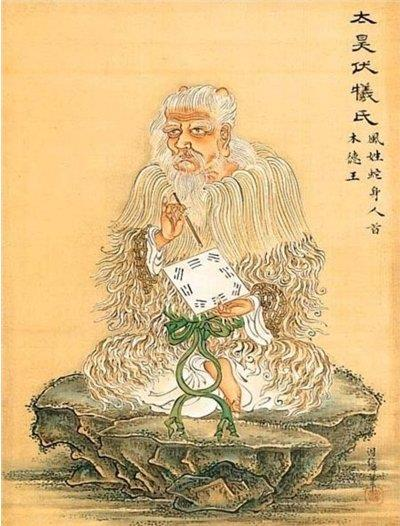
태호복희씨는 5,600년 전 사람으로, 배달의 5세 태우의 환웅의 막내아들입니다. ‘크게 밝다’는 뜻의 태호와 ‘밝은 해’란 뜻의 복희로 그 이름이 천지 광명사상을 담고 있습니다. 복희씨는 백두산에서 삼신상제님께 천제를 올린 후 천하(송화강)에서 용마의 등에 그려진 상을 보고 하도를 그려 인류 역사상 최초로 가장 논리적이고 합리적인 수의 체계를 세웠습니다. 종이 한 장에 다 그려지는 이 도표 하나에서 음양오행 원리가 나오고, 공간과 시간의 순환 원리가 나온 것입니다.
복희씨는 또한 천지의 음과 양을 3수의 원리로 변화시켜 건 ,태, 리, 진, 손, 감, 간, 곤, 팔괘를 그어 주역의 기초를 닦았습니다. 이로써 인간이 천지 시공간의 변화법칙을 체계적으로 이해 할 수 있는 길이 열리게 되었습니다. 또한 복희씨는 그물을 만들어 물고기 잡는 법을 알아내고, 야생 동물을 잡아 제물로 삼기도 하였으며, 혼인 제도를 정하고, 구침鉤針과 금슬琴瑟을 만들어 삶의 편리를 도모하였습니다. 복희씨는 한 마디로 동양철학의 아버지요 인류 문명의 창시자인 것입니다.
중국에선 이분을 인문지조로 받들고 있습니다. 동방 신시문명을 놓고 본다면, 복희씨가 중원 땅에 파종을 했고, 신농씨가 이종을 하였습니다.
중국에서는 경농과 의학의 아버지라 불리는 신농씨를 염제라 부릅니다. 염제 신농은 나무로 보습과 쟁기, 호미를 만들고 지력 있는 땅에 씨를 뿌리고 나무를 심고 채소를 재배하였습니다. 그러므로 신농씨는 경농의 시조요 동서의학사의 원조입니다. 또한 시장을 개설하여 천하의 백성과 재보가 모여들어 교역이 이뤄지게 함으로써 도시 문명과 산업을 일으킨 주인공입니다. 신농씨가 세운 나라는 후손인 유망까지 모두 8대에 걸쳐 530년 동안 이어졌습니다.
배달은 14세 자오지천황(치우천황)이 백두산의 신시에서 대륙의 청구로 도읍을 옮김으로써 역사의 전환점을 맞이하였습니다. 재위 초기, 신농국이 유망에 이르러 쇠퇴의 길을 걷는 것을 본 치우천황은 서방으로 출정하여 지금의 산동성, 강소성, 안휘성을 배달의 영토로 흡수하였습니다.
그런데 그 틈을 타서 서토 지역의 일개 제후였던 헌원이 치우천황을 밀어내고 동북아의 천자가 되고자 모반을 꾀하였습니다. 이때 치우천황은 법력이 고강하여 큰 안개를 잘 지었기 때문에 헌원은 매전 참패를 당하였습니다. 이에 헌원은 천황의 ‘안개 술법’에 대항하기 위해 방향을 일정하게 가리키는 지남거를 만들어 싸웠습니다. 천황의 장우 치우비가 급히 공격하려다가 진중에서 죽자, 천황이 비석박격기를 만들어 하늘이 뒤덮이도록 큰 돌을 쏘아 올려 헌원군을 초토와 시켰습니다. 10년 동안 73회의 접전을 치른 끝에 헌원이 천황에게 항복하였습니다.
그 후 넓어진 강역을 다스리기 위해 도읍을 백두산 신시에서 서토에 가까운 청구(현 대릉하 유역)로 옮김으로써 치우천황의 전성기이자 배달의 전성기인 청구 시대를 열게 되었습니다. 4,700년 전 요서를 넘어 산동성과 더 멀리 탁록까지 진출하여 광활한 영토를 개척한 치우천황은 이름만 들어도 간담이 서늘해질 정도로 법력과 위용을 떨친 한 민족의 성웅으로 한민족은 물론 중국 백성들까지 숭배하고 추앙하였습니다.
중국 진.한 때에는 백성들이 해마다 10월에 치우천황에게 제사를 지냈는데, 그때마다 반드시 ‘붉은 기운’이 천황의 능에서 하늘로 뻗쳤다고 합니다. 이 붉은 기운을 동방 배달족과 한족 백성들이 치우기라 불렀습니다. 이러한 내용은 규원사화, 삼국사기 등 국내 사서뿐 아니라, 사기-천관서, 사기집해 등 중국 기록에도 나타납니다.
중국 백성뿐 아니라 중국 황제들도 치우천황을 숭상하였습니다. 한 고조 유방은 치우천황의 전각을 지어 제사를 지낸 뒤 군사를 일으켜, 진의 수도 함양을 평정하였습니다. 초패왕 항우와 5년간 싸워 마침내 천하를 얻어 제위에 오른 뒤에는 장안에 치우 사당을 짓고 치우천황을 더욱 돈독히 공경하였습니다.
요컨대 태호복희씨, 염제신농씨, 치우천황 이 세분은 동방 문명의 중심축을 세운 위대한 성인 제왕입니다. 이 세분이 출현한 배달 시대는, 삼신의 세 가지 신성 가운데 문명을 꽃피우는 ‘교화신의 신성이 발현된 때였습니다. 그리하여 인간의 삶을 편리하게 하고 인간을 교화시키는 역학, 천문, 의술, 농경술 분야가 크게 발전하였습니다.
——————-
The nation of Baedal, which originated in Sinsi on Mount Baekdu, gradually outgrew its city-state structure to become a major power in Northeast Asia. This transformation owed much to the profound contributions of three great sage kings: Taeho Bokhui, Yeomje Shinnong, and Chiwoo emperor.
Taeho Bokhui: The Father of Eastern Philosophy and Human Civilization
Taeho Bokhui lived about 5,600 years ago and was the youngest son of the fifth Hwanung of Baedal, Taewooei. His name, Taeho (“Great Brightness”) and Bokhui (“Radiant Sun”), embodies the philosophy of heavenly and earthly enlightenment. After offering a heavenly ritual to Samsin Sangje on Mount Baekdu, he observed the symbols on the back of a dragon horse in Chungha (present-day Songhua River) and created the Hado, laying the foundation for humanity’s first logical and systematic numerical framework. From this simple diagram, the principles of Yin-Yang and the Five Elements, as well as the cyclical nature of space and time, were derived.
Bokhui also extended the principles of Yin and Yang into the triadic structure, creating the Eight Trigrams—Geon, Tae, Ri, Jin, Son, Gam, Gan, and Gon—establishing the basis for the I Ching (Book of Changes). This enabled humanity to systematically understand the laws of change in the universe and space-time.
He also invented fishing nets, enabling people to catch fish, and tools for hunting wild animals to be used as offerings. He formalized marriage systems and developed conveniences such as needles and stringed instruments (geomungo and gayageum). In essence, Bokhui was the father of Eastern philosophy and a pioneer of human civilization.
In China, Bokhui is revered as the “ancestor of humanity.” Considering the context of Eastern Sinsi civilization, it can be said that Bokhui sowed the seeds in the central plains, while Shinnong tended the fields.
Yeomje Shinnong: The Founder of Agriculture and Medicine
In China, Yeomje Shinnong is often referred to as the father of agriculture and medicine. Shinnong crafted farming tools such as plows, hoes, and rakes from wood, sowed seeds in fertile soil, planted trees, and cultivated vegetables. He is credited as the progenitor of agriculture and the pioneer of both Eastern and Western medical traditions.
Shinnong also established marketplaces where people from across the land gathered to trade goods, thereby advancing urban civilization and industry. His nation, founded in Baedal, lasted for eight generations and 530 years, extending to his descendant Yumang.
Chiwoo emperor: The Hero-King of Baedal
The 14th ruler of Baedal, Chiwoo emperor, marked a pivotal era in history by relocating the capital from Sinsi on Mount Baekdu to Cheonggu (present-day Dalinghe Basin). Early in his reign, he observed the decline of Shinnong’s nation under Yumang and launched an expedition westward, incorporating present-day Shandong, Jiangsu, and Anhui provinces into Baedal’s territory.
However, during this period, a regional lord named Hwanwon from the Western lands rebelled, aspiring to overthrow Chiwoo and become the ruler of Northeast Asia. Chiwoo, famed for his mastery of fog-based warfare, decisively defeated Hwanwon in successive battles. To counter Chiwoo’s fog tactics, Hwanwon devised a directional cart, but Chiwoo responded by developing a stone projectile launcher, devastating Hwanwon’s forces.
Over ten years and 73 battles, Hwanwon ultimately surrendered to Chiwoo. Following his victory, Chiwoo expanded Baedal’s territory even further, moving the capital from Sinsi to Cheonggu, closer to the Western lands. This ushered in the Cheonggu era, marking the height of Chiwoo’s reign and Baedal’s golden age.
About 4,700 years ago, Chiwoo led Baedal beyond Liaoxi into Shandong Province and as far as Takrok, solidifying vast territories. Known for his legal acumen and formidable presence, Chiwoo became a revered figure among both the Korean and Chinese peoples. His legacy is celebrated as one of the great heroes of Korean history.
During the Qin and Han dynasties in China, annual rituals were held in October to honor Chiwoo, where a “red energy” was said to emanate from his tomb into the sky. This phenomenon was called “Chiwoogi” by the Baedal and Han peoples. Such accounts are documented in Korean texts like Gyuwonsahwa and Samguk Sagi, as well as Chinese texts like Records of the Grand Historian (Tian Guan Shu) and Shiji Zhijie.
Even Chinese emperors revered Chiwoo. Liu Bang, the founding emperor of the Han Dynasty, built a shrine for Chiwoo and performed rituals before launching his campaign, ultimately conquering the Qin capital Xianyang. After winning the throne following a prolonged struggle with Xiang Yu, Liu Bang constructed another shrine for Chiwoo in Chang’an, deepening his reverence.
The Legacy of Three Sage Kings
Taeho Bokhui, Yeomje Shinnong, and Chiwoo emperor were pivotal figures who established the core of Eastern civilization. Their era, the Baedal period, witnessed the flowering of the divine virtue of Gyo-hwasin (the spirit of enlightenment) among the three sacred principles of Samsin. This led to significant advancements in fields such as cosmology, astronomy, medicine, and agriculture, making life more convenient and fostering human enlightenment.