독일의 식물학자 유스투스 폰 리비히는 “식물의 성장에 필요한 필수 영양소 중에 성장을 좌우하는 것은 넘치는 요소가 아니라, 가장 부족한 요소”라고 했다.
기업의 성장도 마찬가지이다. 10개 중 9개를 잘 해도 1개가 부족하면 일이 어렵게 된다. 사람들은 별로 대수롭지 않게 여기는 그 한가지 부족요인이 기업의 성장을 방해할 수 있는 것이다.
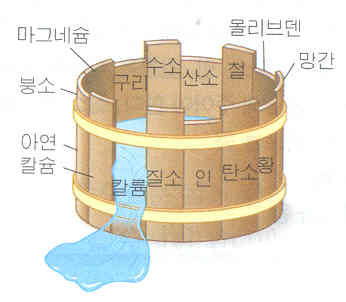
환경분석을 통해 전략방향을 결정하는 가장 보편적인 방법인 SWOT 분석에서도, 통제할 수 없는 외부환경인 기회와 위협에 대해, 내부적으로 통제할 수 있는 강점을 강화하고 약점을 보완해야만 하는 이유이다.
그러나 약점을 보강하는 것이 리비히의 부족한 요소를 채우는 것이지만, 기업은 자신의 약점을 잘 모르고 있거나, 알아도 인정하지 않거나, 또는 일부러 모른채 숨길려고 하는 경향이 있다. 그것이 곧 리비히의 최소율의 법칙이 작용하는 순간일 것이다.
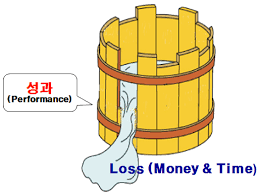
노자는 <도덕경>에서 “천하난사 필작어이(天下難事 必作於易)”라 하며 다음과 같은 말을 하였다.
“세상의 어려운 일은 모두 쉬운 일에서 비롯되고, 세상의 큰일은 반드시 작은 일에서 시작된다 (天下難事 必作於易 天下大事 必作於細).”
뭐든 작은 일에 소홀한 것이 큰 일이 될 수가 없는 이치이다. 그리고 이처럼 실행력도 작은 일에서 시작되어, 작은 실행에 대한 성공 체험이 큰 성공을 이끌어 나갈 수 있는 것이다. 그래서 기업을 경영하는데 있어서 중요한 것은 한방의 큰 홈런보다, 작은 안타를 자주 여러 번 치는게 중요하다.
그러나 처음 일을 시작할 때는 “조금 만 더…” 하는 마음에, 스스로 야근도 하고 특근도 하며 열정을 불태우지만, 어느 정도 성과를 이룬 다음부터는 그 “조금만 더…”가 무척 실행하기 어려운 일이 되어버린다. 그리하여 초심을 잊은 자의 여유로움은 언젠가 엄청 큰 리스크가 되어 부메랑처럼 돌아올 수도 있다.
이 또한 작은 일에 소홀하게 된 결과이다. 리비히의 최소율의 법칙은 항상 우리 주변에 도사리고 있다가, 이렇게 한순간 소홀해질 때 기회를 봐서 튀어 나온다. 성장을 저해하는 부족요소들은 지금의 삼성전자처럼 사실 가장 잘 나갈 때 소홀한 결과의 소치일 것이다.
초심일 때든 후심일 때든 행동은 언제나 잘게 쪼개어진 영양소처럼 적재적소에 골고루 발휘 되어야만, 강한 실행력의 결과로 나타날 것이다.
——————————
Justus von Liebig, a German botanist, stated that among the essential nutrients required for plant growth, the determinant of growth is not the excessive element, but the element in the shortest supply.
Corporate growth follows the same principle. Even if a company performs nine out of ten tasks well, a deficiency in just one area can impede success. That single underestimated shortfall can hinder business growth.
In the widely adopted SWOT analysis method used to determine strategic direction through environmental assessment, a company must strengthen internal strengths and supplement internal weaknesses to respond to uncontrollable external opportunities and threats.
However, although reinforcing weaknesses fills Liebig’s limiting factor, companies often do not recognize their weaknesses, refuse to acknowledge them even when aware, or deliberately hide them. This is precisely when Liebig’s Law of the Minimum comes into effect.
Laozi in the Tao Te Ching stated, “Difficult tasks under heaven always originate from what is easy, and great tasks under heaven always begin from what is small.”
Neglecting small matters makes achieving great outcomes impossible. Execution also begins from small actions, and success in small executions accumulates into large achievements. Thus, in corporate management, consistent small hits matter more than one big home run.
In the beginning of a task, driven by the mindset of “just a little more,” people willingly work late and on weekends, burning with passion. Yet once a certain level of success is attained, that same “just a little more” becomes difficult to execute. Complacency born from forgetting one’s initial mindset can eventually return as a significant risk.
This too stems from neglecting small matters. Liebig’s Law of the Minimum always lurks around us, emerging when we allow even a moment of carelessness. The elements that hinder growth, as seen even in a leading company like Samsung Electronics, likely arise from lapses that occur precisely when performance is at its peak.
Whether at the beginning or later stages, actions must always be executed in finely segmented units like nutrients distributed appropriately at the right place. Only then does strong execution capability manifest as tangible results.