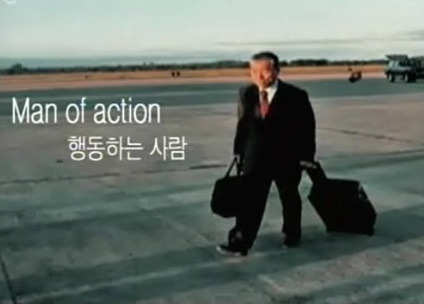
내가 즐겨보는 EBS의 지식채널e에서 행동하는 사람(Man of Action)이라는 제목으로 방영된 내용이 감동으로 다가온 바가 있어, 이 글에 소개하고자 한다.
2006년 5월 22일, 스위스 제네바에서 중년의 한국인 남자가 숨을 거둔다. 그는 남태평양 작은 섬 사모아, 나환자촌의 한 동양인 의사로 ‘아시아의 슈바이처’라고 불리었다.
그는 WHO본부 예방백신국에서 소아마비 발생률을 현격히 낮춘 담당 국장으로, Scientific American지에선 그를 ‘백신의 황제’라고 칭하기도 했다. 그리고 2003년, 한국에선 잘 알려지지 않았던 그가 WHO 사무총장에 당선되었는데, 한국인 최초의 UN기구 수장이었다.
“내가 처음에 WHO에 취업한 것은 월급이나 여러 가지 조건이 좋아서였다. 숭고한 사상을 가지고 취업한 것은 아니다.”
그가 숭고한 사상 대신 선택한 것은 ‘행동’이었다. 이등석 좌석과 단 두 명의 수행원을 데리고 다니며 1년 중 150일 출장에 30만km를 비행한 그를 사람들은 “Man of Action”이라고 부르기 시작했다.
그리고 취임과 함께 내걸었던 그의 공약은 2005년까지 300만 명의 에이즈 환자에게 치료제를 보급하겠다는 것이었으나, 환자 대부분이 의료체계가 빈약한 아프리카 회원국이었으며, 아직 확보되지 않은 예산으로 직원들은 불가능한 공약이라고 우려를 하였지만, 그는 포기하지 않고 행동으로 보여줬다.
“안 된다고 생각하면 수많은 이유가 있고, 그럴듯한 핑계가 생기지. 과연 옳은 일이고 인류를 위해서 반드시 해야 하는 일인가에 대해서만 고민해야 해.”
우려했던 대로 그는 300만 명 중 200만 명에게는 치료제를 보급하지 못하는 실패를 하였다. 그러나 실패에 대한 그의 생각은 달랐다.
“적어도 실패는 시작하지 않은 것보다 훨씬 큰 결과를 남기는 법이야, 바로 그 점이 중요한 거야.”
그의 실패의 결과는 에이즈 치료제를 지급받은 100만 명과 아프리카 에이즈에 대한 사람들의 관심이 높아졌다는 것이다. WHO 직원 연설 중에서 그는 말했다.
“우리는 옳은 일을 해야 합니다. 올바른 장소에서 해야 하며, 올바른 방법으로 해야 합니다.”
한국인 첫 UN산하기구 수장 – 故 이종욱(1945~2006). 사람들은 그를 이렇게 추억한다. Man of action – 행동하는 사람.
행동의 결과 또한 언제나 단순하다. 다른 말이 필요 없다.
‘성공 또는 실패’
그래도 행동을 하였기 때문에 결과가 있다. 행동하지 못하는 사람의 변명은 실패에 대한 두려움이다. 그러나 용기를 내어 그 두려움의 벽을 넘는다면 그 결과가 무엇이 되었든 간에 나의 생각을 행동으로 옮길 수가 있다. 그리고 설령 실패를 했으면 또 어떤가? 그 실패를 통해 배울 수 있다면 이 또한 고마운 일이 아니겠는가?
“신은 낚싯대를 주셨지만, 미끼를 껴야 되는 것은 당신이다”라는 말이 있다. 결국 행동해야만 모든 것의 시작과 끝이 생기는 것이다.
실행이 곧 결과이다.
행동해야 문제를 찾을 수가 있고, 문제를 찾아야 답을 낼 수 있다.
Execution, 실행에 집중하라.
———————
I was moved by a program I regularly watch on EBS, Knowledge Channel e, titled “Man of Action,” and I want to introduce its content here.
On May 22, 2006, in Geneva, Switzerland, a middle-aged Korean man passed away. He had served as an Asian physician in a leprosy colony on the small South Pacific island of Samoa and was called “Asia’s Schweitzer.”
He was the director at WHO Headquarters’ vaccine prevention division who drastically reduced the incidence of poliomyelitis, and Scientific American even referred to him as “the Emperor of Vaccines.” In 2003, when he was elected Director-General of the WHO—a figure not well known in Korea at the time—he became the first Korean to head a UN-affiliated organization.
“I initially joined WHO because the salary and various conditions were good. I did not join because of a lofty ideology.”
Instead of lofty ideology, he chose “action.” Traveling in economy class with only two aides, flying 300,000 km a year and spending 150 days a year on missions, people began to call him a “Man of Action.”
Upon taking office he pledged to provide antiretroviral treatment to three million people with AIDS by 2005. Most of the patients were in African member states with weak healthcare systems, and the staff—faced with unbudgeted costs—worried that the promise was impossible, but he did not give up and demonstrated through action.
“If you think it can’t be done, you will find countless reasons and plausible excuses. You should only consider whether it is the right thing and whether it is something that must be done for humanity.”
As feared, he failed to provide treatment to two million of the three million people he had targeted. But his view of failure was different.
“At least failure leaves far greater results than not starting at all; that is the important point.”
The outcomes of his failure were that one million people received AIDS treatment and global attention to AIDS in Africa increased. In a speech to WHO staff he said,
“We must do the right thing. We must do it in the right place, and we must do it in the right way.”
The first Korean head of a UN-affiliated organization — the late Dr. Jong-Wook Lee (1945–2006). People remember him this way: Man of Action — a man who acts.
The result of action is always simple. No other words are necessary.
“Success or failure.”
Still, because he acted, there was a result. Those who cannot act make excuses out of fear of failure. But if one summons the courage to overcome the wall of fear, whatever the result may be, one can put thought into action. And if one fails, so what? If one can learn from that failure, is that not something to be grateful for?
There is a saying: “God gave you a fishing rod, but you must bait it yourself.” In the end, only by acting does everything have a beginning and an end.
Execution is the result.
You can only find problems by acting, and you can only find answers by finding problems.
Execution — focus on execution.