

우리는 사람을 여러 방면에서 알게 모르게 평가하게 된다. 굳이 어떤 기업이나 조직에 속해 있지 않아도, 그냥 지나가는 사람이나 동네 이웃을 보아도 은연 중에 그 사람이 ‘태도가 좋다, 안 좋다’라는 표현을 자주 하게 된다.
바른 자세, 인사성, 도덕과 규범을 따르는 행동, 말하는 방식, 평상시의 습관, 일에 임하는 자세, 정신상태 등등…. 그 어디에 가져다 놔도 태도라는 단어는 그냥 말이 맞아 떨어진다. 도대체 태도란 무엇이길래 인간을 표현하는 이 모든 의미들을 다 포함하고 있을까?
한국어사전을 보면 태도(態度)란, ‘몸의 동작이나 몸을 거두는 모양새’라는 뜻과 ‘어떤 사물이나 상황 따위를 대하는 자세’라는 뜻으로 몸과 마음가짐 모두에 적용됨을 알 수 있다.
그런 의미에서 태도는 우리의 정신과 생각에 지대한 영향력을 행사하고, 나아가서는 우리의 행동까지도 지배하는 놀라운 힘을 가지고 있다. 따라서 태도란 사람이 생각을 하는 능력이 되기도 하고, 행동을 하게 하는 원동력이 될 수도 있다.
우리나라 속담에 세 살 버릇 여든까지 간다는 말이 있다. 그만큼 버릇을 고치기가 얼마나 힘든지를 일러주는 말이기도 하지만, 자세히 살펴 보면 세 살이라는 아주 어린 시절부터 이미 습관은 형성된다는 것을 의미하기도 한다.
그리고 그 습관이 만들어지기 바로 전 단계에 태도가 있다. 그래서 태도를 바꾸면 행동이 바뀌고, 행동이 바뀌면 습관이 바뀌어, 결국 여든 살까지 평생을 함께 살아 온 우리의 가장 친한 친구 습관은 우리들 운명을 좌지우지하게 되는 것이다.
우리는 이미 형성된 습관을 바꾸기가 얼마나 힘든 일인지 너무도 잘 안다. 하지만 습관이라는 만성 고질병이 형성되기 전의 태도는, 우리가 마음 먹기에 따라서 좀 더 쉽게 바꿀 수가 있다. 그러니 이제 습관을 바꾸기 전에 먼저 태도를 바꾸는 일부터 해보는 게 좋겠다.
태도는 타고난 성격이나, 자라 온 환경에 매우 큰 영향을 받는다. 우리가 재미 삼아 하는 MBTI나 혈액형 테스트, 별자리점, 주역 등을 보기만 해도, 수많은 세월 동안 통계적으로 모아진 타고난 천성이 주는 사람의 특성들은 상당부분 닮아 있음을 알 수 있다.
하지만 한 날 한 시에 똑같이 태어났어도 어떤 이는 대통령이 되고 어떤 이는 평범한 촌부로 살아 가기도 한다. 이는 같은 운명을 타고났어도 환경이 다르고 성격이 다르다면 분명 태도도 달라졌을 것이고, 그 사람의 미래도 당연히 달라질 수밖에 없다는 것을 입증해 준다.
그래서 지금이라도 늦지 않았다. 우리가 태도를 바르게 통제하여, 배워야 할 바람직한 태도와 버려야 할 잘못된 태도를 정확히 구분 짓고, 잘못된 성격, 행동과 습관 등을 고쳐 나갈 수만 있다면, 분명 꿈은 한 발자국 우리에게 다가올 것이다.

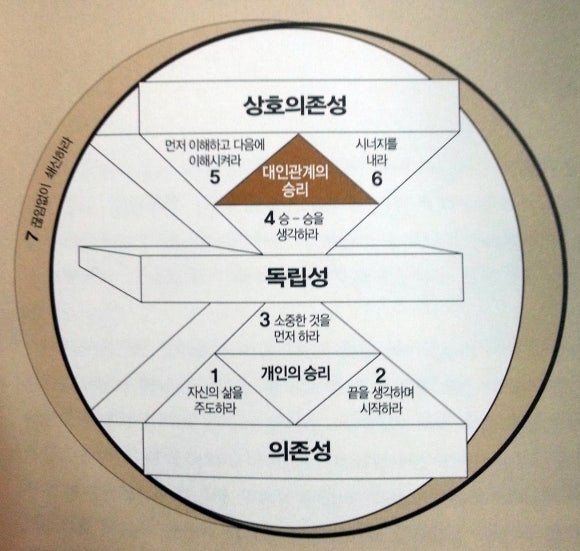
인간은 사회적 동물로서, 혼자 살아갈 수가 없다. 한자의 사람 人은 보이는 그대로 두 사람이 서로 기대어 의지하는 모습이다. 이 말은 사람은 누구나 서로가 의지하는 상호의존성을 통해 인간관계가 형성 된다는 것이다. 여러 사람이 하나로 모인다면, 그 어떤 조직이라 해도 상호 의존성은 인간관계에 대한 관리에서 가장 중요하고 기본적인 것이다.
스티븐 코비의 성공하는 사람의 7가지습관(7 Habits)에 의하면 상호 의존성이란 오직 진정한 개인의 독립성의 기반 위에서만 이루어질 수 있다고 한다.
이 말은 대인관계가 잘 이루어지기 위해서는 먼저 자기관리를 통해, 자식이 부모에게 의존하는 듯한 맹목적인 남에 대한 의존성에서 벗어나, 스스로 심리적, 경제적으로 모두 독립적인 자유를 누릴 수 있는 개인의 승리가 이루어져야 한다는 것이다.
그러면 남도 내게 의존하고 나도 남에게 의존할 수 있는 상부상조의 상호 의존성 속에서 대인관계의 승리가 이루어질 수 있다. 결국 자신을 먼저 관리할 수 있어야, 비로소 대인관계를 관리할 수 있는 것이므로, 무엇보다도 먼저 스스로 태도를 바로잡는 것부터 시작하여 철저한 자기관리가 이루어져야 할 것이다.
지금이라도 늦지 않았다. 우리가 태도를 바르게 통제하여, 배워야 할 바람직한 태도와 버려야 할 잘못된 태도를 정확히 구분 짓고, 잘못된 성격, 행동과 습관 등을 고쳐 나갈 수만 있다면 분명 꿈은 한 발자국 우리에게 다가올 것이다.

—————
We often evaluate people in subtle ways, whether they are strangers, neighbors, or colleagues in a workplace or organization. We find ourselves frequently remarking, “That person has a good attitude,” or “That person has a bad attitude.”
Posture, politeness, adherence to morals and norms, manner of speaking, daily habits, approach to work, mental state—these all fall under the umbrella of “attitude.” But what exactly is attitude, and why does it encompass such a wide range of human traits?
According to the Korean dictionary, attitude (態度) refers both to “the appearance or posture of one’s movements” and “one’s approach to a particular object or situation.” This dual meaning reflects that attitude applies to both physical comportment and mental disposition.
In this sense, attitude wields great influence over our thoughts and mental state and even has the power to shape our actions. Attitude can guide our ability to think and serve as the driving force behind our behavior.
A Korean proverb states, “Old habits die hard.” While this emphasizes how difficult it is to change habits, it also suggests that habits are formed as early as childhood, even as young as three years old.
Before habits are formed, attitude comes first. When we change our attitude, our behavior changes; when our behavior changes, our habits change. Eventually, these habits, which accompany us throughout our lives, hold the power to determine our destiny.
We all know how difficult it is to change entrenched habits. However, the attitudes that precede those habits can be altered with relative ease if we make a conscious effort. Therefore, it is wise to focus on changing our attitude before attempting to change our habits.
Attitude is heavily influenced by our innate temperament and the environment in which we were raised. Popular personality assessments like MBTI, blood type analysis, zodiac readings, and the I Ching reveal common patterns of human characteristics derived from statistical observations over many years.
However, even people born at the same time under seemingly identical circumstances can lead vastly different lives—one becoming a president and another living as a humble farmer. This illustrates that while individuals may share the same fate initially, their environment and temperament influence their attitudes, which in turn shape their futures.
It’s never too late to adjust your attitude. By clearly distinguishing desirable attitudes to adopt from undesirable ones to discard, we can correct flaws in our character, behavior, and habits. Doing so will bring us closer to achieving our dreams.
Attitude and Interpersonal Relationships
As social beings, humans cannot live in isolation. The Chinese character for person, 人, depicts two people leaning on each other, symbolizing the mutual dependence that forms the foundation of human relationships. In any group or organization, interdependence is a fundamental and essential aspect of managing interpersonal relationships.
According to Stephen Covey’s The 7 Habits of Highly Effective People, true interdependence can only be achieved when it is built on a foundation of personal independence.
This means that to foster successful relationships, one must first achieve personal victory by breaking free from blind dependency on others, much like a child relying on their parents. Individuals must gain psychological and financial independence, enabling them to experience true freedom.
Once personal independence is established, a mutually supportive form of interdependence can emerge, where individuals rely on and support one another. Successful relationships stem from this interdependence. Thus, self-management must begin with a deliberate effort to correct one’s attitude and maintain thorough self-discipline.