정직하다는 것이 때론 독야청청(獨也靑靑), 나만 홀로 푸르다고 주장하는 것이 되어서는 안될 것이다. 정직이 강직(剛直)이 되면, 선의의 정직이 자칫 교만하고 잘난 체하는 사람으로 보여 낭패를 당할 수도 있기 때문이다.
초나라의 대부 굴원(屈原)의 #어부사(漁夫辭)를 보면 간신들의 모략으로 쫓겨나 방황하며 강담(江潭)이라는 호숫가를 거닐던 굴원과 그 곳의 한 어부와의 대화가 의미 깊게 나온다.
“그대는 삼려대부(三閭大夫)가 아닙니까? 어인 이유로 여기까지 오게 되었습니까?”
“온 세상이 모두 혼탁한데 나만 홀로 깨끗하고, 뭇사람들이 모두 취해있는데 나만 홀로 깨어 있으니, 그래서 추방을 당했소이다.”
“성인은 일에 얽매이거나 막히지 않고 세상의 변화에 따라 옮기어 나가야 하니, 세상 사람들이 모두 혼탁하면 왜 그 진흙을 휘저어 흙탕물을 일으키지 않으며, 뭇사람들이 모두 취해있으면 왜 그 술 지게미를 먹고 박주(薄酒)를 마시지 않아, 어찌 그리 깊은 생각과 고상한 행동을 하여 스스로 추방을 당하셨소?”
“내 듣기로, 막 머리를 감은 자는 반드시 관(冠)을 털어서 쓰고, 막 목욕을 한 자는 반드시 옷을 털어 입는다 하였소이다. 어찌 몸의 깨끗한 곳에 외물의 지저분한 것을 묻히겠소? 차라리 상강(湘江)에 뛰어들어 물고기의 배속에서 장사를 지낼지언정 어찌 희디흰 순백으로 세속의 먼지를 뒤집어 쓴단 말이요?”
굴원의 말에 어부는 떠나가며 노래를 불렀다 한다.
“창랑(滄浪)의 물 맑으면 내 갓 끈을 씻으리요,
창랑의 물 흐리면 내 발을 씻으리요.”
(창랑지수청혜 가이탁오영 滄浪之水淸兮 可以濯吾纓
창랑지수탁혜 가이탁오족 滄浪之水濁兮 可以濯吾足.)”
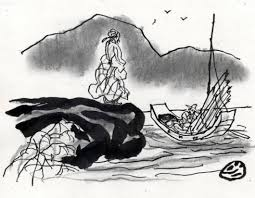
어부는 굴원에게 혼자 잘났다고 독불장군처럼 그러지 말고 시대의 흐름과 주변 환경에 맞게 조금이라도 허리를 굽히고 환경에 적응하여, 조직의 구성원들과 함께 뜻을 계속 펼쳐야 하는 것이 아니냐며 따끔한 충고를 던져 주었다.
이 점은 과거 내가 가장 부족했던 점이 아닌가 싶다. 세라젬화장품 대표이사 시절, 7년간 잘 만들어진 한중국 화장품법인을 지주회사인 세라젬에서 수십명의 인원을 보내 대대적인 감사를 하였다.
이는 나를 내보내기 위한 꼬투리를 잡으려는 의도적인 감사라는 점을 대부분 이미 예견하고 있었다. 의료기기인 본사에서 독립되어, 홀로 좋은 성과를 내고 있는 화장품 회사를 탐내지 않는 임원진이 없었으니 말이다. 하지만 나는 이러한 의료기기 경영진들의 정치싸움에 휘말리지 않으려고 이를 무시하고, 오직 업무에만 집중하여 성과로 평가받으면 인정받을 수 있으리라 믿었다.
그러나 감사결과 꼬투리를 잡지 못한 감사팀은 억울한 죄를 씌우며 나를 옭아맸고, 스스로 나의 죄를 실토하라는 자백서를 쓰도록 강요하였다. 이는 내게 사퇴하라는 무언의 압력으로 받아들여졌지만, 나는 7년동안 고생한 직원들과 이 터전을 차마 버릴 수가 없어서, 꾹 참고 그들의 비위를 맞추려고도 노력했다. 그러나 잘못한 것도 없는 자백서를 차마 쓸 수는 없었다.
그러다 결국 견디지 못하고 타의 반, 자의 반으로 사표를 낼 수밖에 없었는데… 그것이 중국에 넘어가 회사를 만들고 맨땅에 헤딩하듯 회사를 키웠으나, 본사의 권력자에게 아부하지 못한 대가였다.
정직이 강직이 되면 부러지고 물러날 수밖에 없으니, 그 동안 나를 따르고 같은 꿈을 꾸었던 후배들에게 나는 어쩌면 무책임한 짓을 하게 된 것일 수도 있다. 무엇이라도 도에 지나치면 탈이 날 수밖에 없으며, 그로 인해 나를 다치게 하는 일이 나 혼자만이 아니라, 함께 한 모든 이들도 다치게 할 수 있음을 알고 때론 자중하며 참고 기다릴 줄 아는 지혜도 필요한 것이다.

—————
Being honest should not become a claim of moral superiority, as if one were the only upright individual in a corrupt world. When honesty turns into inflexibility, even well-meaning candor can come across as arrogance or self-righteousness, potentially leading to unintended consequences.
In the classic Chinese text The Fisherman’s Song by Qu Yuan, a significant exchange takes place between Qu Yuan, a Chu official exiled due to the schemes of treacherous courtiers, and a fisherman by the lakeshore of Jiangtan.
“Aren’t you the renowned minister of the Three Departments? What brings you here?”
“The whole world is muddied, yet I alone remain clear. The masses are drunk, but I alone am sober. Thus, I have been exiled.”
The fisherman replied with a pointed observation:
“A wise person adapts to the times and avoids entanglements. If the world is muddy, why not stir the waters and let them settle? If the masses are drunk, why not partake in the lees and drink the diluted wine? Why hold such lofty thoughts and act so nobly, only to be cast out?”
Qu Yuan responded resolutely:
“I have heard it said that one who has just washed their hair will dust their crown before wearing it, and one who has just bathed will shake out their garments before donning them. Why should I allow the filth of external impurities to stain my cleansed self? I would rather leap into the Xiang River and let the fish consume my remains than soil my pure white essence with worldly dust.”
To this, the fisherman departed, singing a song:
“If the waters of the Changlang River are clear, I shall wash my cap strings.
If the waters are murky, I shall wash my feet.”
(滄浪之水淸兮 可以濯吾纓
滄浪之水濁兮 可以濯吾足)
Through his song, the fisherman rebuked Qu Yuan for isolating himself in self-righteousness and urged him to bend, adapt to his environment, and work alongside others to pursue shared goals, even amid imperfection.
Reflecting on this, I cannot help but see parallels to my own shortcomings. During my tenure as CEO of Ceragem Cosmetics, I dedicated seven years to building a successful joint Korean-Chinese cosmetics venture. However, a large-scale audit, orchestrated by the parent company to scrutinize the business, soon revealed itself as a politically motivated maneuver to find fault with me.
Being an independent and high-performing entity, our company became the target of jealousy and political scheming from the leadership of the medical device division at headquarters. Though I was aware of this, I chose to ignore the politics, focusing instead on producing results, believing merit would ultimately prevail.
When the audit team failed to uncover any mismanagement, they resorted to fabricating accusations, pressuring me to write a confession admitting fault. The implicit demand was clear: I should step down. Yet, having poured my heart into the company and worked alongside my loyal team, I couldn’t abandon them. I tried to placate my detractors, but I could not bring myself to sign a false confession.
Eventually, the pressure became unbearable, and I was forced to resign—partly by choice, partly by coercion. This experience was a bitter lesson: despite the success we had achieved from the ground up, my refusal to play into the power games of those above me ultimately led to my downfall.
Looking back, my unwavering honesty turned into rigidity, leaving me with no choice but to break or withdraw. Perhaps I failed those who followed me and shared my vision. Extremes of any virtue, even honesty, can bring harm—not only to oneself but also to those who depend on you. It’s essential to temper principle with wisdom, knowing when to yield and when to stand firm. At times, restraint and patience can be the greater strength.