

장자(莊子)의 달생편(達生篇)에는 우리에게 겸손함의 미덕을 가르쳐 주는 목계지덕(木鷄之德)이란 말이 있다. 이는 “망지사목계(望之似木鷄), 기덕전(其德全) – 보기에 흡사 나무로 만든 닭과 같으니, 그 덕이 완전하도다”라는 말에서 유래된 것으로써, 나무 닭과 같은 덕을 키워야 한다는 말로 다음과 같은 일화가 있다.
기원전 8세기 중국 주나라의 선왕(宣王)은 닭싸움을 매우 좋아해서, 어느 날 ‘기성자’라는 투계 조련사에게 최고의 싸움닭을 만들어 달라고 닭을 사서 보냈다.
그리고 열흘이 지나 닭이 훈련이 잘됐는지 왕이 물어보자 기성자는 “닭이 강하긴 하나 교만하여 자신이 최고인줄 안다”며 아직 멀었다고 답하였다. 또 열흘이 지나 왕이 다시 물으니, “교만함은 버렸으나 상대방의 소리와 행동에 너무 쉽게 반응하기 때문에 인내심과 평정심을 길러야 합니다.”라고 말하였다.
참다못한 왕이 다시 또 열흘 뒤에 묻자 기성자는 “조급함은 버렸으나 눈초리가 너무 공격적이라 눈을 보면 닭의 감정상태가 다 보입니다. 아직은 힘듭니다.”라고 말했다.
마침내 40일째가 되던 날 기성자는 상대방이 아무리 소리를 지르고 위협해도 반응하지 않는 것이 완전히 평정심을 찾았다고 하며 왕에게 말했다.
“다른 닭이 아무리 도전해도 동요하지 않으니, 마치 나무로 만든 닭(木鷄)처럼 됐습니다. 이젠 어떤 닭이라도 바라보기만 해도 도망칠 것입니다” 라고 대답하였다.

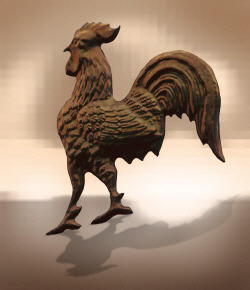
이를 다시 설명하면, 목계지덕형 인재는 교만하여 자신이 최고라고 으스대지 않고, 외부의 상황에 성질 급하게 반응하지 않는 끈기와 인내를 가지고 있으며, 눈초리가 부드럽고 겸손하여 자신을 통제할 줄 아는 내면이 강한 한마디로 외유내강(外柔內强)한 사람이라고 할 수 있겠다.
스스로 겸손할 줄 아는 사람은 참을 수 있으며 많은 정보를 수용할 줄 아는 열린 사람이다. 목계지덕이 있는 사람은 세상에 당할 자가 없을 것이다.
—————-
In the Zhuangzi, specifically the chapter Dàshēng (達生篇), there is a story that teaches us the virtue of humility through the concept of mùjīzhīdé (木鷄之德), or “the virtue of the wooden rooster.” This phrase originates from the saying:
“望之似木鷄,其德全”
(“It appears as if it were a wooden rooster; its virtue is complete.”)
It refers to cultivating a character as steady and composed as a wooden rooster. Here is the story behind the phrase:
In the 8th century BCE, during China’s Zhou dynasty, King Xuan (宣王) had a great fondness for cockfighting. One day, he commissioned a renowned cockfighting trainer named Jichengzi (紀成子) to prepare the ultimate fighting rooster.
After ten days, the king asked if the rooster was ready for battle. Jichengzi replied, “The rooster is strong, but it is still arrogant and thinks too highly of itself. It’s not ready yet.”
Another ten days passed, and the king inquired again. Jichengzi said, “The rooster has shed its arrogance, but it still reacts too easily to the sounds and movements of others. It needs to develop patience and composure.”
Impatient, the king checked again after yet another ten days. This time, Jichengzi explained, “The rooster is no longer impatient, but its gaze is still too aggressive—its emotions can be read just by looking at its eyes. It’s not yet steady enough.”
Finally, on the 40th day, Jichengzi announced, “Now, the rooster is unaffected by noise or threats from others. It has attained complete composure, like a wooden rooster. Other roosters dare not approach it; even a mere glance from this rooster will send them fleeing.”
This tale illustrates the characteristics of a mùjīzhīdé individual: one who is not arrogant or self-important, who does not react impulsively to external events, and who maintains patience and composure. Such a person exudes a calm and humble demeanor while possessing inner strength—a true embodiment of wàiróunèiqiáng (外柔內强), “gentle on the outside, strong on the inside.”
A person who understands humility is patient, open-minded, and receptive to information. Someone who embodies the virtue of the wooden rooster is ultimately invincible, for they are grounded in wisdom and self-control.