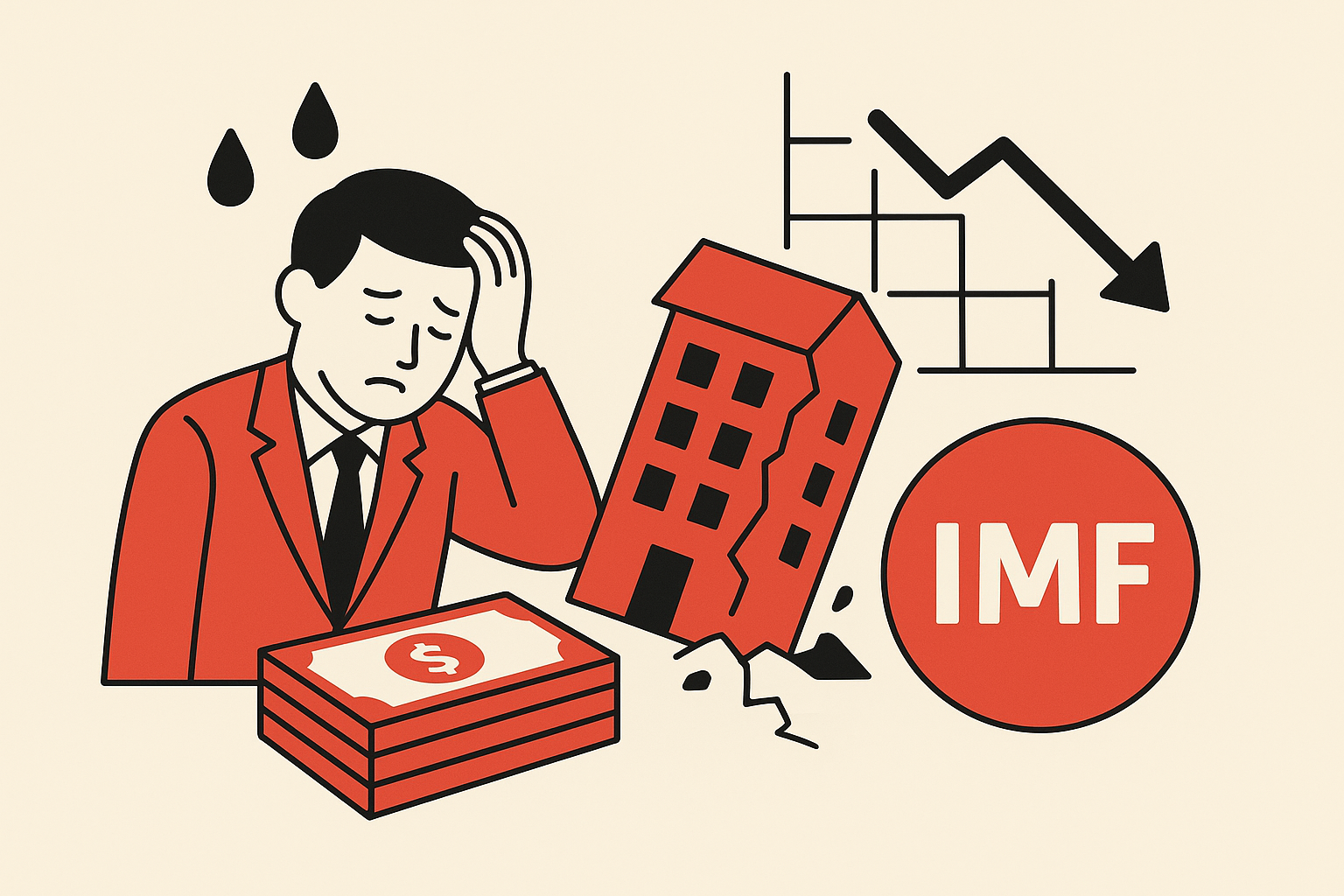
Episode 10 : IMF
1997년 이전까지 우리는 앞만 보고 달려왔습니다. 더 빠르고 효율적인 성장을 위해 많은 부분을 정부에서 조정하였습니다. 외환에 대하여는 외부 상황과 관계없이 고정환율에 가까운 제도를 시행했고, 수출을 통해 외환을 들여오는 것은 괜찮지만 수입을 위해 외환을 내보내는 것에는 매우 인색했고, 해외의 투자자들이 국내산업이나 부동산 등에 투자하는 것은 거의 원천적으로 봉쇄하는 정책을 썼습니다. 수출장려와 수입규제, 외환규제 같은 정책으로 우리 경제는 비약적으로 성장하였지만 외국의 투자자들은 대한민국에 투자할 수 없는 배타적인 시장이었지요.
이런 각종 규제를 통해 비약적으로 성장하던 한국시장의 투자매력에 눈독을 들이던 외국자본은 그 동안 한국이 필요로 하던 자금을 끊임없이 빌려주는 고마운 부자 아저씨 역할을 해 주었습니다.
그런데 1997년 어느 날 갑작스런 해외자금의 이탈로 금고의 외환 이 부족해 지자 환율이 불안해지고, 해외에서 빌어 온 부채의 만기 연장이 거부되고, 이에 따라 급속히 외화자산이 유출되는 악순환이 발생하면서 유동성 위기에 빠진 우리나라를 비롯한 몇몇 신흥공업국가들은 부도 상태에 직면하게 됩니다.
다급해진 우리나라는 돈을 빌려준 채권국을 찾아가 대출의 만기를 연장해 줄 것을 부탁하는 한편, 당장 갚아야 할 돈을 빌리기 위해 일본과 미국 등 여러 우방국에 긴급 자금의 지원을 요청하였습니다.
하지만 우리의 요구는 보기 좋게 거절당하고, 결국 IMF에서 급전으로 대출을 받게 되는 데, IMF는 그 돈을 우리에게 대출해 주며 몇 가지 조건을 걸었습니다.
크게 보면 그 동안 외국자본에 대해 매우 배타적이고 폐쇄적으로 운영하던 대한민국의 자본시장과 금융시장을 완전히 개방하고, 국가가 소유하고 운영하던 알짜배기 공기업을 민영화하며, 그 동안 시장에 많이 풀린 돈을 회수하는 긴축재정을 시행하라는 충격적인 조건들이었습니다.
허리 띠를 졸라매고 앞만 보고 뛰어가다 궁지에 몰리게 된 우리는 눈물을 머금고 이를 수락해야 했고, 대한민국의 시장은 단 한번의 자본 공격에 그렇게 맥없이 항복하고 말았습니다.
이어서 시행된 자본시장의 개방과 기업의 구조조정, 고금리정책 등으로 주식시장의 돈은 썰물처럼 빠져나가고 대출을 통해 부동산에 투자했던 기업과 개인은 유동성에 더한 이자폭탄에 연쇄부도를 당하게 되었지요.
그럼에도 불구하고 외화대출을 상환해야 하는 시기는 자꾸 돌아오고 기축 통화가 아닌 우리나라 돈으로는 해외 부채를 상환할 수 없는 상태에서 더욱 심하게 긴축을 요구하는 IMF에 화가 난 정부는 전 국민을 상대로 “금 모으기 운동”을 펼칩니다. (달러로 상환해야 하는 빚은 우리나라 돈으로는 갚을 수 없지만 금으로는 갚을 수 있는 것이지요.)
다행히 이렇게 모인 금으로 우리는 겨우 유동성 위기를 넘기고 살아 남았지만, 그 동안 국가와 기업, 그리고 개인의 재산이 무너진 자리에 외국의 자본이 들어와 아주 저렴하게 대한민국 자산을 차지하게 되었습니다.
수 십 년간 피 땀 흘려 이룩한 자산을 멀뚱멀뚱 두 눈 뻔히 뜨고 빼앗겨 버린 것이지요. 폭락한 부동산, 폭락한 주식 등 모든 것이 “유동성”이라는 것 하나 때문에 송두리째 남의 입에 들어간 상황이 되고 결국 이전의 대한민국 경제체계는 이렇게 망해버렸습니다.
IMF는 돈을 빌려준 채권국가들과 대한민국 사이에서 머니 게임의 공정한 심판 역할을 자처하며 대한민국의 개발도상국 체계를 3년 만에 지워버리고 이제 금융선진국들과 똑같은 구조의 자본시장과 금융시장을 가진 완전히 다른 나라를 건설하였습니다.
——————-
Episode 10 : IMF
Before 1997, the country had been moving forward without looking back. For faster and more efficient growth, many sectors were tightly controlled by the government. With respect to foreign exchange, a quasi–fixed exchange rate regime was maintained regardless of external conditions, and while earning foreign currency through exports was encouraged, outflows of foreign currency for imports were treated with extreme caution. The government also implemented policies that fundamentally blocked foreign investors from entering domestic industries or acquiring real estate. These export-promotion, import-restriction, and foreign-exchange-control policies enabled rapid economic expansion, but to foreign investors, Korea remained an exclusive and highly closed market.
Foreign capital, which had long coveted the rapidly growing Korean market strengthened by such regulatory frameworks, played the role of generous wealthy lenders who continuously provided the funds Korea required.
However, one day in 1997, a sudden outflow of overseas capital caused foreign-exchange reserves to fall, the exchange rate to become unstable, and rollover of external debt to be denied. This triggered a vicious cycle of rapid capital flight, and Korea—along with several other emerging industrial nations—fell into a liquidity crisis and faced the brink of national default.
Desperate, Korea sought out creditor nations to request extensions on maturing loans, while simultaneously appealing to the United States, Japan, and other allies for emergency financing.
But these requests were categorically rejected, and Korea ultimately obtained an emergency loan from the IMF. In doing so, the IMF imposed several conditions.
In broad terms, those conditions required Korea to fully open its capital markets and financial markets—previously operated in a highly exclusive and protectionist manner—privatize state-owned flagship enterprises, and implement fiscal austerity to withdraw excess liquidity that had been circulating in the market. These were shocking requirements.
Driven into a corner after years of tightening its belt and focusing solely on growth, the nation had no choice but to accept these terms with bitter resignation. Korea’s economic system, built over decades, collapsed helplessly under a single wave of capital attack.
As capital-market liberalization, corporate restructuring, and high-interest-rate policies were implemented, money in the stock market fled like a receding tide. Companies and individuals who had invested in real estate through borrowed funds faced liquidity shortages compounded by soaring interest rates, triggering a chain of bankruptcies.
Nevertheless, repayment deadlines for foreign-currency debt continued to return, and Korea—unable to repay external liabilities with its own non-reserve currency—faced even harsher austerity demands from the IMF. In frustration, the government launched a nationwide “Gold-Collection Campaign,” as gold could be used to repay foreign debt even when Korean won could not.
Fortunately, the gold collected allowed the country to narrowly overcome the liquidity crisis. But in the process, the wealth of the nation, corporations, and individuals had collapsed, and foreign capital moved in to acquire Korean assets at extremely low prices. Hard-earned national assets accumulated over decades were taken away in plain sight. With plummeting real estate values, collapsing stock prices, and the overwhelming burden of liquidity constraints, everything was swallowed by outsiders. Ultimately, the previous Korean economic order collapsed entirely.
The IMF, positioning itself as a neutral referee between creditor nations and Korea in this “money game,” erased Korea’s developing-economy framework within three years and rebuilt the nation as one with capital-market and financial-market structures identical to those of advanced economies.