Episode 2. 지폐의 탄생
어느 날 욕심 많은 이웃나라가 전쟁을 걸어왔어요. 모든 백성들이 행복하게 사는 이 나라가 탐이 났나 봅니다. 왕은 전쟁에 필요한 무기를 만들고, 군인들을 먹이는 데 필요한 돈을 써야 했지만 금방 돈이 떨어지고 말았지요.
이런 상태로는 더 이상 전쟁을 할 수도 없고 항복할 일밖에 남지 않았습니다. 항복을 하면 모든 재산은 이웃나라에게 빼앗기게 되고, 사랑하는 백성들은 모두 적의 노예로 살 수밖에 없겠지요. 걱정으로 매일매일 뜬 눈으로 밤을 지새던 왕은 그 나라의 제일 부자에게 돈을 빌리기로 했지요.
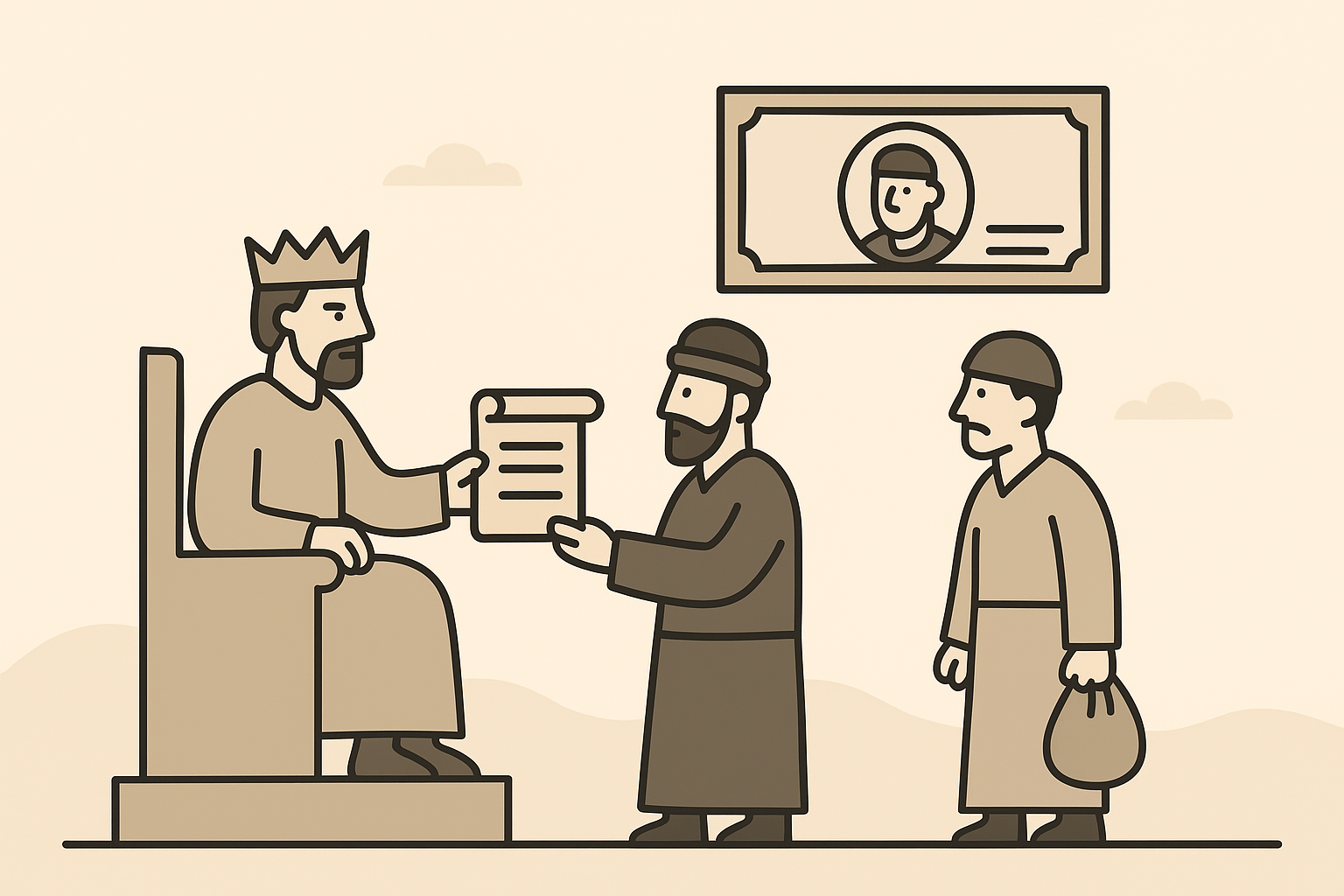
왕은 부자에게 자초지종을 설명하고 나중에 이기면 큰 보상을 해 주기로 했습니다. 그리고 “이 나라의 왕인 짐은 우리 나라 제일 부자에게 백만 금을 빌린다.”라고 쓰여 진 차용증서를 주고 돈을 빌립니다.
그리고 그 돈으로 전쟁을 해서 결국 이겼어요. 전쟁을 일으킨 이웃 나라로부터 당연히 막대한 배상금을 받게 되었고 왕은 돈을 빌려준 기특한 부자에게 빌린 돈의 열 배를 갚아주려고 했지요.
그런데 부자가 큰일이 난 거에요. 돈을 열 배로 주신다니 즐겁기는 하지만, 그 무거운 황금을 들고 가는 것도 그렇고 그의 집에는 마땅히 보관할 곳도 없었기 때문이에요. 그래서 왕께 이렇게 제안합니다.
“그러지 마시고 전하, 제게 주실 금을 그냥 왕궁에 보관하고 그저 제게는 그 금액만큼 황금보관증을 써 주시면 어떨까요? 금액을 적고 전하께서 서명을 해 주시면 제가 필요할 때마다 그 보관증을 드리고 왕궁에서 조금씩 돈을 찾았으면 좋겠습니다. 제 편의를 좀 봐 주시지요.”
그 말을 들은 왕은 흔쾌히 그렇게 하기로 했고 부자에게 돈을 주는 대신 황금보관증을 쓰고는 왕의 도장인 옥새를 꽝 찍어 주었습니다. 황금보관증을 받은 부자는 이후로 무거운 황금을 들고 다니지 않고 필요한 것이 있으면 왕이 써 준 황금보관증을 사용했어요.
부자에게서 황금대신 왕이 써준 황금보관증을 받은 상인들은 처음에는 반신반의했지만 그걸 들고 왕궁에 가면 틀림없이 황금을 주는지라 완전히 황금보관증을 믿고 거래하게 되었습니다.
이제 사람들은 더 이상 무거운 황금을 들고 다니지 않게 되고, 대신 왕이 서명한 황금보관증으로 거래를 하게 되었어요. 그게 훨씬 쓰기 편했겠지요.
그러다 보니 보관증을 들고 궁전에 와서 황금으로 바꾸어달라고 하는 사람도 점점 줄어들게 되고 언젠가부터 사람들은 무거운 황금을 들고 다니는 대신 아예 황금보관증만 사용하게 되었어요.
왕이 써 준 황금보관증에 적힌 금액과 왕의 서명이 금의 가치를 대신하게 된 것이지요. 우리가 쓰는 지금의 지폐에도 이처럼 금액과 함께 한국은행장의 도장이 찍혀있습니다.
이제 돈은 가치가 있는 금에서 가치가 없는 종이 조각으로 대체되었지만 사람들은 그 종이에 찍힌 서명만으로도 금의 가치가 있음을 믿어 줌으로써 더 편리하게 돈을 사용하게 되었답니다.
——————
The Emergence of Paper Money: Origins of Banknotes and the Evolution of Monetary Trust
One day, a greedy neighboring nation launched a war. Coveting a land where all citizens lived in prosperity, it sought to seize it through force. The king needed money to produce weapons and feed soldiers, but his supply of gold quickly ran out.
Under such conditions, continuing the war was impossible, and surrender seemed inevitable. Surrender would mean losing all wealth to the invaders and condemning beloved citizens to slavery. Troubled by this, the king turned to the wealthiest man in the land for a loan.
The king explained the crisis and promised a great reward if victory was achieved. He issued a promissory note stating, “I, the king of this nation, borrow one million in gold from the wealthiest man of the realm,” and secured the loan. With this money, the kingdom fought and ultimately won the war. Afterward, the defeated nation paid substantial reparations, and the king intended to repay the wealthy lender ten times the borrowed amount.
The wealthy man, however, faced a significant problem. Receiving tenfold repayment in heavy gold was burdensome, and he lacked adequate storage space at home. Thus he made a proposal to the king:
“Instead of giving me all that gold physically, Your Majesty, why not store it in the royal treasury and issue a gold deposit certificate for the equivalent amount? If you write down the sum and sign it, I can redeem portions of the gold whenever necessary by presenting the certificate at the palace. It would be far more convenient.”
The king readily agreed. Instead of handing over the gold, he issued a detailed gold deposit certificate and stamped it with the royal seal. From then on, the wealthy man no longer carried heavy gold; whenever he needed something, he used the king’s deposit certificate.
Merchants who received these certificates in place of actual gold were initially skeptical, but they became fully convinced upon confirming that the palace would reliably exchange them for gold. As trust grew, people stopped carrying physical gold altogether and relied solely on these certificates for transactions. Over time, fewer people visited the palace to redeem gold, and eventually the certificates themselves became the primary medium of exchange.
The amount written on the king’s gold certificate and the royal signature came to substitute for the intrinsic value of gold. Likewise, today’s banknotes bear a denomination and the signature of the Governor of the Bank of Korea, signifying state-backed value.
Money thus transitioned from inherently valuable metal to inherently valueless paper, yet the public accepted the paper’s worth because they trusted the authority behind the signature. Through that trust, people adopted a far more convenient system of monetary exchange.