다음 날 아침, 신대리는 술이 덜 깬 눈으로 간신히 출근하였지만, 정신만은 또렸했다. 어제 밤에 이팀장 책상 위에 올려놓은 보고서를 술김에 확 치워버리고 싶은 생각도 들었지만, 너무 늦게 출근하는 바람에 어쩔 수가 없었다. 그는 이내 마음을 비우고, 자리에 쓰러지듯 앉아 졸린 눈을 간신히 뜨며 컴퓨터를 켰다. 오늘따라 유난히 컴퓨터 부팅되는 시간이 더욱 길게 느껴졌다.
기다리는 동안 문득 어제 강소장과 나눴던 얘기가 생생하게 생각났다. 아무리 생각해도 함께 있는 박성준이 문제였다. 분명, 혼자 하기 벅찬 일이지만, 박성준에게 도움을 청할 일은 아니라 생각됐다. 게다가 별도의 일을 수행한다는 것이 자칫 이팀장 귀에 들어갈 수 없도록 해야 하기 때문에 철저하게 위장도 해야 한다. 문득 지난 번에 읽었던 손자병법의 군쟁(軍爭)편에 나왔던 구절이 생각나자 그는 얼른 책을 꺼내 다시 한번 찾아봤다.
‘선지우직지계자승(先知迂直之計者勝)’, 즉 가까운 길을 돌아가는 법을 먼저 아는 자가 승리를 거둔다는 말이었다. 그리고 이와 더불어 ‘이우위직, 이환위리(以迂爲直, 以患爲利)’란 말도 생각났다. 해석하면 돌아가는 길이 곧장 가는 길이 되어, 나의 어려움을 유리함으로 만들어야 한다는 뜻이었다. 그러므로 그 길은 돌기도 하고, 미끼를 던져 적을 유인하기도 하고, 상대방보다 늦게 출발하고서도 먼저 도달하기도 하는 것이다(후인발 선인지, 後人發 先人至).
이와 더불어 병법36계에는 “암도진창(暗渡陳倉), 즉 암암리에 진창으로 건너간다’라는 말도 있다. 한(漢)의 명장 한신(韓信)이 관중을 쳐들어갈 때, 파괴된 도로를 수리하는 것처럼 하고 우회하여 진창(陳倉)을 진격하여 적의 허를 찔렀다는 고사에서 나온 말이다.
병법서에 나오는 글귀들을 보며 신대리는 생각했다.
‘흠~ 맞아. 적에게 어리숙하게 보이거나, 조금 더 돌아감으로써 승리를 쟁취할 수 있다는 말은 단순히 적을 속이는 방법으로만 보기에는 어려움이 많은 전략이야. 허허실실, 그러면서도 적극적인 대처 방안을 만들어야만 해. 세상은 때로는 곧장 가는 것보다 돌아가는 것이 유리할 때도 있는 거야. 처음에는 돌아가는 것이 무척 어렵고 힘들지만 절대 포기하지 말고 원칙에 맞게 로직에 따라 우직하게 가다 보면, 나중에 내가 바라던 이상의 좋은 결과를 가져올 수 있을 거야. 바로 눈 앞의 화를 참고 장기적인 안목으로 승부하자.’
결국 유비가 조조에게 바보 행세를 했듯이, 신대리도 이팀장에게 권태로운 모습을 계속 보여주기 위해서는 같이 일하는 후배인 박성준조차도 속여야 한다고 생각했다. 그렇게 그는 술 냄새 푹푹 풍기며 간신히 생각을 정리하며 오전을 보내고 나서야 제대로 일을 시작할 수가 있었다. 그는 그 동안 보고서에 포함했던 신 브랜드인 아미앙떼의 현황과 안테나 매장을 통한 고객 의견을 따로 뽑아 정리하는 일부터 시작했다.
신대리는 아미앙떼 출시 후 6개월 간의 매출실적과 실판매 실적을 먼저 분석해보고, 투여된 예산에 대한 비용 효율 및 광고, 판촉 효과에 대해서도 정리 하였다. 안테나 매장의 의견은 다소 편중된 경향이 있어서 좀 더 넓은 조사가 필요함을 느꼈으나, 일단 지금까지 조사 결과만으로도 아미앙떼의 문제점들이 충분히 정리되어 있다고 생각했다.
그는 1년 간 시장조사 업무를 통해 환경분석이 모든 전략의 가장 기초가 된다는 것을 몸소 체험하였다. 특히, 치열한 경쟁이 벌어지는 성숙시장에 접어든 화장품 산업에서는 무엇 하나라도 남들과 다르기 위해서 먼저 경쟁사를 더욱 깊이 들여다 봐야 한다는 확고한 신념이 생겼다. 그래서 그는 더욱 시장에서 아미앙떼의 현 위치를 객관적으로 파악하기 위해 노력해왔던 것이다.
어제 마신 술이 과해서인지 갑자기 피로가 몰려왔다. 오늘은 일단 여기까지 하자는 생각에 책상을 정리하며 문득 창 밖을 내다봤다. 먼저 퇴근한다며, 월말 보고서도 어제 다 끝냈는데 뭘 이리 열심히 하시냐는 박성준의 질문에, 그냥 보고서를 다시 정리해보는 거라며 별거 아닌 냥 넘겨버리고 업무에 몰두한지 얼마 안된 것 같았는데, 벌써 8시가 넘어 밖은 무척 어두웠다. 그는 얼른 집으로 달려가고 싶은 마음뿐이었다.
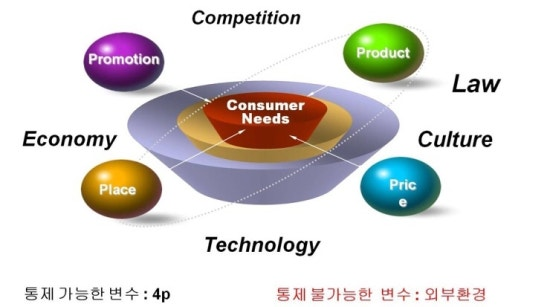
다음 날 신대리는 오전 업무를 간단히 정리하고 바로 늘상 해왔던 것처럼 안테나 매장에 방문하겠다는 핑계로 회사를 나와, 회사와 떨어진 조용한 까페를 찾았다. 그는 어제 만든 아미앙떼 현황 및 문제점 리스트를 가지고, 앞으로 이를 입증하기 위해 보강해야 할 자료를 수집할 목록을 만들기 시작했다. 그는 일단 4P 측면에서 접근해 보기 시작했다.
제품(Product) 측면에서 보면 이미 브랜드별 판매실적 분석 및 제품에 대한 고객 반응 등이 그 동안 잘 정리되어 있는 상황이었다. 문제는 다음의 대안이 없다는 것이었다. 아미앙떼가 아니라면, 과연 어떤 후속 브랜드를 출시해야 할지에 대한 답이 없었다. 결국 고객이 원하는 제품을 찾아내기 위해서는 아미앙떼가 잘 안된 근본 원인에 대해 좀 더 자세히 조사해볼 필요가 있었다. 먼저 문제를 알아야 해결 방법이 나오기 때문이다.
가격(Price)과 유통(Place) 측면에서는 한 가지만 빼고 더 이상의 조사가 필요 없을 정도로 가장 잘되어 있었다. 장려금 및 할증 정책에 의한 가격할인은 갈수록 심해지고 신유통으로 부각되고 있는 브랜드숍과 홈쇼핑 등 때문에 대리점과 화장품전문점 체제의 붕괴는 더욱 가속화되어 가고 있어, 이를 직영영업소가 대체하고 있지만 이도 오래 가지 못할 상황이다. 결국 직영영업소에 투여된 고정비를 보다 효율적으로 사용하기 위해서는 이를 브랜드숍의 직영점으로 전환한 후, 프랜차이즈 매장으로 확대하는 방법뿐이 없으며, 이에 가장 필수적인 것이 선발업체와 다른 차별화된 컨셉이 필요하다는 생각뿐이었다. 그런데 과연 이런 살을 도려내는 듯 치열한 경쟁에서 우리만의 자리를 차지할 수 있을까? 신대리의 고민은 항상 여기서 갈 길을 잃고 헤매고 있었다.
결론적으로 지금 가장 중요한 것은 역시 아미앙떼를 대체할 새로운 컨셉의 브랜드를 단순히 제품만 출시하는 것이 아니라, 더 늦기 전에 브랜드숍으로 진출하기 위한 준비를 해야 한다는 것이다. 브랜드숍으로 진출하려면 적어도 300품목의 제품이 필요하므로, 이를 다 개발하려면 기간이 1년은 넘게 걸릴 것이다. 따라서 제품 개발기간 동안에 매장의 이미지를 잡고 인테리어 도안을 완료하여 제품 출시와 동시에 매장을 오픈하면 될 것이다. 게다가 이미 직영영업소가 10개나 있으니, 영업소의 전세금을 빼서 목 좋은 대로변으로 나오면 10개는 다 못해도 그 절반인 5개의 직영매장을 오픈할 수 있을 것 같았다.
문제는 지금 조사를 통해 제안을 하고 회사에서 바로 받아들여서 개발을 시도한다 해도 내후년에나 제품이 나올 수 있을텐데, 과연 그 때까지 기존의 체제가 잘 버틸 수 있을지 걱정이었다. 그래도 다행히 회사는 오랜 전통있는 화장품회사로써, 오래되었지만 꾸준히 팔리는 스테디 셀러 (Steady Seller) 브랜드도 여럿 있기 때문에, 비록 어려워지겠지만 2~3년은 충분히 버틸 수 있을 것이라는 생각도 들었다.
기본적인 조사 방향을 잡자 그는 바로 간단한 설문들을 만들어, 11월 안테나매장 설문에 현재의 문제점과 새로운 컨셉에 대한 고객의 니즈에 대한 내용을 살짝 포함시킨 한편, 그 밖에 브랜드숍에 대해서는 직/간접적으로 별도로 직접 발로 뛰며 조사할 수밖에 없었다. 조사가 깊이 들어가자면 혼자서 하기에 그리 쉽지 않은 일이었지만, 그래도 최근 1년 동안 전문적으로 시장조사로에 인맥을 다져온 신대리는, 지방과 수도권 외곽 지역은 영업 동료들을 활용하거나 전화 통화로 조사를 하는 한편, 서울 시내 주요 상권에서는 직접 방문을 통해 조사를 할 수 있었다.
그렇게 하여 조사는 12월 초가 되어서야 마칠 수가 있었다. 무려 한 달 반이 걸렸다. 아무리 요령이 생겼다고 하나, 혼자서 하다 보니 시간이 걸릴 수 밖에 없었다. 신대리는 그 동안의 조사도 문제였지만, 앞으로 보고서를 작성하는 것도 걱정이라 생각했다. 그러나 이미 만족할만한 데이터를 어느 정도 확보했다는 생각에 그는 마음이 뿌듯하였다. 이런 감정은 과거 전 직장에서 매출이 부진한 작은 가전대리점들을 상대로 매출을 급성장시켰을 때 느꼈던 희열감과 닮아 있었다.
————
The Next Morning, Assistant Manager Shin arrived at work with bleary eyes, still under the influence of the previous night’s drinks, but his mind was sharp. He briefly considered snatching back the report he’d left on Team Leader Lee’s desk in his drunken haze but found himself out of options after showing up late. Resigned to his situation, he collapsed into his chair, squinting at the screen as his computer booted up. For some reason, the loading process seemed to drag on endlessly today.
As he waited, the conversation he had with Manager Kang the night before vividly resurfaced in his mind. No matter how he looked at it, the problem was Park Sung-jun. While the task was too much for him to handle alone, he firmly believed asking for Park’s help was not an option. Moreover, he needed to ensure that the separate work he was planning wouldn’t reach Team Leader Lee’s ears, requiring a meticulously disguised approach. Suddenly, a passage from the Art of War came to mind, prompting him to pull out the book and revisit it.
“Those who understand the strategy of taking a circuitous route will achieve victory (先知迂直之計者勝).”
Alongside it, he remembered another maxim: “Use the roundabout route as the shortcut, and turn adversity into opportunity (以迂爲直, 以患爲利).” The idea was to make the indirect path the quickest route and turn challenges into advantages. Accordingly, such an approach might involve detours, baiting the enemy, or departing later only to arrive first (後人發 先人至). Another strategy, “暗渡陳倉” (crossing to Chencang in secrecy), also came to mind. It refers to the tale of General Han Xin of the Han Dynasty, who pretended to repair a destroyed road but instead bypassed it to launch a surprise attack on Chencang, catching his enemy off guard.
Reflecting on these strategies, Assistant Manager Shin mused:
“Hmm, that’s right. Appearing foolish or taking a longer route to achieve victory isn’t simply about deceiving the enemy. It requires meticulous planning and proactive measures. Sometimes, the indirect path is more advantageous than heading straight. While taking the long way might be arduous at first, sticking to principles and logic can eventually lead to a greater outcome than expected. I need to endure short-term setbacks and play the long game.”
Ultimately, just as Liu Bei feigned ignorance to outwit Cao Cao, Shin decided he had to maintain his air of indifference toward Team Leader Lee, even if it meant deceiving his colleague, Park Sung-jun. With this resolve, he trudged through the morning with a lingering scent of alcohol, organizing his thoughts bit by bit before finally managing to start his tasks properly.
His first order of business was revisiting the data he had included in the report, focusing on the status of Amiante, the new brand, and summarizing customer feedback gathered from antenna shops.
Reviewing Amiante Assistant Manager Shin began by analyzing sales performance and actual sales results for Amiante over the past six months. He then assessed the cost-effectiveness of the budget allocated to its marketing and promotional efforts. While feedback from antenna shops showed some biases, he concluded that the current data sufficiently outlined Amiante’s key issues.
Through his year of market research experience, Shin had come to understand that environmental analysis forms the foundation of any strategy. In the fiercely competitive and mature cosmetics market, distinguishing oneself from the competition required deeper scrutiny of rival brands—a belief he held firmly. This conviction fueled his efforts to objectively evaluate Amiante’s position in the market.
Perhaps due to the excessive drinking from the night before, fatigue suddenly overwhelmed him. Deciding to wrap things up for the day, he tidied his desk and gazed out the window. When his junior colleague Park Sung-jun asked why he was working so late despite finishing the monthly report yesterday, Shin casually dismissed the question, saying he was just reorganizing the report. Immersed in his work, time had flown; it was already past 8 p.m., and the darkened cityscape beckoned him home.
The following morning, Shin quickly wrapped up his routine tasks and, as usual, used the pretext of visiting antenna shops to leave the office. Seeking a quiet place, he found a secluded café and began drafting a list of supplementary data he needed to validate the issues he had identified with Amiante. Approaching the matter through the lens of the 4Ps, he started outlining his plan.
From the Product perspective, he noted that detailed analyses of sales performance by brand and customer feedback were already well-documented. However, there was no clear follow-up plan. Without Amiante, what kind of successor brand should the company launch? To answer this, he felt it was necessary to investigate the root causes of Amiante’s underperformance in greater depth—understanding the problem was key to finding a solution.
As for Price and Place, these areas were well-researched, with one notable exception. Discounts driven by incentive policies and surcharges had worsened over time, while the rise of new distribution channels, such as brand shops and home shopping, had accelerated the collapse of traditional distributor and cosmetics store networks. While the company’s directly operated sales offices had stepped in to fill the gap, this approach was unsustainable. Shin believed the only viable solution was to transform these offices into directly operated brand shops and later expand into franchise stores. However, this required a distinct and differentiated concept to stand out in the cutthroat competition. Could they truly carve out a unique space in such a fiercely competitive market? Shin often found himself stuck at this crossroads.
In conclusion, Shin determined that the most pressing task was not simply launching a new brand to replace Amiante but preparing for an entry into brand shops. With at least 300 products required for such a move, product development would take over a year. During this time, the company could establish store images and finalize interior designs so that stores could open simultaneously with product launches. With 10 direct sales offices already in place, even converting half of them into direct brand shops could provide a strong starting point.
The pressing concern, however, was whether the existing system could hold out until the new products were ready. Fortunately, the company’s long-standing reputation and several steady-selling brands offered some reassurance that it could endure for two to three years.
After finalizing his research direction, Shin created simple survey questions, subtly embedding queries about current issues and new concepts into the November antenna shop survey. For brand shops, he planned to conduct additional direct and indirect investigations, leveraging his network of contacts from a year of market research. While conducting such extensive research alone was no easy feat, Shin utilized his sales colleagues for remote regions and phone interviews for suburban areas, reserving personal visits for major districts in Seoul.
By early December, Shin finally completed the research, a process that took nearly six weeks. Despite his growing efficiency, working solo inevitably required more time. While the upcoming report-writing phase loomed large, Shin felt a sense of satisfaction knowing he had gathered sufficient data. The feeling reminded him of the exhilaration he once experienced at his previous job, helping struggling small appliance dealerships achieve rapid sales growth.
It was a sense of triumph born from effort and perseverance.