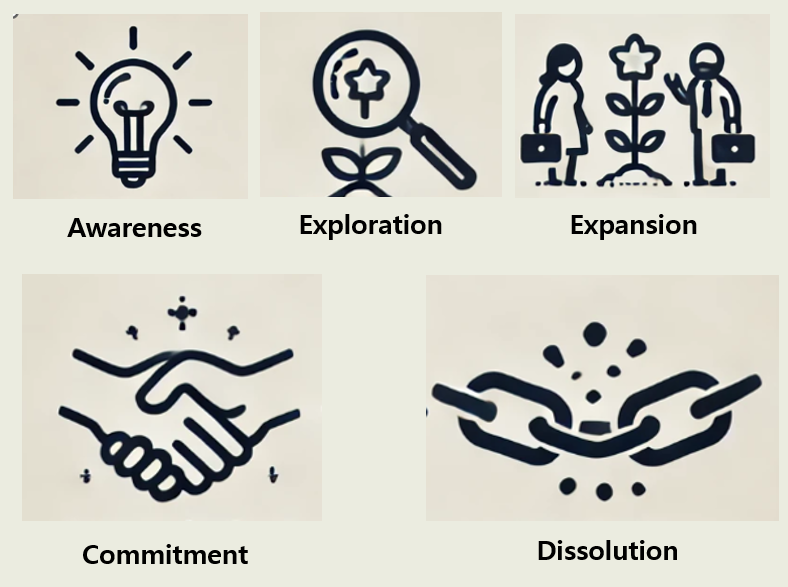
다음과 같은 구매자와 판매자라는 B2B 관계의 형성 및 발전과정을 이해할 필요가 있다.
① 인식(Awareness) 단계: 구매자나 판매자가 서로에 대해 알게 되는 과정이다. 이 단계에서는 자주 보는 미디어나, 박람회, 바이어 매칭, 인적 소개 등으로 브랜드에 대해 구매자가 인식하게 된다.
② 탐색(Exploration) 단계: 잠재적 거래 파트너가 의무, 혜택, 부담 그리고 거래의 가능성을 검토하는 단계이다. 이 단계에서는 시험 구매가 이루어질 수 있으며, 매우 취약한 단계로서 최소한의 투자와 상호 의존성으로 인해 관계가 쉽게 종료될 수 있다. 이때 쌍방은 거래조건 뿐만 아니라, 당사자의 기회주의적 성향이 어느 정도인지도 파악할 필요가 있다.
③ 확장(Expansion) 단계: 관계가 발전하고, 더 많은 커뮤니케이션과 거래가 활발히 일어나며, 양 당사자 사이의 신뢰가 증가한다. 이 단계에서는 서로가 서로에게 더 많은 것을 제공하며, 거래관계가 심화된다.
④ 몰입(Commitment) 단계: 관계가 공고해지고, 양 당사자는 거래 관계를 지속할 것을 약속한다. 이 단계에서는 서로가 다른 거래 파트너를 찾지 않고, 지속적인 관계 유지에 중점을 둔다.
⑤ 해지(Dissolution) 단계: 거래 관계가 종료되며, 이는 다양한 이유로 인해 발생할 수 있다. 계약의 해지는 종종 복잡하고 비용이 많이 들어서, 심적으로도 무척 힘든 과정이 이루어질 수도 있다.
따라서 B2B 관계가 종료되지 않고, 우호적인 관계를 유지하기 위해선 서로에 대한 신뢰(Trust)와 몰입(Commitment)이 필요하다. 이를 통해 쌍방간 거래비용은 감소하고 성공적인 수익을 달성할 수 있는 장기적인 관계가 지속될 것이다. 신뢰와 몰입에는 지속적인 소통(Communication)이 필수적이다. 적시에 정보를 공유하고 투명한 의사소통을 하면 할수록, 오해를 방지하고 각 쌍방의 기대와 요구를 명확히 인식하여, 문제를 해결하고 궁극적으로 만족도를 높이는데 기여하게 된다.
특히 거래 당사자들은 가치를 공유해야 한다. 공유된 가치(Shared Values)는 더 깊은 연결감을 느끼게 하고, 협력적이며 지속 가능한 관계를 발전시키기 위해 더 큰 노력을 기울이게 하는 중요한 요소이다. 이런 과정을 통해 파트너들은 신뢰관계가 확립되고, 서로에 대한 믿음을 바탕으로 위험을 감수하고 투자를 확대할 용의가 생긴다. 신뢰는 불확실성을 감소시키고, 상호 작용의 질을 향상시켜서 최종적으로 몰입의 관계를 형성하게 한다.
몰입은 관계를 지속적으로 유지하려는 파트너에 대한 약속을 의미한다. 몰입이 강할수록 거래 당사자들은 관계를 지속시키기 위해 필요한 자원을 투입하는데 주저하지 않는다. 장기적인 몰입은 거래관계에서 더 나은 협력, 높은 성과 및 갈등 해결에 기여하며, 이는 결국 양측의 이익 증대로 이어진다. 또한 이를 통해 파트너들은 장기적인 이익(Long-term Benefits)을 인식하고 전환 비용(Switching Cost)을 고려할 때, 현재 관계를 유지하는 것이 더 이득이라고 판단하게 된다. 이는 단기적 이익을 추구하는 대신 장기적인 관점에서 서로에게 가치를 제공하려는 의지를 강화하게 한다.
구체적인 방법으로, 고품질의 정보를 수집하고 공유하는 것은 관계를 강화하고 지속 가능하게 만드는 주요 요소 중 하나이다. 거래 당사자들은 시장동향, 소비자 행동의 변화, 그리고 경쟁 환경에 대한 깊은 이해를 통해, 고객의 요구와 우선순위를 정확하게 파악할 수 있어야 한다. 이러한 정보는 고객과의 관계에서 발생할 수 있는 문제를 예방하고, 고객이 필요로 하는 솔루션을 제공함으로써 만족도를 높이는데 기여한다.
또한 수출하는 판매자 측에서 바이어 고객 데이터베이스를 체계적으로 관리하면, 고객의 구매 패턴, 선호도 및 피드백을 추적할 수 있다. 이 데이터는 개별 고객 맞춤형 수출전략을 수립하는데 사용되며, 고객의 지속적인 참여를 유도하고, 브랜드 충성도를 증진시킬 수 있다. 또한, 실시간으로 고객의 반응을 분석하여 즉시 피드백을 제공하고 필요한 조치를 취할 수 있다. 이는 고객이 자신의 요구가 신속하게 해결되고 있다고 느끼게 하여 신뢰감을 증가시키는 데 기여한다.
마지막으로 정기적인 고객 만족도 조사를 통해 서비스의 질을 지속적으로 평가하고 개선할 수 있다. 고객의 의견을 적극적으로 반영하는 것은 고객 중심의 비즈니스 접근 방식을 강화하고, 고객이 자신의 의견이 중요하게 다루어진다고 느끼게 하는 중요한 방법이다. 이러한 과정은 고객과의 긴밀한 관계를 유지하고, 고객의 지속적인 비즈니스를 확보하는 데 결정적인 역할을 한다.
이와 같이, B2B 상의 판매자와 구매자 관계는 단순한 거래를 넘어서 서로에 대한 깊은 이해와 존중을 바탕으로 구축되어야 한다. 지속적인 정보 교환과 피드백의 활용은 관계를 강화하고, 양측 모두에게 가치를 제공하는 지속 가능한 관계를 형성하는 데 필수적이다.
———————————-
Understanding the Formation and Development Process of B2B Relationships between Buyers and Sellers
1. Awareness Stage:
This is the process where buyers and sellers become aware of each other. At this stage, buyers recognize the brand through frequently seen media, trade shows, buyer matching, and personal introductions.
2. Exploration Stage:
Potential trading partners review the obligations, benefits, burdens, and possibilities of the transaction. Trial purchases may occur, and this is a very fragile stage due to minimal investment and mutual dependence, making it easy for the relationship to end. At this point, both parties need to understand not only the transaction conditions but also the opportunistic tendencies of each other.
3. Expansion Stage:
The relationship develops, more communication and transactions occur, and trust between both parties increases. In this stage, both parties provide more to each other, deepening the transaction relationship.
4. Commitment Stage:
The relationship becomes solid, and both parties promise to continue the transaction relationship. At this stage, both parties focus on maintaining a continuous relationship without seeking other trading partners.
5. Dissolution Stage:
The transaction relationship ends, which can happen for various reasons. Terminating the contract is often complex and costly, involving significant emotional strain.
To prevent the end of B2B relationships and maintain a friendly relationship, trust and commitment between the parties are essential. This reduces transaction costs and sustains a long-term relationship that achieves successful profits. Continuous communication is crucial for trust and commitment. Sharing information in a timely and transparent manner helps prevent misunderstandings, clarifies each party’s expectations and demands, resolves issues, and ultimately enhances satisfaction.
It is crucial for trading parties to share values. Shared values foster a deeper sense of connection and greater efforts to develop a cooperative and sustainable relationship. Through this process, partners establish trust, leading to a willingness to take risks and expand investments based on mutual belief. Trust reduces uncertainty, enhances the quality of interactions, and ultimately forms a committed relationship.
Commitment means a promise to continually maintain the relationship. The stronger the commitment, the less hesitant the parties are to invest resources necessary for maintaining the relationship. Long-term commitment contributes to better cooperation, higher performance, and conflict resolution, ultimately leading to increased benefits for both sides. By recognizing long-term benefits and considering switching costs, partners determine that maintaining the current relationship is more advantageous. This reinforces the willingness to provide value to each other from a long-term perspective rather than pursuing short-term gains.
Collecting and sharing high-quality information is one of the key factors in strengthening and sustaining relationships. Trading parties need to accurately understand customer needs and priorities through a deep understanding of market trends, changes in consumer behavior, and the competitive environment. This information helps prevent problems in customer relationships and contribute to customer satisfaction by providing needed solutions.
Systematic management of buyer customer databases by exporting sellers allows tracking of customer purchase patterns, preferences, and feedback. This data is used to develop tailored export strategies for individual customers, encouraging continued customer engagement and enhancing brand loyalty. Additionally, analyzing customer responses in real-time and providing immediate feedback helps increase trust by making customers feel their needs are promptly addressed.
Conducting regular customer satisfaction surveys allows continuous evaluation and improvement of service quality. Actively reflecting customer opinions strengthens a customer-centric business approach and makes customers feel their opinions are valued. This process plays a decisive role in maintaining close relationships with customers and securing ongoing business.
In summary, B2B relationships between sellers and buyers should be built on a deep understanding and respect for each other, beyond simple transactions. Continuous information exchange and feedback utilization are essential for strengthening relationships and forming sustainable relationships that provide value to both sides.