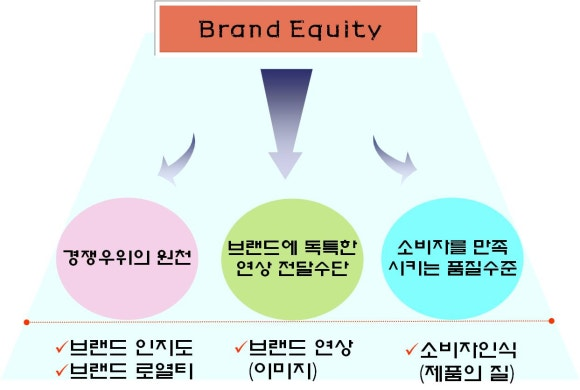
나는 브랜드 자산의 중요 네가지 요인인 브랜드 인지도와 지각된 품질에 대해서 얘기했지만, 이에 영향을 주는 브랜드 연상 이미지(Brand Association Image)와 그 결과라 할 수 있는 브랜드 충성도 또한 매우 중요한 브랜드 전략의 핵심요소이다.
이 네 가지를 포함한 브랜드 자산은 회사 전반적인 경영의 일환이어야만 된다. 따라서 브랜드 육성은 마케팅 부서나 판매부서의 하위 업무가 아닌 CEO가 중시해야 하는 본연의 업무 중 하나가 되어야 한다.
CEO가 브랜드 비전과 프로그램을 강조하고 진두지휘하는 것은 강력한 파워 브랜드를 보유한 회사들의 공통된 모습이다. 브랜드 전략을 마케팅 부서의 영역에서 전사적 차원으로 끌어올릴 때 브랜드라는 무형자산이 창출될 확률이 그만큼 높아진다고 할 수 있다.
그리고 이렇게 되기 위해서, 브랜드 자산의 핵심요소는 변함없는 일관성을 유지하는 것이다. 시장은 달라질 수 있으나, 브랜드가 변해서는 안 된다. 브랜드에 새로운 경향을 입힐 수는 있으나, 소비자 마인드 속에 자리 잡고 있는 브랜드의 본질적 성격을 바꾸어서는 안 된다. 내가 저가로 포지셔닝 했던 브랜드를 고가로 리포지셔닝(Repositioning) 하고 싶어하는 CEO에게 호박이 수박 될 수 없다고 말했던 사례를 명심해야 한다.
또한 브랜드 자산을 구축하기 위해서는 일관된 원칙으로 꾸준히 마케팅에 투자하여 브랜드 파워를 형성해야 한다. 따라서 경영실적 악화 등의 이유로 원칙 없이 광고비를 삭감하는 것은 장기적인 브랜드 자산 구축의 관점에서 볼 때 바람직하지 못한 행태이다. 코카콜라의 피에르 페라리는 “광고는 기차를 끌고 가는 엔진과 같다. 기차에서 엔진을 떼어내면 당분간은 그대로 굴러갈지 모르지만, 결국 기차는 멈추게 된다”고 말했다.
반면, 브랜드 자산은 구축하기도 힘들지만 일순간에 무너질 수도 있다. 부도, 감원, 공장의 화재나 폭발사고, 소비자 불매운동 등 경영활동 과정에서 직면하는 위기는 대다수가 브랜드 위기로 연결된다. 따라서 위기 대처능력에 따라 브랜드의 운명이 바뀐 사례는 비일비재하다.
따라서 기업은 정치, 경제, 사회, 문화적 환경에 맞는 브랜드 위기관리 매뉴얼을 만들어서 행동요령과 절차를 숙지하고, 평소에 브랜드 위기대처 능력을 배양하여 유사시에 대비해야 한다.
또한 “기업이 만드는 것은 제품이지만 고객이 구매하는 것은 브랜드이다.” 라는 말처럼, 브랜드는 소비자와 제품 간에 관계를 형성시켜 주므로, 기업은 고객 네트워크를 조직하고 브랜드에 열광하는 층을 전략적으로 관리해야 한다.
최근에는 다양한 SNS 마케팅을 통해 커뮤니티를 쉽게 형성하여, 효율적이면서도 효과적인 입소문 마케팅과 고객 충성도를 관리하는 것도 큰 비용과 노력이 들지 않으므로, 소홀하지 말아야 할 것이다.
————————————
Although I have discussed the importance of brand awareness and perceived quality, which are crucial factors of brand equity, brand association image and brand loyalty, which result from these, are also key components of an effective brand strategy.
Brand equity, including these four factors, should be an integral part of overall corporate management. Therefore, brand development should not be a subordinate task of the marketing or sales departments but a fundamental duty that the CEO must prioritize. Companies with powerful brands share the common practice of having their CEOs emphasize and lead brand vision and programs. Elevating brand strategy from the marketing department to the company-wide level significantly increases the likelihood of creating intangible assets known as brands.
To achieve this, the key elements of brand equity must maintain unwavering consistency. While the market may change, the brand should not. Brands can adopt new trends, but they must not alter their essential character in the minds of consumers. This is reminiscent of when I told a CEO, who wanted to reposition a low-priced brand as high-priced, that “a pumpkin cannot become a watermelon.”
Moreover, building brand equity requires consistent investment in marketing to develop brand power. Therefore, cutting advertising expenses without principle, even during periods of poor business performance, is undesirable from the perspective of long-term brand equity building. As Pierre Ferrari of Coca-Cola said, “Advertising is like the engine pulling a train. Removing the engine might allow the train to coast for a while, but eventually, it will come to a stop.”
On the other hand, while brand equity is challenging to build, it can be destroyed in an instant. Crises encountered in business operations, such as bankruptcy, layoffs, factory fires or explosions, and consumer boycotts, often lead to brand crises. There are numerous examples where the fate of a brand has changed based on its crisis response capabilities.
Therefore, companies must develop brand crisis management manuals suitable for the political, economic, social, and cultural environment, familiarizing themselves with the guidelines and procedures, and continually enhancing their brand crisis response capabilities to be prepared for any emergencies.
Additionally, as the saying goes, “Companies create products, but customers buy brands.” Brands form relationships between consumers and products, so companies should organize customer networks and strategically manage brand enthusiasts.
Recently, various SNS marketing strategies have made it easier to form communities, allowing for efficient and effective word-of-mouth marketing and customer loyalty management without significant cost and effort. Thus, this should not be overlooked.