본격적으로 코칭을 어떻게 해야 하는 지 알아보겠다. 먼저 코칭에는 기본적인 철학이 있다. 즉, 모든 사람에게는 무한한 가능성이 있고, 그 사람에게 필요한 해답은 모두 그 사람 내부에 있으므로 스스로 해답을 찾기 위해서는 파트너가 필요하다는 것이다. 결국 리더는 팀원에게 해답을 주고 가르치는 사람이 아니라, 팀원이 스스로 문제를 파악하고 해답을 찾을 수 있도록 도와주는 파트너가 되어야 한다.
물론 팀원 모두에게 그렇게 할 수는 없다. 개개인의 역량 정도에 따라 접근법도 달라야 할 것이다. 아무 것도 모르는 신입사원이라면 스스로 문제가 무엇인지도 깨닳는 것조차 힘들 테니 말이다. 따라서 다음과 같이 역량에 맞는 순차적인 접근이 필요할 것이다.

또한 업무의 몰입 정도에 따다 다음과 같이 다른 접근을 할 수도 있다.
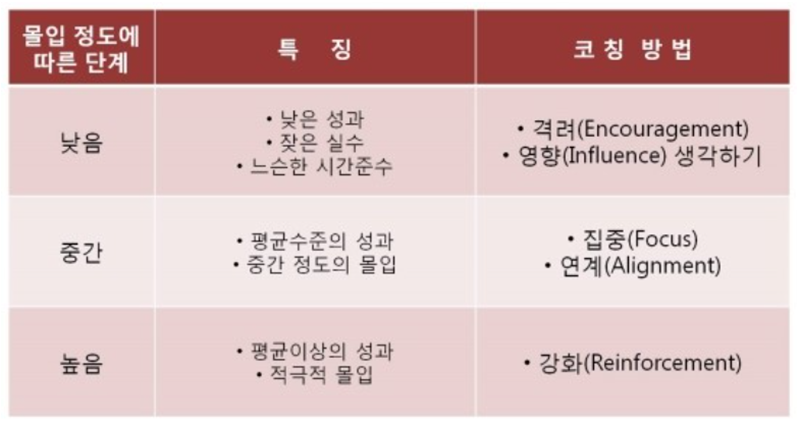
이 밖에도 팀원의 감정이 고조되어 있을 때, 팀원이 적극적으로 일하고 싶어하지 않을 때, 평균적인 업무수행이 지속될 때, 합의한 내용이 잘 지켜지지 않을 때 등, 코칭 대상자의 상황에 따라 리더는 적절하게 코칭을 하여 대응하고 리드해 나가야 한다.

그렇게 하기 위해서 가장 우선되어야 할 것이 적극적 경청이다. 옆의 그림과 같이 한자 들을 청(聽)자를 풀이해 보면, 귀(耳)로 잘 들어주는 사람이 왕(王)으로서, 마음을 기본으로(一心), 눈, 머리, 털, 입, 목, 배, 팔, 손, 손가락, 엉덩이, 발가락, 다리, 등, 허리의 14 부위(十四)를 활용하여, 온몸으로 들어야 한다는 것을 의미한다.
즉, 적극적 경청은 상대방의 입장에 서서 상대방이 말하는 사실적인 내용뿐만 아니라, 상대방의 입장에 서서 이해해 주고, 표면에 주고받는 사실보다 내면에 담긴 의미와 기분을 듣기 위해 노력해야 한다는 것이다. 그리고 상대방의 이야기를 듣고 그 이야기를 내가 어떻게 알아들었는가를 상대에게 확인해 줌으로써, 내가 정확히 듣고 있고 관심을 가지고 있음을 아래와 같이 확인을 통해 표현하는 것이 중요하다.
- 의사 확인하기: 상대의 이야기를 듣고 일반적으로 자기 이야기를 하기보다는 상대가 한 말을 내가 어떻게 들었는가를 확인해 주는 방법으로써, 상대로 하여금 내가 자신의 이야기를 단순히 듣고만 있는 것이 아니라, 이해하고 받아들이고 있다는 것을 알려주는 중요한 수단이다.
- 기분 확인하기: 상대의 이야기를 들으면서 상대의 말속에 담겨있는 기분을 상대의 입장에서 공감하고 받아들이는 일로서 한마디로 공감 수용하기라 할 수 있다.
——————-
Let’s dive into how to effectively coach others. First, it’s important to understand the foundational philosophy behind coaching. The philosophy posits that every person has infinite potential, and the answers they need are already within them. However, they need a partner to help them discover those answers for themselves. In essence, a leader is not someone who provides answers and teaches the team members but rather a partner who helps them identify their problems and find their own solutions.
Of course, this approach cannot be applied uniformly to everyone. The method must be tailored to the individual’s level of competence. For instance, a new employee who knows nothing may struggle to even recognize what the problem is. Therefore, a sequential approach that matches their level of competence is necessary.
Additionally, different approaches can be taken depending on the level of engagement in the task.
Moreover, leaders must adjust their coaching strategies based on the situation of the team member, whether it be when emotions are running high, when the team member is reluctant to work actively, when average performance persists, or when agreed-upon commitments are not being upheld. The leader must coach appropriately, leading and responding to the specific needs of each situation.
To do this effectively, the most important skill is active listening. The Chinese character for listening, 聽 (tīng), offers a symbolic breakdown: a good listener is like a king (王), who listens with his ears (耳) while focusing with his heart (一心), and using all 14 parts of his body, including his eyes, head, mouth, arms, hands, legs, and so on.
In other words, active listening means not only understanding the factual content of what the other person is saying but also standing in their shoes, making an effort to understand the underlying emotions and meanings behind the words. It is crucial to confirm with the speaker how you have understood their message, thereby showing that you are listening accurately and genuinely interested. This confirmation can be expressed in the following ways:
- Clarifying Intent: Instead of immediately responding with your own thoughts after hearing what the other person has said, clarify how you understood their words. This is a vital way to let them know that you are not just hearing them but truly understanding and accepting what they are saying.
- Acknowledging Feelings: As you listen to the other person, acknowledge and empathize with the emotions embedded in their words from their perspective. This is what is meant by empathetic acceptance.