

아래 표는 내가 엑셀로 작성했던 월별 현금흐름표를 약식으로 만든 예시이다. 만약 내년도 사업계획서를 작성한다면, 매출과 손익계획에 근거해서 아래와 같이 예상 자금계획을 작성할 수 있다. 매월 기말시제는 전월에 이월된 ‘기초시제+현금유입-현금유출’로 계산된다. 이 또한 매우 간단한 더하기 빼기 수준의 산수이니까, 어려울 것이 없다.

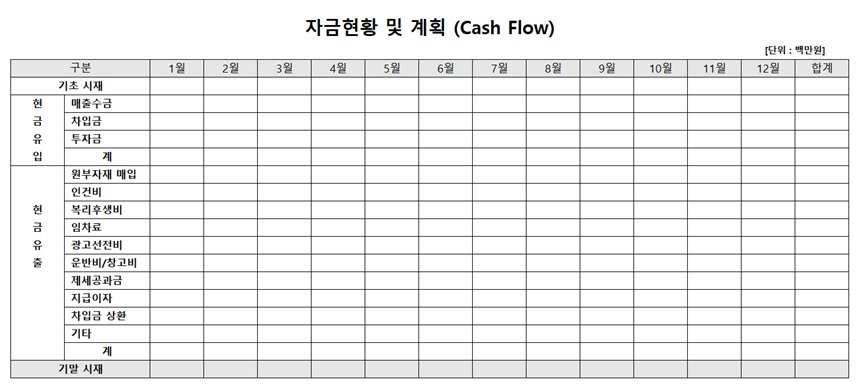
그런데 표를 보면, 손익계산서에는 표시되지 않는 차입금, 투자금, 차입금 상환 등, 현금이 들어오고 나갈 계획도 표시할 수 있다.
또한 손익계산서는 매출이 발생한 기간의 매출실적이 부가세 별도로 표시되지만, 거래선에서 30일 또는 60일 후에 돈을 주는 경우가 있으므로, 현금흐름표에는 수금이 되는 시점의 현금이 표시되어야 하므로, 금액과 시점의 차이가 있다. 제품생산을 위하여 원부자재 매입을 할 경우도 마찬가지다. 거래처에 선금과 잔금을 지급하는 시점이 다르면, 이 또한 돈이 나가는 시점을 구분해서 작성해야 한다.
마지막으로 고가의 설비를 구입했을 경우, 손익계산서에선 설비 구입비용을 한번에 비용처리 하지 않고 수년에 걸쳐 감가상각비로 차감하는데, 감가상각비는 실제로 현금으로 지출이 된 것이 아니므로, 현금흐름표에는 감가상각비를 표시하지 않고, 설비금액 전부를 지출되는 시점에 현금유출로 표시해야 한다.
이렇게 향후 1년의 현금흐름을 월별로 예측해 두고 매월 실제 사용된 금액으로 수정하며 현금흐름을 검토함과 동시에, 앞서 말했던 손익계산서의 3개월 롤링 포케스팅을 통해 자금계획도 매월 3개월 예측으로 보완해 가면, 지금 현금이 얼마나 있고, 언제 어떻게 현금이 들어오고 나갈 지를 미리 예측할 수 있을 것이다.
그리고 이를 통해 현금흐름을 좋게 개선할 수 있는 방안도 찾을 수 있다. 즉, 매출 증대, 원가 절감, 매출채권 축소, 재고자산 적정 보유, 시설 투자 최소화, 불필요 자산 매각, 차입금 증대, 유상 증자 등의 방법을 모색하여, 사업계획 목표를 달성할 수 있는 업무 실행에 차질이 없도록 할 수 있을 것이다.
——————————
The table below is a simplified example of a monthly cash flow statement I created in Excel.
If you were to prepare a business plan for next year, you could create an estimated financial plan based on sales and profit projections, as shown below. The ending balance for each month is calculated as ‘beginning balance + cash inflow – cash outflow’ from the previous month. This is simply addition and subtraction, so it shouldn’t be difficult.
Looking at the table, you can see plans for cash inflows and outflows that don’t appear on the income statement, such as loans, investments, and loan repayments. Also, while the income statement shows sales performance for the period when sales occurred (excluding VAT), customers may pay 30 or 60 days later.
Therefore, the cash flow statement should show the cash at the time of collection, resulting in differences in amounts and timing. The same applies when purchasing raw materials for product manufacturing. If the timing of advance and balance payments to suppliers differs, this should also be recorded separately according to when the money is paid out.
Lastly, when purchasing expensive equipment, the income statement doesn’t expense the entire purchase cost at once but deducts it as depreciation over several years. Since depreciation isn’t an actual cash outflow, it shouldn’t be shown on the cash flow statement. Instead, the entire equipment cost should be recorded as a cash outflow at the time of purchase.
By predicting cash flow for the next year on a monthly basis, updating it with actual amounts used each month, and reviewing cash flow while complementing it with a three-month rolling forecast of the income statement mentioned earlier, you can predict how much cash you currently have and when and how cash will come in and go out.
This allows you to find ways to improve cash flow. In other words, you can explore methods such as increasing sales, reducing costs, decreasing accounts receivable, maintaining appropriate inventory levels, minimizing facility investments, selling unnecessary assets, increasing loans, or issuing new shares to ensure that business plan objectives can be achieved without disruption to operations.