“저자가 개발한 B화장품의 신제품 아이디어 발굴 사례를 통해 보여주는 콘셉트 개발 접근법. 중국 MZ세대를 위한 친환경 및 비건 화장품 개발 과정을 통해 창의적인 화장품 콘셉트 개발 과정의 팁을 얻으세요.”
“A concept development approach demonstrated through the author’s case study of generating new product ideas for B cosmetics. Gain insights into the creative process of developing cosmetic concepts through the development of eco-friendly and vegan cosmetics for the Chinese MZ generation.”
타깃 코스팅이 되었으면, 이제 그 목표원가 수준에 맞는 제품의 아이디어를 찾아야 한다. 이미 앞서 얘기했지만 소비자의 니즈와 원츠를 파악하는 소비자 조사와 경쟁 제품 분석을 기반으로 여러 힌트를 얻을 수 있고, 이를 토대로 직원들과 브레인 스토밍(Brainstorming)을 하던가, 1인 기업이라면 CEO가 인사이트를 가지고 바로 직접 화장품 제품 아이디어를 발굴할 수 있을 것이다. 그러나 다시 한번 강조하는 건 목표원가 내에서 개발하는 것이다.
내가 개발한 B화장품의 경우는 내수보다 중국수출을 타깃으로 하였고, 중국 MZ세대를 겨냥했기 때문에 최신 화장품 트렌드를 앞서가고자 했다. 그래서 기본적으로 바탕을 깔고 간 것이 ‘친환경’과 ‘비건’이었다. 친숙하고 어렵지 않은 성분, 건강하고 자극 없는 성분, 화학적인 유해성분이 없는 천연 화장품은 3년 전엔 새로운 글로벌 트렌드로 부각되는 시점이라서, 트렌드에 앞서가는 중국의 MZ세대에게도 받아들여질 것이라는 결과에 이르렀다.
수년 전부터 화학을 의미하는 ‘케미컬(Chemical)’과 혐오/공포를 뜻하는 ‘포비아(Phobia)’가 합쳐진 ‘케미컬 포비아(화학물질에 대한 공포증)’란 말이 유행할 정도로 생필품이나 먹거리 등에 포함된 각종 화학물질들이 인체에 위협을 가할 것이라는 걱정이 날로 늘어나는 사회적 상황이 대두되었다. 나는 이를 감안해서 화학적 유해성분을 최대한 배제하는 ‘클린 뷰티(Clean Beauty)’와 동물성 원료를 사용하지 않거나 동물실험을 하지 않는다는 ‘비건 화장품’으로 중요한 콘셉트의 바탕을 잡은 것이다.
하지만 중요한 것은 경쟁제품과 차별화될 수 있는 주요 콘셉트였다. 화장품에는 특별한 원료의 기능이 부각되는 기능성 콘셉트가 있거나, 의미 있거나 인상적인 스토리텔링(Storytelling)으로 이야기가 회자되도록 하는 감성적 콘셉트가 필요했다. R&D가 없는 작은 기업에서는 선택의 여지가 없이 주로 차별적 스토리를 포함하는 콘셉트에 집중하는 것처럼, 나도 밤잠을 설치면서 스토리를 만들기 위해 수많은 고민과 인터넷 검색의 시간을 가졌다.
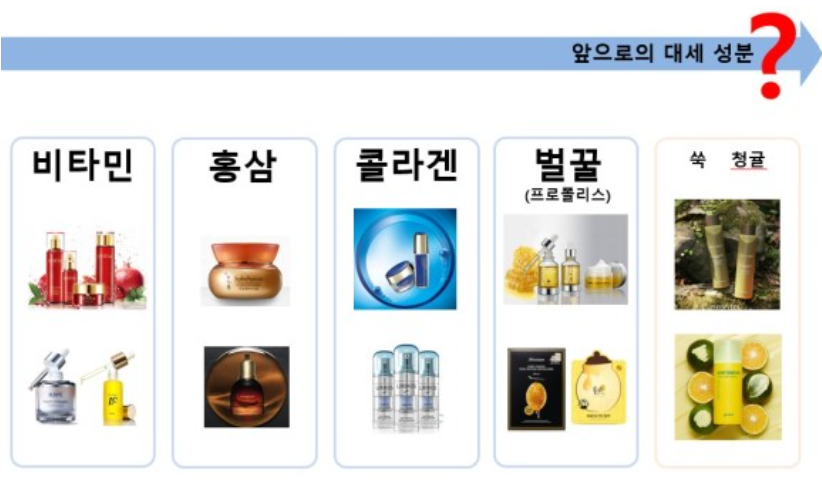
그러다 내가 과거 건강기능식품 전문회사인 종근당건강에서 화장품 총괄임원을 했을 때 직원이 조사했던 자료가 생각났다. 당시 조사에 따르면, 소비자들에게 널리 알려진 건강식품이 화장품 성분으로 연결되었을 때, 화장품 시장에서도 좋게 받아들여진다는 내용이었다. 비타민, 홍삼, 콜라겐, 벌꿀, 약쑥, 유산균 등의 건강식품은 몸에 좋으면서도 쉽고 친숙한 성분이기 때문에, 화장품 성분으로도 잘 받아들여진 것이다.
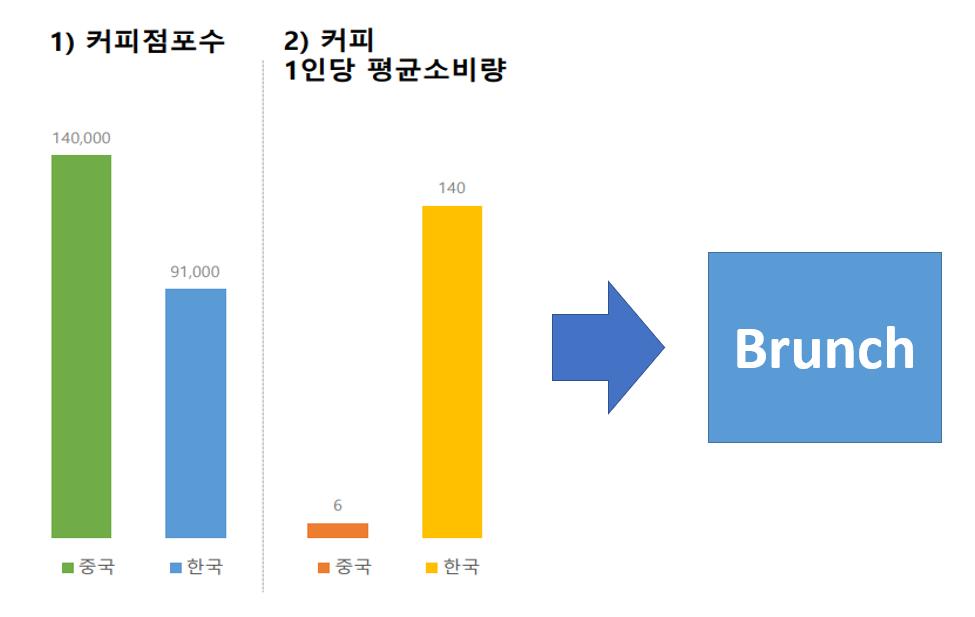
그래서 나는 관점을 바꿔서 먹을 수 있는 음식에 주목하였다. 그런데 마침 한 중국 인터넷 자료에서 중국의 커피숍이 기하급수적으로 늘어나고 있는 자료를 봤다. 주로 차를 마시는 문화가 발전된 중국에서는 과거만 해도 직원들이 항상 텀블러에 차를 가지고 다니며 수시로 마실 정도라서, 괜찮은 커피숍 찾기가 어려웠었다. 그러나 2020년에 내가 중국에 다시 갔을 때만 해도 엄청나게 늘어난 커피숍을 보고 무척 놀랐던 적이 있었다. 그런데 이 보고서에는 중국인의 1인당 커피 평균 소비량이 한국인보다 훨씬 못 미치는데도 불구하고, 커피숍의 수는 이미 한국을 앞질렀다는 것이다. 나는 이 자료에서 앞으로 커피뿐만 아니라 다양한 디저트와 브런치(Brunch)도 크게 증가할 것임을 예측할 수 있었다.
그래서 이에 착안하여 ‘BEAUTY + BRUNCH’의 합성어로 B화장품의 브랜드명(Brand Name)을 만들었다. 느긋하게 일어나 여유롭게 즐기는 건강하고 풍요로운 식사인 브런치처럼, B화장품을 피부에 주는 건강하고 풍요로운 스킨케어 화장품으로 개발 방향을 수립하게 되었다. 그리하여 나는 브런치 카페를 생각하며, B화장품이 먹는 음식처럼 안전하고 균형 잡힌 영양을 공급하고, 유럽식 브런치 메뉴에 있는 다양한 식재료에서 핵심 콘셉트를 추출하기로 결정하였다.
——————————-
Once target costing is set, it’s time to find product ideas that fit the target cost level. As previously discussed, consumer research to understand the needs and wants of customers, as well as analysis of competitive products, can provide numerous hints. Based on this, brainstorming with employees or, for a sole proprietorship, the CEO directly using insights to unearth cosmetic product ideas is possible. However, it’s crucial to emphasize again that development should occur within the target cost.
For the B-cosmetic I developed, the target was set for exports to China rather than domestic sales, aiming at the latest cosmetic trends to appeal to the Chinese MZ generation. Thus, the fundamental concepts were ‘eco-friendly’ and ‘vegan’. Ingredients that are familiar, not complicated, healthy, non-irritating, and devoid of harmful chemicals were the base due to their emergence as a new global trend three years ago, expected to be well-received by the trend-setting MZ generation in China.
The term “Chemical Phobia,” a combination of ‘chemical’ and ‘phobia’, became trendy years ago, reflecting societal concerns about the potential threats of various chemicals in daily necessities and food. Considering this, I based my key concepts on ‘Clean Beauty’, which minimizes chemical components, and ‘Vegan Cosmetics’, which do not use animal-derived ingredients or test on animals.
However, what was essential was having a major concept that could differentiate from competitive products. Cosmetics needed a functional concept that highlights the special ingredients or an emotional concept that could be shared through meaningful or impressive storytelling. For small businesses without R&D, focusing on concepts including unique stories is often the only choice, leading me to spend many nights and internet browsing hours creating stories.
Then I remembered a study conducted by an employee when I was the cosmetic division head at a health supplement company, Jongkundang Health. According to the study, health food ingredients well-known to consumers, when linked to cosmetic ingredients, were also well-received in the cosmetic market. Vitamins, Korean ginseng, collagen, honey, mugwort, probiotics, etc., being beneficial and familiar ingredients, were well-accepted as cosmetic ingredients.
Thus, I shifted focus to edible foods. Notably, an internet source from China showed a rapid increase in coffee shops, a significant change from the traditionally tea-drinking culture, where it was hard to find good coffee shops as employees would carry tea in tumblers. Shocked by the massive growth of coffee shops during my 2020 visit to China, the report indicated that despite the average coffee consumption per person in China being far less than in Korea, the number of coffee shops had already surpassed Korea. This data led me to predict a significant rise not just in coffee but also in various desserts and brunch offerings in the future.
With this insight, I created the brand name for B-cosmetic as a blend of ‘BEAUTY + BRUNCH’. Just like brunch, a leisurely and nutritious meal enjoyed after waking up late, I aimed to develop B cosmetics as skincare that provides healthy and rich nourishment to the skin. Inspired by brunch cafes, I decided to make B-cosmetics as safe and balanced in nutrition as food, extracting key concepts from the diverse ingredients found in European brunch menus.