

화장품 산업의 30년 경력자이자 마케팅의 전문가이며, 현재는 컨설턴트 및 작가로 활동 중인 저자의 30년 경험과 지식을 통해, 중소기업 리더들에게 성공과 실패를 넘어선 진정한 통찰과 습관적으로 따라해야 할 업무 방식을 공유합니다.
As an expert in marketing with 30 years of experience in the cosmetics industry, and currently active as a consultant and author, I share with leaders of small and medium-sized enterprises the true insights beyond success and failure, along with habitual work methods that should be followed, all derived from my 30 years of experience and knowledge.
——————————–
한양대학교에서 경영학과를 나온 나는 1988년 첫 직장으로 대기업인 LG전자에 입사하여 대리점 관리 영업을 하였다. 하지만 당시 대기업의 횡포로 밀어내기식 영업에 대한 회의감과 학창시절부터 가장 좋아했던 마케팅을 하고 싶었던 나는 LG전자를 퇴사하고, 1990년에 지금 스킨푸드의 전신인 피어리스 화장품에 입사하면서 화장품 마케팅에 첫발을 내딛게 되었다. 그로부터 애경산업(화장품), 필립스전자(소형가전), 쟌퀼(화장품), 미니골드(주얼리), LG생명과학(전문의약품), 세라젬H&B(화장품), 종근당건강(화장품), AM H&B(화장품)에 이르기까지, 약 30여년 동안 나는 여러 회사를 옮기면서 잠시 화장품 산업에서 벗어난 적도 있었지만, 결국 마법 같은 매력으로 다시 화장품 시장으로 돌아오고 말았다.
나는 애경산업에서 수백 억대의 메가 브랜드를 론칭하여 대성공을 거둔 적도 있었지만, 애경을 나와 쟌퀼이라는 작은 화장품 회사를 설립했다가 전재산을 날릴 정도로 실패도 하였다. 하지만 그런 실패의 경험은 세라젬에서 투자한 화장품 중국법인을 설립하고, 약 8년 간 중국에서 맨땅에 헤딩하듯이 제품을 개발하고 시장을 개척하여 다시 큰 성공을 이루게 한 초석이 되었다.
그후 이를 발판으로 종근당건강으로 자리를 옮겨 중국법인을 만들었지만, 당시 코로나19 팬데믹 때문에 일을 제대로 해보기도 전에 회사를 떠나야 하는 아픔도 겪었고, 가장 최근에는 직원 3명의 소기업 AM H&B에서 뷰런치 화장품을 출시한 바도 있다. 이렇게 대기업과 중소기업을 오가며 겪었던 나의 성공과 실패의 경험은 결국 나를 한 기업의 대표이사가 되도록 만들어주기도 했다.
또한 직장을 다니면서 나는 끊임없이 공부를 하여 한양대학교 MBA석사와 경영학 박사과정을 수료하였고, 7개의 중소기업들을 컨설팅하기도 했으며, 책도 4권을 출간하고 겸임교수로서 대학 강의와 여러 단체의 초빙강사로서 많은 강연도 하였다.
이때 내가 가장 많이 들었던 질문들이 있다.
“어떻게 마케팅을 해야 매출을 증대할 수 있을까요?”
“직원관리가 잘 안되는데 어떻게 해야 할까요?”
“매출은 어느 정도 되는 것 같은데 항상 돈이 부족한 이유는 뭘까요?”
그런데 이런 질문들은 너무 광범위적인 내용을 포함해서 어느 하나로 간단하게 대답하기 쉽지 않다. 이는 어느 한가지 이유 때문이 아니라, 제품, 마케팅, 영업, SCM(Supply Chain Management), 자금회계 등… 복합적으로 회사의 속사정을 깊이 들어가 봐야 알 수만 있기 때문이다. 그래서 수개월 간의 컨설팅이 필요한 이유이기도 하다.
하지만 중소기업에서 이런 컨설팅을 받기가 쉽지 않다. 특히 요즘 같은 불경기에 경제적 요인도 있겠지만, 내가 컨설팅을 해본 결과 CEO(Owner)들이 나의 자문을 머리로 이해하면서도 몸으론 실행하려고 하지 않는 복지부동의 태도를 취하고 있기 때문이다. 그래서 나는 한 가지 결론을 내렸다. 이건 배우고 깨우치는 것의 문제가 아니라, 현재를 이루게 한 과거의 고정관념, 사고방식, 관습의 문제라고….
그래서 말로 글로 지식과 정보로 아무리 알려줘도 소용이 없다. 더욱이 직원들이 변화하려고 해도 소용없다. 결국 중소기업에선 가장 막강한 힘을 가진 오너가 움직여야만 하기 때문이다. 따라서 나는 오너를 변하게 하기 위해선 과거의 반복적인 행동, 즉 습관을 바꿔야 한다고 생각했다.
습관(習慣)의 한자어를 보면 습(習)자는 둥지에서 어린 새가 하늘로 날기 위해 날개를 계속 퍼덕이는 모습을 형상화한 것이고, 관(慣)자는 마음 심(心)에 꿸 관(貫)자가 더해진 것이다. 즉 어린 새의 날개 짓이 마음에 꿰였다는 뜻이다.

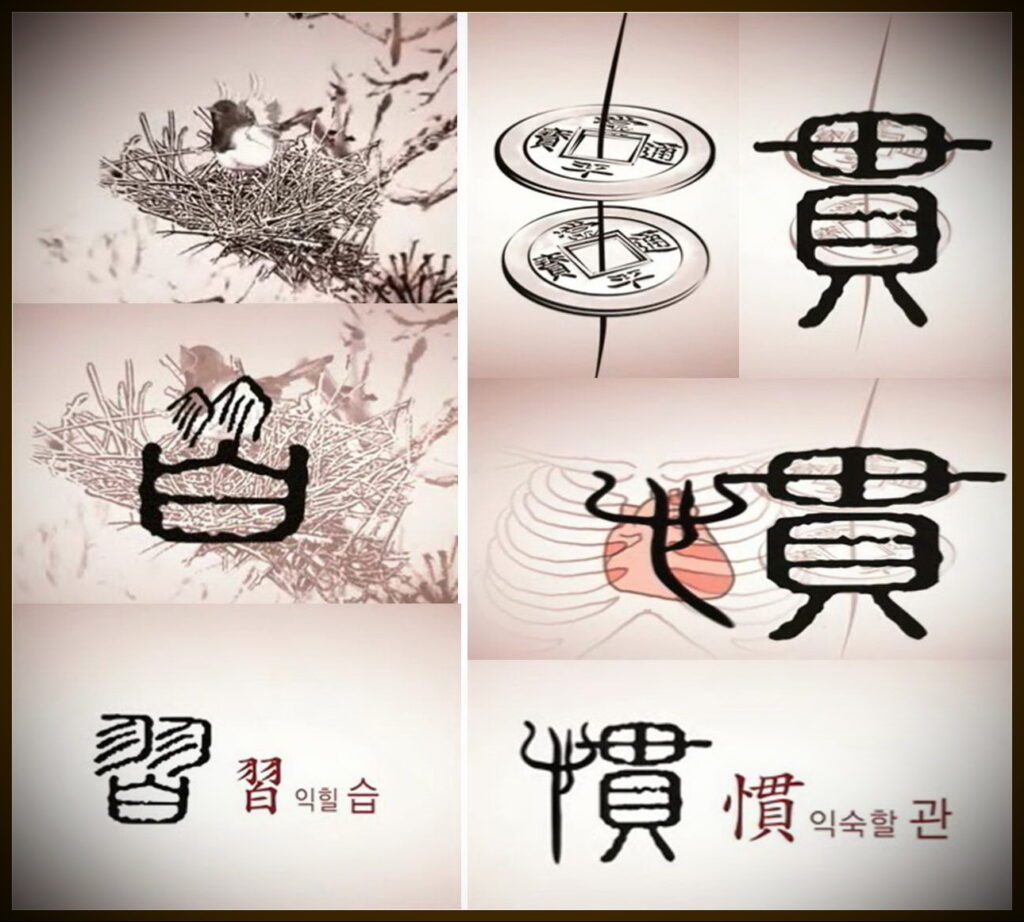
어미의 품에서 벗어나 둥지를 박차고 날아오르기 위해 어린 새는 수도 없이 날개 짓을 반복한다. 그리고 매일 반복한 날개 짓은 어린 새의 마음 속에 깊이 자리 잡혀, 어느 날 자신도 모르게 하늘을 날 수 있는 모습으로 바뀐다. 이렇게 습관(習慣)이란 어린 새가 날개 짓을 매일 반복하여 마음에 꿰인 듯 익숙해져, 누가 시키지 않아도 의도적으로 하려 하지 않아도 자동적으로 이루어지는 자연스러운 행동이다.
그래서 나는 이 글을 빌어, 화장품 중소기업 리더들이 내게 자문을 구했던 것 중에 주요 내용을 30개의 질문으로 세분화하여, 각 질문에 대해 나의 경험과 지식뿐만 아니라, 매일, 매주, 매월 습관적으로 행동해야 하는 것들을 적어보고자 한다. 이런 행동들이 둥지 안의 어린 새의 날개 짓처럼 계속 반복되어, 처음 행동이 습관이 되어 개인의 운명과 나아가서는 회사의 운명도 바꾸게 되길 기원한다.
이글은 화장품 기업의 CEO에게 초점을 맞췄지만, 다른 산업분야의 여러 중소기업에서 가진 똑 같은 문제를 내포하고 있으며, 기업의 규모에 따라 CEO뿐만 아니라, 임원, 팀장급들에게도 중요한 인사이트를 제공하리라 확신한다.
부디 많은 독자들에게 도움이 되기를 바라며…. 2024년 4월 3일 신윤창 올림.
————————–
In 1988, after graduating from Hanyang University with a degree in Business Administration, I joined LG Electronics, a major corporation, as my first job, managing dealership sales. However, disillusioned by the aggressive sales practices of large corporations at the time and eager to pursue my passion for marketing, which I had cherished since my school days, I left LG Electronics and, in 1990, took my first steps into the cosmetics marketing field by joining Fearless Cosmetics, the precursor to Skinfood. From then on, through AEKYUNG Industrial (cosmetics), Philips Electronics (consumer electronics), Jean Kiel (cosmetics), Mini Gold (jewelry), LG Life Sciences (pharmaceuticals), CERAGEM H&B (cosmetics), ChongKeunDang Health (cosmetics), to AM H&B (cosmetics), over the course of roughly 30 years, I transitioned between various companies. Although I momentarily stepped away from the cosmetics industry, I inevitably found myself drawn back to the magnetic allure of the cosmetics market.
While at AEKYUNG Industrial, I successfully launched a mega-brand worth tens of billions, marking a significant achievement. However, after leaving AEKYUNG, I founded a small cosmetics company named Jean Kiel and faced a devastating failure, losing my entire fortune. Yet, this experience laid the groundwork for my subsequent success in establishing and developing a cosmetics subsidiary in China with CERAGEM, over about eight years, pioneering product development and market exploration from scratch in China.
Building on this foundation, I moved to ChongKeuDang Health to establish a subsidiary in China, but I faced the challenge of leaving the company before properly settling due to the COVID-19 pandemic. Most recently, I launched BEURUNCH cosmetics with a small company, AM H&B, consisting of just three employees. My journey through both large and small companies, experiencing both success and failure, eventually led me to become the CEO of a company.
Simultaneously, while working, I continuously studied, completing an MBA and a Doctorate in Business Administration at Hanyang University, consulting for seven small and medium-sized enterprises (SMEs), publishing four books, and delivering numerous lectures at universities and invitations as a guest speaker.
During this time, I was frequently asked:
“How can we increase sales through marketing?”
“What should we do if employee management is not working well?”
“It seems like we’re making enough sales, but why are we always short on money?”
These questions are challenging to answer simply because they encompass a broad range of topics. The reason is that it’s not due to a single cause but requires a deep dive into the company’s inner workings, including product, marketing, sales, SCM (Supply Chain Management), and finance, among others. Hence, several months of consulting are often necessary.
However, it’s not easy for SMEs to receive such consulting, especially in an economic downturn, not only due to financial reasons but also because, based on my consulting experience, CEOs (Owners) understand my advice intellectually but are physically inactive, demonstrating a lack of initiative. Therefore, I concluded that this is not an issue of learning and enlightenment but rather one of past stereotypes, thought patterns, and customs that have shaped the present.
Therefore, no amount of verbal or written advice, knowledge, and information will suffice. Moreover, it’s futile for employees to attempt change. Ultimately, in SMEs, the most powerful owner must take action. Thus, I believe to induce change in the owner, it’s essential to alter past repetitive actions, i.e., habits.
Looking at the Chinese characters for habit (習慣), the character for “習” symbolizes a young bird in a nest flapping its wings to fly towards the sky, while “慣” adds the character for “貫” to the heart (心), meaning that the action of the young bird’s flapping has become embedded in the heart.
To break free from the nest and soar, a young bird repetitively flaps its wings countless times. This daily repetition firmly embeds the action in the young bird’s heart, transforming it into a natural behavior that occurs automatically, without anyone prompting or the bird intentionally trying to do so.
Through this writing, I aim to categorize the key contents of the advice sought by leaders of cosmetics SMEs into 30 questions. For each question, I will share my experience and knowledge, as well as the actions that should be habitually performed daily, weekly, and monthly. I hope these actions, like the continuous flapping of wings by a young bird in its nest, will become habitual, changing not only individual destinies but also the destinies of companies.
While this writing focuses on CEOs of cosmetics companies, it embodies the same problems faced by various SMEs across different industries and offers significant insights to CEOs, as well as executives and team leaders, depending on the size of the company.
I hope this proves helpful to many readers. April 3, 2024, by Shin Yun Chang.