환단고기를 편찬한 계연수(1864~1920)와 스승 이기(1848~1909)
천 년의 세월에 걸쳐 쓰인 다섯 권의 사서를 한 권의 [환단고기]로 묶은 인물은 바로 1864년 평안도 선천에서 태어난 운초 계연수입니다. 지인들로부터 구한 책을 한 권으로 엮어 편찬한 것입니다.
안함로의 [삼성기]는 운초의 집안에 전해 오던 것이었고, 원동중의 [삼성기]는 인근의 태천에 살던 백관묵에게서 구하였습니다. [단국세기]또한 백관묵의 소장본이고, [북부여기]는 삭주 뱃골 사람 이형식의 소장본이었습니다. [태백일사]는 운초의 스승인 해학 이기의 집안에 전해 오던 것이었습니다.
백관묵(1804~?)은 문재로 이름이 높은 명문 집안 출신인데 헌종 6년(1840)에 식년시에 진사로 합격하였고 많은 장서를 소장하고 있었습니다. 그리고 이형식은 1796년생으로 백관묵과 같은 해에 식년시 생원과에 합격하였습니다. 이형식 소장본에는 [단군세기]도 합본되어 있었는데 그 내용이 백관묵의 [단군세기]와 동일하다고 기록되어 있습니다.
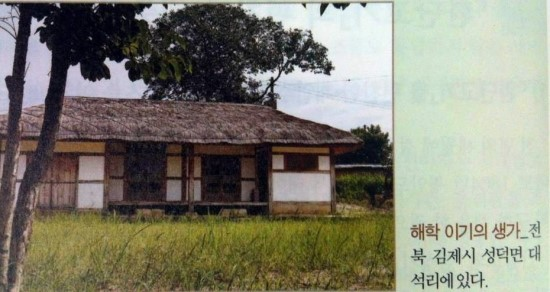
[환단고기]가 탄생하기까지 백관묵과 이형식을 비롯한 많은 사람의 공덕이 있었지만, 특히 계연수와 이기의 혈성과 희생이 컸습니다. 이기는 전라도 만경 출생으로 정약용의 학통을 계승한 실학자이자 독립운동가였습니다. 15세 때 향시에 나가면서 뛰어난 재주와 명성이 여러 고을에 알려졌습니다. 이기는 당시 유명한 선비들과 교류하였는데, 석정 이정직(1840~1910), 매천 황현(1855~1910)과 더불어 호남의 三才라 불리었습니다. 이기의 문장에 대해 이정직은 “대개 백증(이기의 자)의 글은 쓸데없는 글자나 구절이 없어서 마치 꽃 중의 꽃이요, 곡식의 자양분과 같고, 따뜻하고 윤기가 있으며, 법도에 맞고 아담하다”라고 높이 평가하였습니다. 이건창(1852~1898)은 “백증의 문장은 수를 놓은 비단이다”라고 평하였습니다. 황현도 “씩씩하고 뛰어나며, 뛰고 달리는 기운이요, 특출하게 아름답고 박학한 문장이다”라고 칭찬 하였습니다.
성리학과 실학을 모두 섭렵한 이기는 실사구시를 주장하였고, 저항의 일선에서 애국 활동을 하였습니다. 1894년(고종31)에 동학혁명이 일어나자, 동학군 최고 지도자인 전봉준을 찾아가서 ‘동학군을 이끌고 한양으로 올라가 간사한 무리를 물리치고 임금을 받들어 국가의 질서를 새롭게 하자’는 뜻을 전했습니다. 전봉준은 이기의 뜻에 호응하여 남원에서 동학군을 지휘하던 김개남과 협의하도록 하였으나 협의는 실패로 돌아갔습니다.
1895년 청일전쟁에서 승리한 일본이 노골적으로 조선에 침투해 오자 농민생활의 안정과 국권을 회복하는 데에는 토지개혁이 급선무라고 생각하여, 서울로 올라가 탁지부대신 어윤중을 만나 토지제도 개혁안을 제시하기도 하였습니다. 1905년 러일전쟁이 일본의 승리로 끝난 뒤, 전후 처리문제를 논의하기 위한 강화회의가 미국 포츠머스에서 열릴 때, 이기는 동지들과 직접 미국으로 건너가 한국의 독립을 보장해 달라는 호소를 하려 하였습니다. 그러나 일본의 방해로 여권이 나오지 않아 뜻을 이루지 못하였습니다.
미국행에 실패한 이기는 동향 후배이자 동지인 나인영(나철 1863~1916)을 비롯한 몇 명의 독립운동가와 그 해 8월 일본으로 건너가 일왕과 일본 정계 요인들에게 조선 침략을 규탄하는 서면 항의를 하였습니다. 그러나 이러한 외교적 투쟁은 성과를 거두지 못하였고, 그 해 11월 소위 을사보호조약이 체결되었습니다. 이 소식을 듣고 12월에 귀국하여 서울에 머물던 이기는 곧 이어 모친상을 당해 귀향하였습니다.
그러나 국권이 기울어지는 위급한 시기였으므로 ‘상복을 벗어버렸다’는 비난을 무릅쓰고 다시 상경하여 한성사범학교 교관으로 들어가 후진 양성에 진력하였습니다. 또한 대한자강회를 조직하고 월보를 발행하여 국민 계몽에 앞장섰습니다. 이기는 교육의 목적을 국권 회복에 두고, 교육을 통하여 자강자급으로 실력을 길러 나라를 지키자고 주창하였습니다.
1907년에는 육순의 나이에도 아랑곳하지 않고 나인영, 오기호, 윤주찬, 김인식등과 을사오적 암살을 계획하였습니다. 그러나 계획이 실패로 끝나 7년의 유배형을 받고 진도로 귀양을 갔습니다. 다행히 2년 후에 석방되어 서울로 돌아온 이기는 [호남학보]를 발행하고, 단군 성조의 얼을 기리고 고조선의 역사를 부흥시키자는 취지로 단학회를 조직하여 계몽운동과 구국운동을 계속 펼쳤습니다. 하지만 끝내 국세가 기울자 1909년 7월 13일 서울의 한 여관에서 절식으로 62년의 일생을 마쳤습니다.
이기의 생애에서 특히 시선을 끄는 것은, 이기가 [단군세기]를 쓴 이암과, 이암의 현손으로 [태백일사]를 쓴 이맥의 후손이라는 점입니다. [태백일사]가 가보로 전해졌기에 이기는 고대사에 대한 해박한 지식을 가질 수 있었습니다. 이기의 지도와 감수 아래 계연수가 발간한 역사서의 최종 결정판이 바로 [환단고기]입니다.
계연수에 대한 기록은 해동인물지와 정신철학통편 왜에는 좀처럼 찾아보기 어렵습니다. 두 책이 전하는 내용도 몇 가지 큰 사건에 그칠 뿐입니다. [해동인물지]는 계연수의 자는 인경人卿, 호는 운초雲樵 이고 평안도 선천에서 살았으며, 이기의 문하생이 되어 백가의 책을 섭렵한 후 1890년에 [단군세기]와 [태백일사]등을 간행하였다고 전합니다.
하지만 이 기록에는 오류가 있습니다. 계연수는 1890년이 아니라 1911년(辛亥)에 책을 발간하였고, [단군세기]와 [태백일사]를 환단고기에 함께 묶어 간행하였습니다. 지난 30여 년 동안 필자가 [환단고기]를 연구하고 서지학적 정보를 추적하는 과정에서 현단단학회 회장인 양종현(1948~)을 만나게 되었는데, 그 덕분에 계연수의 실체가 좀 더 분명하게 밝혀졌습니다.
양종현은 [환단고기]의 전수자인 이유립의 증언을 바탕으로 계연수의 생존 당시 모습을 초상화로 그려 소장하고 있었습니다. 계연수는 1864년에 평안도 선천에서 태어났습니다. 일찍 부모를 여의었는데, 어릴 때부터 무엇이든 한 번 보면 곧바로 외울 만큼 기억력이 뛰어났습니다. 동방 한민족의 옛 역사와 민족정신에 관심이 지대했던 그는 27세(1890) 때까지 약초를 캐어서 팔아 생계를 유지하며 여러 양반가와 사찰에서 비장하던 서책과 금석문, 암각문 등 각종 사료를 수집하였습니다.
한민족의 역사를 밝히고자 한 계연수가 뜻을 이룰 수 있게 된 결정적인 계기는 해학 이기와의 만남이었습니다. 1897년(34)에 이기의 문하에 들어간 계연수는 스승의 가르침 아래, 두 해 동안에 이암의 [태백진훈]과 [단군세기], 그리고 [참전계경], [태백일사], [천부경요해] 등을 간행하였습니다.
1909년 대영절(3월16일)에 이기, 나철 등이 단학회를 창립하고, 그 해 5월5일에 강화도 참성단에서 천제를 올려 삼신상제님께 이를 고할 때, 계연수도 그 자리에 참여 하였습니다. 두 달 후에 이기가 자진하자, 계연수가 그 뒤를 이어 단학회 2대 회장을 맡았습니다. 2년 후인 1911년(48세), 계연수는 스승이 생전에 세세히 감수해 준 [환단고기]에 범례를 지어 붙인 후 드디어 세상에 내놓습니다.
서문에 나와 있듯이, 묘향산 단굴암에서 책을 옮겨 편집한 후, 자신의 벗이자 독립운동 동지인 홍범도(1868~1943)와 오동진(1865~1930)두 사람의 자금 지원으로 만주 관전현에서 [환단고기] 30부를 간행하였습니다.
범례에서 계연수는 “환단 이후로 계속 전수되어 온 三一心法(태고시대 동방의 우주사상의핵심)이 진실로 이 책 속에 들어 있으니, 동방 대광명의 참 진리가 중흥하는 기틀이 아니고 무엇이랴! 손발이 절로 춤추며 흥겨워 외치고 싶고 기뻐서 미칠 듯하도다!”라고 벅찬 심정을 토로했습니다. 발간 의의에 대해서도 “우리 자신의 주체성을 발견하게 되었으니 크게 축하할 만한 일이며, 또 한편으로 세계 인류가 대립을 떠나 공존할 수 있는 기틀을 마련하게 되었으니 더욱 경축할 만한 일이다”라고 밝혔습니다.
1914년(51세) 대영절에 계연수는 단학회 동지들과 평안도 삭주 천마산에서 천제를 올리고 혈맹을 맺어 ‘역사 회복 운동을 통한 구국운동’을 다짐하였습니다. 이듬 해 10월 단학회의 근거지를 만주로 옮기면서 관전현 홍석랍자구에 배달의숙이라는 교육기관을 열어 청년 학도를 가르치기 시작하였습니다. 뿐만 아니라 만주에서 활동하던 독립운동 단체인 천마대, 서로군정서, 의민사, 별파대, 기원독립단 등에 속한 단원들의 사상적 계몽에 주된 역할을 하였습니다. 그리고 단학회가 결성된 지 10여년이 지난 1919년 3월부터 기관지 <단학회보>를 간행하기 시작하여 제 8호까지 발간하였습니다.
환단고기를 간행한 후 역사 회복뿐 아니라 항일 독립운동에도 적극 참여하던 계연수는 조선인의 민족혼 말살과 역사 파괴에 혈안이 된 일제가 검거할 제1순위 대상이었습니다. 결국 계연수는 1920년 (57세) 조선독립군으로 위장한 밀정(당시 밀정을 파견한 위순사감독 감영극(감연극)은 조선역사를 고취하는 놈은 일본의 대동방 평화정책을 방해하는 것이니 모두 잡아 없애야 한다‘고 하였습니다-양종현-백년의 여정, 106쪽)의 덫에 걸려 무참히 살해되었습니다. 일제는 그의 사지를 절단하여 압록강에 버리고 배달의숙 건물에 불을 질러 계연수가 소장하던 3,000여권에 달하는 서적과 원고를 모두 태워 버렸습니다.
조선이 일본 제국의 흉포한 야욕에 나라를 완전히 빼앗기고 절망의 벼랑 끝에 서 있던 그때, 인류의 창세사와 한민족의 9천 년 국통 맥을 총체적으로 드러낸 ‘국사학의 아버지’ 계연수는 이렇게 비극적인 최후를 맞았습니다.
—————–
Gae Yeon-su (1864-1920), Compiler of Hwandangogi, and His Mentor, Yi Gi (1848-1909)
The individual who compiled the five ancient texts written over a thousand years into one volume, Hwandangogi, was Gae Yeon-su, who was born in Seoncheon, Pyeongan Province, in 1864. He collected these books from acquaintances and compiled them into a single volume.
Samseonggi by An Ham-ro was passed down in Gae’s family, and Samseonggi by Won Dong-jung was acquired from Baek Gwan-muk, who lived nearby in Taecheon. Dangun Segi was also a book owned by Baek Gwan-muk, while Bukbuyeogi was owned by Yi Hyeong-sik from Bae’gol, Sakju. Taebaek Ilsa was passed down in the family of Gae’s mentor, Haehak Yi Gi.
Baek Gwan-muk (1804-?) came from a prestigious family known for its scholarly achievements, and he passed the civil service exam (jinshi) in the 6th year of King Heonjong’s reign (1840). He had a large collection of books. Yi Hyeong-sik, born in 1796, passed the civil service exam (saengwon) in the same year as Baek Gwan-muk. Yi’s version of Dangun Segi was recorded as being identical to that of Baek Gwan-muk.
Many contributed to the creation of Hwandangogi, including Baek Gwan-muk and Yi Hyeong-sik, but the most significant sacrifices were made by Gae Yeon-su and his mentor Yi Gi. Yi Gi, born in Mankyeong, Jeolla Province, was a Silhak scholar and independence activist who inherited the intellectual tradition of Jeong Yak-yong. At the age of 15, Yi took the local exam, and his talents and reputation spread across the region.
Yi Gi interacted with prominent scholars of his time, such as Seokjeong Yi Jeong-jik (1840-1910) and Maechun Hwang Hyeon (1855-1910), and together they were known as the “Three Geniuses of Honam.” Yi Jeong-jik praised Yi Gi’s writing, saying it was precise, like the “flower of flowers, warm and elegant, and adheres to propriety.” Yi Geon-chang (1852-1898) said that “Yi Gi’s writing was like embroidered silk,” while Hwang Hyeon described it as “vigorous and exceptional, full of outstanding energy and scholarly depth.”
Yi Gi mastered both Confucianism and Silhak and advocated for practical learning. He actively engaged in patriotic resistance, suggesting to Jeon Bong-jun, leader of the Donghak Peasant Army, that they march to the capital to overthrow the corrupt officials and restore order to the nation. Though the plan to collaborate with Kim Gaenam, commander of the Donghak Army in Namwon, failed, Yi continued his efforts.
After Japan’s victory in the Sino-Japanese War of 1895, Yi presented a proposal for land reform to Eo Yun-jung, Minister of Taxation. When the Russo-Japanese War ended in 1905, Yi planned to travel to the U.S. with fellow independence activists to appeal for Korea’s independence at the Portsmouth Peace Conference but was blocked by Japanese interference.
Undeterred, Yi traveled to Japan with Na In-young (later known as Na Cheol, 1863-1916) and other activists to protest Japan’s invasion of Korea directly to the Japanese emperor and political leaders. However, diplomatic efforts were unsuccessful, and the Treaty of Eulsa was signed in November 1905. Yi returned to Korea and briefly mourned his mother’s death before resuming his educational efforts. He became an instructor at Hansung Normal School and led the Daehan Self-Reliance Society, publishing a monthly journal to educate the public.
In 1907, at the age of 60, Yi participated in a plot to assassinate the five pro-Japanese officials who signed the Treaty of Eulsa, but the plan failed, and Yi was exiled to Jindo for seven years. He was released after two years and returned to Seoul, where he continued his educational and independence efforts, founding the Honam Hakbo and organizing the Dangun Society to revive Korea’s ancient history. In 1909, Yi committed suicide in a Seoul inn after fasting.
One of the most remarkable aspects of Yi Gi’s life is that he was a descendant of Yi Am, author of Dangun Segi, and Yi Mak, author of Taebaek Ilsa. Because Taebaek Ilsa was passed down as a family heirloom, Yi possessed extensive knowledge of ancient history. Under Yi Gi’s guidance, Gae Yeon-su produced the definitive version of Hwandangogi.
Gae Yeon-su’s records are scarce, found primarily in the Haedong Inmulji (1969) and Jeongsin Cheolhak Tongpyeon (1920), both of which mention only a few significant events. According to the Haedong Inmulji, Gae’s courtesy name was In-gyeong, and his pen name was Uncho. He lived in Seoncheon, Pyeongan Province, and studied under Yi Gi, publishing works like Dangun Segi and Taebaek Ilsa in 1890.
However, this record contains errors. Gae Yeon-su actually published Hwandangogi in 1911, combining Dangun Segi and Taebaek Ilsa into a single volume. Over the past 30 years of researching Hwandangogi, I encountered Yang Jong-hyeon, president of the Hwandan Society, who provided additional insights into Gae’s life.
According to Yang, based on testimony from Yi Yu-rip, the inheritor of Hwandangogi, Gae was born in 1864 in Seoncheon, Pyeongan Province. He lost his parents early and had a remarkable memory, able to recall things after seeing them once. By the age of 27, he had collected various historical records and inscriptions from noble families and temples.
Gae’s encounter with Yi Gi in 1897 was pivotal in fulfilling his goal of restoring Korea’s history. Under Yi’s guidance, Gae published works like Taebaek Jinheun and Dangun Segi, as well as other texts such as Chamjeon Gyegyeong, Taebaek Ilsa, and Cheonbu Gyeong Yohae.
In 1909, on March 16, Yi Gi, Na Cheol, and others founded the Dangun Society, holding a ritual at Chamseongdan in Ganghwado. Gae participated in the ceremony and succeeded Yi Gi as the society’s second president. In 1911, Gae published Hwandangogi, with financial support from his fellow independence fighters Hong Beom-do (1868-1943) and Oh Dong-jin (1865-1930), printing 30 copies in Manchuria.
In the preface, Gae wrote about his deep emotional connection to the text, describing the revelation of ancient Eastern truths within the pages. He emphasized the significance of reclaiming Korean identity and its importance for global harmony.
Gae continued his independence and educational activities in Manchuria, founding the Baedal Academy and training young scholars. He also contributed to the ideological enlightenment of independence groups in Manchuria. However, in 1920, Gae was brutally murdered by Japanese spies disguised as Korean independence soldiers. The Japanese authorities destroyed the Baedal Academy and burned 3,000 of Gae’s books and manuscripts.
Gae Yeon-su, the “father of Korean historiography,” who revealed the 9,000-year history of the Korean people, met a tragic end while the nation was on the verge of collapse.