

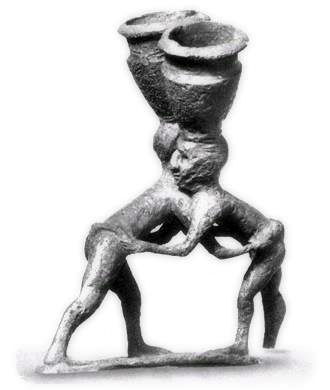
수메르 문명의 실상은 19세기에 메소포타미아 지역에서 설형문자로 쓴 점토판들과 청동으로 만든 여러 가지 조각상, 원통형 인장 등이 발굴되면서 알려지기 시작하였습니다. 1870년대에 프랑스 탐사대가 라가시 지역의 유적을 발굴하였고, 1880년대부터는 미국 고고학자들이 니푸르에서 수만 점의 점토판을 발굴하였습니다. 이로써 오랫동안 암흑 속에 묻혀 있던 수메르 문명의 정체가 드러나기 시작하였습니다.
[도시국가를 건설한 수메르]
발굴된 유물을 통해 문명은 대체로 BCE 5000년경부터 시작되어 BCE 3500년경에는 도시국가들로 이루어진 성숙한 고대 문명이 된 것으로 추정됩니다(고야마 시게키-[지도로 보는 중동 이야기] 18쪽). 수메르인들은 티그리스와 유프라테스, 이 두 강 사이의 땅에 스무 개에 가까운 도시를 세웠습니다. 그곳은 하류지역으로 잦은 홍수가 발생하였기 때문에, 홍수 대책과 관개를 위해 농경민들을 집단으로 조직한 것이 도시국가 성립의 배경입니다. (권희석-[평화가 잠자는 땅 중동] 148쪽)
각 도시국가는 저마다의 수호신을 모셨는데, 그 이유는 그 신들이 우주의 최고신으로부터 태초에 그 도시를 할당 받아 다스리는 것이라 믿었기 때문입니다. 도시의 중앙에 신전을 짓고 그 둘레에 주거지를 지어 생활하였습니다.
대표적인 도시국가 몇 개를 말하자면 우르, 우루크, 니푸르, 라가시 등이 있습니다.
우르는 [구약전서]에 나오는 유대족의 믿음의 조상인 아브라함의 고향으로 추정되는 곳이고, 우르크는 다름 아닌 [구약전서]의 에레크입니다. 도시들은 물의 사용권을 놓고 물 전쟁을 벌였고, 강한 도시들이 약한 도시들을 병합하였습니다.
수메르의 도시는 저마다 다른 모양을 취하였습니다. 우르크는 널찍한 원형에, 전체 길이가 약 9.5Km에 이르는 성벽이 도시를 둘러쌌습니다.
니푸르는 도시 한가운데를 흐르는 운하로 인해 두 지구로 나누며, 주변은 직사각형의 성벽으로 둘러싸여 있었습니다. 19세기 말 펜실베이니아 대학 발굴단이 점토판 하나를 발견했는데, 그 점토판에는 BCE 1500년 무렵의 니푸르 지도가 그려져 있었습니다. 놀랍게도 그 지도는 실제 발굴 작업에 이용되었을 만큼, 지도의 내용이 정확했습니다.
라가시는 몇 개의 지구로 나누어진 아주 큰 도시국가였습니다. 각 지구는 일정한 거리를 두고 자리를 잡았으며, 각 지구마다 따로 성벽을 쌓았고 다른 수호신을 모셨습니다.
수메르의 도시들이 남긴 뛰어난 문명의 자취는 점토판 기록을 통해 그 전모가 지금도 계속 밝혀지고 있습니다.
[다신 신앙을 한 수메르]
수메르인에게 종교는 그들의 삶에서 중요한 비중을 차지했습니다. 자신들이 창조된 것은 신에게 봉사하기 위해서라고 믿었을 정도로 신앙심이 깊었습니다. 수메르인들은 신이 대기, 태양, 바라 등에 내재되어 있다고 보았습니다. 그들의 신관은 다신관으로, 인간적 속성과 성격을 지닌 수많은 신이 존재하며, 신은 선을 행할 수도 있고 악을 행할 수도 있는 존재로 계급 구조 속에서 일정한 역할을 수행한다고 생각하였습니다.
계급 구조의 최상부에는 안(An)이 있었습니다. 안은 ‘신들의 왕’으로서 다른 모든 신을 낳은 우주 최고의 신입니다. 안은 수메르의 초기왕조 시대에는 우루크의 수호신이었지만, 그 후 인간 세상을 직접 다스리지 않고 하늘 세계에만 존재하는 신으로 바뀌었습니다.(조철수-[수메르의 신화]38~41쪽)
지상에 사는 신들의 우두머리는 안의 큰 아들인 엔릴(Enlil)이었습니다. 안과 엔릴의 관계는 그리스 신화의 크로노스와 제우스의 관계와 같습니다. 수메르의 신관에서 독특한 개념은, 신들 중에 제일 큰 일곱 신이 있고 그들이 세상의 운명을 결정하며 그들에게 서열이 있다는 것입니다. 일곱 신 가운데 하늘로 올라가 하늘에 자리 잡은 안을 제외한 나머지 여섯 신은 수메르의 수호신이 되었습니다.
대기의 신이자 수메르 중앙 지역이 도시인 니푸르의 수호신인 엔릴이 서열의 머리이고, 산기슭 언덕의 여신이면서 북쪽 키시 지방의 신인 닌후르상, 물의 신이자 지혜의 신이며 유프라테스 강 하류에 위치한 에리두의 신인 엔키, 달의 신이면서 우르인 신인 난나, 정의의 신이자 태양신이며 라르사의 신인 우투, 사랑과 전쟁의 여신이자 우르크의 신인 인안나의 순서로 서열이 매겨졌습니다.
수메르의 다신 숭배 전통은 수메르가 망한 이후에도 바빌로니아와 아시리아 같은 후대 메소포타미아에 전승되었고, 이것이 후에 그리스. 로마 신화의 근간이 되었습니다.
[최초의 양원제]
그리스인이 민주주의라는 말을 만들어내기 오래 전인 BCE 3000년경에 이미 수메르의 한 도시에서 ‘최초의 양원제’가 운영되었습니다. 수메르의 양원은 연장자들의 회합인 ‘상원’과 전투에 임할 수 있는 남자 시민의 회합인 ‘하원’으로 구성되었습니다.
우루크가 이웃 도시인 키시와 전쟁을 할지 말지 결정하기 위해 소집된 집회에서, 상원이 평화를 선택하자 왕이 거부권을 행사하며 그 문제를 하원으로 가져갔습니다. 하원은 전쟁을 선택하였고, 왕은 그것을 승인하였습니다. 서양 민주주의 정치의 바탕인 의회제도는 바로 수메르에서 출발한 것입니다.
[함무라비 법전보다 앞서는 수메르 법전]
가장 오래된 고대의 법전은 BCE 1750년, 셈족의 왕인 함무라비에 의해 공포되었다고 알려져 있습니다. 그러나 함무라비 법전 보다 더 오래된 메소포타미아 법전이 지금까지 세 가지나 발굴되었습니다.(새뮤얼 크레이머-[역사는 수메르에서 시작되었다]85~90쪽)
그 중 가장 오랜 것이 바로 1948년 이라크 박물관의 한 큐레이터가 바그다드의 한 구석진 언덕에서 캐낸 두 점의 점토판입니다. 햇볕에 구운 밝은 갈색의 그 점토판을 판독한 결과, BCE 2350년경에 우르를 다스리던 우르남무왕이 제정한 법령으로 밝혀졌습니다. 손상이 심해 겨우 5개의 법규만 복원되었는데, 그 중 하나는 물과 관련된 재판에 대한 것이었고, 또 하나는 노예의 처리에 대한 것이었습니다. 함무라비 법전보다 500년이나 앞서서 수메르는 문명 사회의 특징인 법적 질서와 체계를 벌써 확립하였던 것입니다.
수메르 법전에서 유래된 많은 법조문이 후대의 히브리 법문 속에 여실히 나타납니다. 고대 법률제도 연구의 권위자인 E.A. 스파이저는 ‘정통 유대인들은 그들이 이혼에 관해서 말할 때에 수메르 법 용어를 사용했었다. 그리고 성전 안에서 유대인들이 토라를 읽을 때 경전의 끝에다 손을 대는 풍습이 옛날 수메르의 풍습에서 기원했다는 사실을 모르고 지금도 실행하고 있다“라고 하였습니다. 현대 법이 수메르법에서 그 근원을 얼마나 찾아야 될지는 모르지만, 영국 사학자 삭스(H.Saggs)는 ”땅 거래하는 법은 궁극적으로 수메르 법에서 나온 것이 분명하다“라고 하였습니다.
[알파벳을 낳은 수메르]
수메르인은 BCE 3200년경에 이미 문자를 사용했습니다. 초기의 문자는 그림문자(상형문자)였으나, 서서히 진화하여 BCE 3100년경 기호와 부호가 음가를 가진 문자가 되었습니다. 그 문자가 바로 수메르의 설형문자(쐐기문자)입니다. 그 지역에서 많이 나던 갈대의 뾰족한 끝으로 젖은 점토판에 쐐기 모양의 자국을 내어 다양한 글자를 만들었습니다. 딱딱하게 굳은 설형문자 점토판은 역사상 최초의 ‘공식기록 문서’가 되었습니다.
처음 5백 년 동안은 수메르의 문자가 곡물의 양, 가축의 수를 계산하는 데 주로 사용되었습니다. 그만큼 초기에 문자가 표현하는 개념이 단순하였던 것입니다. 그러다가 수메르인의 문자는 명사를 수식하는 동사와 형용사까지 갖춘 서술적 글쓰기가 가능할 정도로 섬세해져 결국 600여 개의 설형문자 기호가 만들어졌습니다. 그 후 수세기 동안 많은 문명이 수메르의 문자를 채택하여 자신들의 고유 언어에 적용하였습니다.
이 문자를 택한 아카드어는 고대 세계의 국제어가 되었습니다. 반면에 보기에는 더 아름답지만 필기가 성가신 그림문자를 사용한 이집트어는 끝내 국제어가 되지 못하였습니다. 아카드어는 그 후 바빌로니아, 아시리아, 페르시아 등 메소포타미아 땅에서 계속적으로 널리 사용되었습니다. 뿐만 아니라 페니키아 문자와 그리스 문자를 거쳐 오늘날의 알파벳으로 발전하였습니다.
그런데 설형문자로 기록을 남긴 수메르인의 말은 우리말과 똑같이 주어나 목적어 같은 체언 다음에 조사(토씨)가 붙는 언어, 즉 교착어입니다. 놀랍게도 세계어 가운데 교착어는 한국어와 한국어의 영향을 받은 일본어, 알타이어뿐입니다. 수메르어를 연구하는 한국 학자들의 연구에 의하면, 수메르 말의 어순이 우리말과 거의 같으며 말의 단어 자체가 같은 것이 100가지나 된다고 합니다.
수메르어와 한국어의 두드러진 유사성은 두 집단의 공통된 뿌리를 암시합니다.
** 한국어 수메르어
아버지………………………………아빠
칼……………………………………카르
한……………………………………안
엄마…………………………………엄마
밝음…………………………………바르
우리(겨레)…………………………우르
달……………………………………달
사람…………………………………사람
나락(볍씨)………………………나락(곡신의 신)
단군(몽골어=텡크리)…………딩기르
아우…………………………………아우
북……………………………………북
어디서………………………………~쉐
어디로………………………………~어라어디
부터…………………………………~타
정연종, 『한글은 단군이 만들었다』230쪽
<한글, 그 비밀의 문>, 히스토리 채널 2003년10월9일 방영

————-
The true nature of the Sumerian civilization began to be uncovered in the 19th century with the excavation of cuneiform-inscribed clay tablets, bronze sculptures, and various cylindrical seals in Mesopotamia. In the 1870s, French expeditions unearthed relics in the Lagash region, and from the 1880s onwards, American archaeologists excavated tens of thousands of clay tablets from Nippur. These discoveries gradually illuminated the identity of the Sumerian civilization, which had been shrouded in darkness for centuries.
[The Sumerians and Their City-States]
Artifacts indicate that Sumerian civilization likely began around 5000 BCE and had matured into an advanced civilization comprising city-states by approximately 3500 BCE (Shigeki Koyama, Stories of the Middle East Told Through Maps, p. 18). The Sumerians established nearly 20 cities between the Tigris and Euphrates Rivers. Due to frequent flooding in the lower reaches of this region, they organized agricultural communities to implement flood control and irrigation systems, laying the foundation for the formation of city-states (Hee-seok Kwon, The Land Where Peace Sleeps: The Middle East, p. 148).
Each city-state worshipped its own patron deity, believing that the deity had been assigned the city by the supreme god of the cosmos. At the city’s center, they built temples surrounded by residential areas.
Prominent city-states included Ur, Uruk, Nippur, and Lagash.
- Ur: Believed to be the birthplace of Abraham, the patriarch of the Jewish faith as mentioned in the Old Testament.
- Uruk: Corresponds to Erech in the Old Testament.
These cities often waged “water wars” over control of water resources, with stronger cities annexing weaker ones.
Sumerian cities took on diverse forms:
- Uruk: Encompassed by a circular wall approximately 9.5 km long.
- Nippur: Divided into two districts by a canal running through its center, surrounded by rectangular walls. A clay tablet discovered by a University of Pennsylvania excavation team in the late 19th century depicted a map of Nippur dating to 1500 BCE, which was remarkably accurate and used in modern excavations.
- Lagash: A large city-state divided into several districts, each with its own walls and dedicated patron deity.
The extensive cultural legacy of Sumerian cities continues to be revealed through the study of their clay tablet records.
[Sumerian Polytheism]
Religion played a central role in Sumerian life. They believed humans were created to serve the gods, who they thought resided in natural elements like the atmosphere, the sun, and the sea. The Sumerians practiced polytheism, with numerous anthropomorphic gods possessing both benevolent and malevolent tendencies, each fulfilling specific roles within a hierarchical structure.
At the top of the hierarchy was An, the “King of the Gods” and the creator of all other deities, who was initially the patron god of Uruk. Over time, An was seen as an otherworldly god, dwelling solely in the heavens (Chul-soo Cho, Sumerian Myths, pp. 38–41).
The chief of the earthly gods was An’s eldest son, Enlil, comparable to Zeus’s relationship with Cronus in Greek mythology. Among the pantheon, the “Seven Great Gods” were believed to determine the fate of the world, each ranked in order:
- Enlil: God of the atmosphere, patron god of Nippur.
- Ninhursag: Goddess of foothills, patron of Kish.
- Enki: God of water and wisdom, patron of Eridu.
- Nanna: Moon god, patron of Ur.
- Utu: Sun god and god of justice, patron of Larsa.
- Inanna: Goddess of love and war, patron of Uruk.
Sumerian polytheistic traditions persisted after the fall of Sumer, influencing Babylonian and Assyrian beliefs and eventually forming the basis of Greek and Roman mythology.
[The First Bicameral Legislature]
Long before the Greeks coined the term “democracy,” a bicameral legislature was in operation in a Sumerian city-state around 3000 BCE. Sumer’s legislature consisted of two assemblies: a senate of elders and a lower house of male citizens eligible for battle.
In one instance, Uruk convened these assemblies to decide whether to wage war against the neighboring city of Kish. When the senate chose peace, the king exercised a veto and referred the decision to the lower house, which voted for war. The king approved the lower house’s decision. Thus, the parliamentary system, a cornerstone of Western democracy, originated in Sumer.
[The Sumerian Code of Laws Predating Hammurabi’s Code]
While the oldest known legal code is often attributed to Hammurabi, the Semitic king who promulgated his laws around 1750 BCE, three even older Mesopotamian legal codes have been discovered (Samuel Kramer, History Begins at Sumer, pp. 85–90).
The oldest among these was unearthed in 1948 by an Iraqi curator, who discovered two clay tablets on a secluded hill in Baghdad. These tablets, baked to a bright brown hue, contained decrees issued by King Ur-Nammu of Ur around 2350 BCE. Though heavily damaged, five laws were reconstructed, including one related to water disputes and another to the treatment of slaves.
Predating Hammurabi’s code by 500 years, the Sumerians had already established the hallmarks of a civilized legal system. Many of their legal principles appear in later Hebrew laws. Renowned scholar E.A. Speiser noted that Orthodox Jews unknowingly used Sumerian legal terminology when addressing divorce and that their custom of touching the Torah at the end of a reading originated from Sumerian practices. H.S. Saggs argued that land transaction laws clearly trace back to Sumerian origins.
[The Sumerians: Inventors of Writing and Alphabetic Systems]
By 3200 BCE, the Sumerians had developed writing. Initially pictographic, their script evolved by 3100 BCE into phonetic symbols, resulting in the invention of cuneiform writing. Using reeds to inscribe wedge-shaped marks on wet clay tablets, they created the world’s first “official records.”
For 500 years, Sumerian writing served primarily to document quantities of grain and livestock. Over time, it developed into a sophisticated system capable of descriptive writing, culminating in approximately 600 cuneiform symbols. Many civilizations adopted this script for their own languages.
The Akkadian language, which used Sumerian writing, became the ancient world’s lingua franca. Unlike Egyptian hieroglyphs, which remained cumbersome for writing, Akkadian cuneiform spread widely across Babylonia, Assyria, and Persia, influencing the development of Phoenician, Greek, and eventually modern alphabets.
Intriguingly, the Sumerian language shared structural similarities with Korean. Both are agglutinative languages, attaching particles to nouns. Korean researchers have identified nearly 100 linguistic parallels between the two languages, suggesting a potential common origin.
Examples of Linguistic Similarities
| Korean | Sumerian |
|---|---|
| Father (아버지) | Abba |
| Sword (칼) | Kar |
| One (한) | An |
| Mother (엄마) | Umma |
| Brightness (밝음) | Bar |
| Us (우리) | Ur |
| Moon (달) | Dal |
| Human (사람) | Sar |
| Rice Grain (나락) | Narak (Grain God) |
| Heaven (단군) | Dingir |
| Younger Brother (아우) | Aw |
| North (북) | Buk |
(Adapted from Jeong Yeon-jong, Hangeul Was Created by Dangun, p. 230; History Channel documentary Hangeul: The Secret Code, October 9, 2003)