[동방 역사의 주인공, 동이]
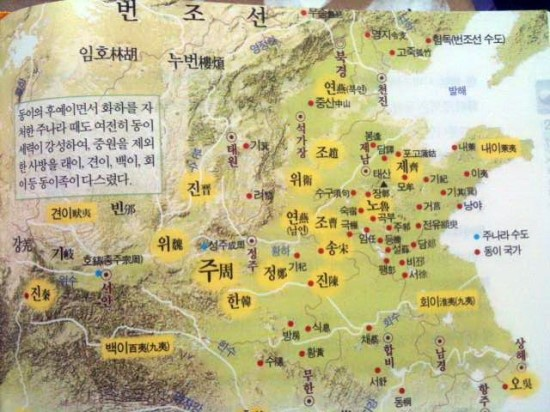
어느 민족이 동방 역사를 주도하였는가? 이 물음은 동북아 역사 속에서 한민족사와 더불어 풀어야 하는 하나의 수수께끼입니다. 대만과 중국학자들은 동방 역사의 주류가 중국 한족이 아니라 ‘동이’라는 공통된 의견을 내놓았습니다. 중국 현지를 가 보면, 오늘의 공산당 정부에서도 동이족 출신 제왕들을 하늘같이 섬기는 것을 볼 수 있습니다.
태호복희의 사당이 진시황, 한무제등 중국 역대 황제의 사당보다 더 웅대하고, 그분을 더 존귀하게 모시는 것이 그 예입니다. 특히 천하제일사당이라 불리는 하남성 회양현의 복희 사당에는 북경의 자금성 못지않게 참배객이 몰려 날마다 인산인해를 이루고 있습니다.
그렇게 된 이유는 어디에 있을까요? 감출래야 감출 수 없는 자신의 뿌리, 동이의 역사가 살아 숨 쉬고 있기 때문입니다. 동북아 창세 역사와 중국의 창세 역사 그리고 역대 왕조사를 만든 주류를 이야기할 때 빼놓을 수 없는 것이 바로 ‘동이’인 것입니다.
[동이의 의미]
그러면 과연 동이란 어떤 의미를 지니고 있을까요?
東은東은夷에라고 한다’하면서 예기-왕제편의 내용을 인용하고 夷의란 것은 柢이다.]
여기서 란, 를 ‘~’와 동이의 ‘夷’夷자가은 자에 대한 최초의 기록을 상나라 갑골에서 찾고 있는데, ‘이 곧 ’이며, ’尸‘자는 ‘人자의자를 “동방지인야. 從大從弓”와 활이라는 의미의 弓이從大從弓이라는 ‘과, 즉 ‘華夏’와 夷를족은, 齊, 魯나라를나라도,
다”黎는黎를秦입니다. 산동 곡부를 중심으로 활동한 백익부는 하 왕조가 확립되기 이전에 하후씨와 자주 싸웠고, 하말.상초에도 중요한 영향력을 지닌 동이족의 하나였습니다. 이밖에도 동이족은 중국 대륙 곳곳에 크고 작은 나라를 무수히 세우고 화하족 나라들과 세력을 다투었으나, 주나라 건국 이후 춘추전국 시대를 지나면서 하나 둘 사라졌고, 마지막에 동이족의 한 갈래였던 진에 의해 통일되었습니다.
[중국 문화의 발원, 동이]
[삼성기]하에 의하면, 중국 한족의 시조 반고는 실존 인물임과 동시에 환웅이 동방을 개척할 당시 환인에게 청하여 따로 개척의 길을 떠났던 인물입니다. 그때 반고는 많은 재화와 보물을 지니고 十干十二支의巫人으로儒士들은
仁’仁道문제를자는 人의과 는 같은 글자다. 는 이며 는 또한 다. 그러므로 진한 이래 夷人仁과자를 철(金+夷)이라 썼는데 동이가 가장 먼저 철을 사용하였기에 자를 넣었고, 은나라 복사의 서법도 동이의 서법을 계승하였다”라고 하였습니다.(李白鳳-과 歷)
[동이 출신의 중국 사상가들]
역대 제왕은 아니지만 중국 사상사의 위대한 인물들도 그 뿌리가 동이라는 것을 알 수 있습니다.
먼저 노자의 경우입니다. 노자가 어떤 사람인가 하는 것은 오늘날에도 여전히 커다란 수수께끼 가운데 하나입니다. 노자에 대한 최초의 공식적인 기록은 사마천의 사기-노장신한열전입니다. 그런데 사마천이 당시까지 전해 오던 노자라는 인물에 관련된 여러 가지 설을 함께 제시했기 때문에 이후로 노자에 대한 갖가지 논란이 제기되었습니다.
일반적으로 노자는 성이 이씨이고 이름은 耳, 자는 담(聃)으로 알려져 있습니다. 초나라 고현의 여향사람으로 주나라 수장실의 관리였는데, 공자가 노자를 찾아가 예를 물었다고 합니다. 그러나 [태백일사]<삼한관경본기>에 따르면, 노자 이이는 본래 동방의 시원 족속인 풍이족 출신이다. 노자의 아버지는 성은 韓씨이고 이름은 건이라고 합니다.
유교에서 빼 놓을 수 없는 인물은 공자와 맹자입니다. 공자는 은의 후예인데, 은이 동이의 선민이 세운 나라라는 것은 이미 잘 알려진 사실입니다. 맹자에 대해서는 [사서석지]3속권 하에, “맹자는 추나라 사람인데 추나라는 춘추시대에 주나라였고 주(邾)나라는 본래 동이 국가이니, 그렇다면 맹자 또한 동이 사람이 아니겠는가”라고 씌여 있습니다. 주(邾)는 노나라 부근에 있던 동이국가로서 공자가 쓴 [춘추]에 그 이름이 자주 등장합니다.
겸상애(서로 사랑함).교상리(서로 이롭게 함)를 제창한 위대한 사상가, 묵자는 어떠할까요? 당나라 때 임보가 펴낸 성씨에 관한 책인 [원화성찬]에는 “전국 시대 송나라 사람으로 [묵자]의 저자인 묵적은 본래 고죽군의 후예이다”라고 나와 있습니다. 고죽국은 은나라 현자인 백이와 숙제가 살던 나라로 동이 국가였고, 삼국유사 고조선조에는 고구려는 본래 고죽국이었다라고 기록되어 있습니다. 이러한 사실에서 묵자 또한 동이족임을 확인할 수 있습니다.
이처럼 동북아의 창세 역사와 황제헌원 이래 중국의 역대 왕조를 이끌어온 주류와 위대한 사상가의 대다수가 동이입니다. 하지만 중국은 한 대 이후 동이를 왜곡하여 동방의 오랑캐로 비하시켰고, 유교를 국교로 신봉한 조선 왕조는 그것을 답습하여 스스로 소중화라 하였습니다.
—————-
[The Protagonists of Eastern History, Dongyi]
Which people led the history of the East? This question remains a riddle to be unraveled alongside the history of the Korean people within the broader context of Northeast Asian history. Scholars from Taiwan and China share a common perspective that the main driving force of Eastern history was not the Han Chinese but the “Dongyi.” Evidence of this can be observed in modern-day China, where even the current Communist government venerates the Dongyi-descended emperors with great reverence.
For example, the shrine dedicated to Taihao Fuxi surpasses those of renowned Chinese emperors like Qin Shi Huang and Emperor Wu of Han in grandeur and esteem. Particularly, the Fuxi Shrine in Huaiyang County, Henan Province—touted as the “greatest shrine under heaven”—attracts crowds comparable to Beijing’s Forbidden City, with throngs of visitors paying homage daily.
Why is this the case? It is because the roots of their identity, which they cannot conceal even if they wished, lie in the history of the Dongyi, which continues to resonate. When discussing the creation myths of Northeast Asia and China, as well as the dynastic histories of the region, the Dongyi are an indispensable element.
[The Meaning of Dongyi]
What, then, does “Dongyi” mean? The term “Dong” (東, meaning “East”) and “Yi” (夷, often interpreted as “barbarian” in later Chinese usage) collectively referred to the “people of the East.” According to the Book of Rites (Liji), the character “Yi” (夷) signifies “peace” (柢). The earliest record of the term appears in Shang dynasty oracle bone inscriptions, where “Yi” refers to “people.” The composition of the character combines “大” (great) and “弓” (bow), symbolizing the people of the East who were skilled with bows.
Historically, the Dongyi people were not a singular group but comprised various tribes and states. For instance, the Baiyi group, centered in Qufu, Shandong Province, frequently clashed with the Xia dynasty before its establishment and continued to wield significant influence during the late Xia and early Shang periods. Beyond this, the Dongyi established countless nations across the Chinese mainland, often vying for power with the Hua-Xia peoples. However, following the founding of the Zhou dynasty and through the Spring and Autumn and Warring States periods, the Dongyi gradually diminished, ultimately being unified under the Qin dynasty, a branch of the Dongyi.
[Dongyi as the Origin of Chinese Culture]
According to Samseonggi (Records of the Three Sacred Histories), Pangu, the mythical progenitor of the Han Chinese, was a real figure who sought his path with permission from Hwanin (the supreme deity) when Hwanung began developing the East. Pangu brought with him various treasures and resources and was considered a shaman of the Ten Heavenly Stems and Twelve Earthly Branches.
Li Baifeng noted, “The concept of Ren (仁, meaning ‘benevolence’) originates from the Dongyi people. The character Ren (仁) comprises Ren (人, ‘person’) and Er (二, ‘two’), signifying the unity of people. During the Qin and Han dynasties, the character ‘Yi’ (夷) was modified to include the radical ‘metal’ (金), reflecting the Dongyi’s early use of iron. Furthermore, the Shang dynasty’s writing system was an extension of the Dongyi script.”
[Dongyi-Origin Philosophers in Chinese Thought]
While not emperors, many great Chinese philosophers have their roots in the Dongyi lineage.
Take Laozi, for example. Laozi remains an enigmatic figure to this day. The first official record of Laozi appears in Sima Qian’s Records of the Grand Historian (Shiji), which compiled various traditions about him. Generally, Laozi’s family name is said to be Li (李), his given name Er (耳), and his courtesy name Dan (聃). He was reportedly a native of Quren in Chu, serving as an archivist in the Zhou dynasty’s court. Confucius is said to have sought his guidance on rituals. However, according to Taebaek Ilsa (Annals of Taebaek), Laozi was originally of the Dongyi-affiliated Fengyi tribe. His father’s surname was Han (韓), and his name was Geon.
Confucius and Mencius, central figures in Confucianism, also trace their origins to the Dongyi. Confucius is widely recognized as a descendant of the Yin (Shang) dynasty, which was founded by the Dongyi people. Regarding Mencius, Sasheoseokji notes, “Mencius was a native of the state of Zou, which during the Spring and Autumn period was part of the Zhou dynasty but originally a Dongyi state. Thus, Mencius must also be of Dongyi origin.”
Finally, Mozi, the philosopher who championed universal love (Jian Ai) and mutual benefit (Jiao Xiang Li), also belongs to this lineage. According to the Tang-era text Yuanhua Xingzan, “Mo Di, the author of Mozi, was a native of Song during the Warring States period and a descendant of the state of Guzhu.” Guzhu was a Dongyi state associated with the renowned Shang dynasty sages Boyi and Shuqi.
The creation myths of Northeast Asia, the dynasties since the Yellow Emperor Xuanyuan, and the majority of China’s philosophical and cultural pioneers can be traced back to the Dongyi people. However, beginning with the Han dynasty, China distorted the image of the Dongyi, relegating them to the status of Eastern “barbarians.” The Joseon dynasty, which fervently adhered to Confucianism as its state religion, adopted this perspective, even dubbing itself “Little China.”