<춘추필법의 악폐>
공자가 노나라 242년의 역사를 편년체로 기록하여 춘추[春秋]라 이름지었는데요. 이 책은 주나라 왕실을 종주로 삼는 대통일 사상과 [존왕양이尊王攘夷]정신을 표방하였습니다. 그 후 중국 사서들은 이 춘추를 역사 서술의 표준으로 삼았습니다.
…
중국 사서의 편찬 원칙은 세가지 춘추필법으로 요약됩니다.
- 중국에 영광스러운 일은 한껏 부풀려 쓰고 수치스러운 일은 감춘다
- 중국은 높이면서 주변 나라는 깍아 내린다.
- 중국사는 상세히 쓰면서 이민족 역사는 간략하게 적는다.
춘추필법은 표면적으로는 대의명분을 밝혀 세우는 역사 서술법이지만, 사실은 중국이 천하의 중심이라는 중화주의에 충실한 필법입니다. 자신들의 역사가 동이족에서 비롯되었다는 역사 콤플렉스를 이 춘추필법으로 덮으려 한 것입니다.
사마천 이하 역대 중국의 사가들이 춘추필법에 의거하여 역사를 기록한 결과, 동북아 문명의 주체였던 한민족의 역사는 중국 변방 오랑캐 족속의 하잘 것 없는 역사로 왜곡 되고 말았습니다.
<탁록대전의 진실>
한중고대사를 날조한 기록상의 첫 인물은 2100년 전 한나라 때의 사관인 사마천입니다. 사마천은 동북아의 한민족 강토로 쳐들어간 한무제가 전쟁에 참패하고 돌아온 시기에 [사기]를 저술하였습니다.
우리의 치우천왕과 중국의 왕 헌원은 탁록이라는 곳에서 10년동안 대전을 벌였습니다. 이를 사마천 사기에 금살치우[禽殺蚩尤]라는 표현을써서 마치 치우천황을 헌원이 이긴것처럼 기록하였으나 그들이 죽인것은 치우천황이 아니고 치우비라는 일개 장수였습니다.
중국의 또 다른 역사서 [사기집해-사마천이 사기를 기록하며 참고한 문헌]에는 치우고천자[蚩尤古天子] 즉 치우는 옛 천자라는 구절이 나옵니다. 이는 곧 천하의 지배자는 헌원이 아니라 치우천황이라는 말입니다
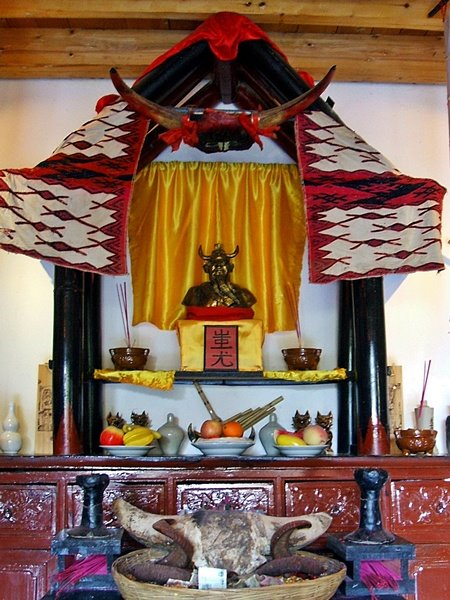
중국이 흙이나 나무 돌로 무기를 삼았을때 치우천황은 금속 투구를 머리에 쓰고 큰 쇠뇌같은 큰 병장기를 갖추고 출전하여 그 위엄을 천하에 떨치셨다고 합니다.
중국 고서인 [관자]에는 치우천황의 군대무기에 대해 갈로산에서 흐르는 물에 철이 있었고 이것을 제련하여 칼, 갑옷, 창등을 만들었다고 서술합니다. 이는 중국은 이러한 무기를 갖지 못했다는 은연중의 고백이기도 하겠습니다. 그래서 중국은 치우천황을 악마의 형상으로 그리곤 합니다. 투구에는 뿔이 달려 있었기 때문에 지금도 악마는 머리에 뿔이 나있는 것으로 인식을 합니다
그당시 치우천황은 동북아에서 가장 먼저 청동 무기를 썼으며 동북아 금속 문명의 선진주자 였습니다.(이덕일, “고조선은 대륙의 지배자였다 214~231쪽)
사마천은 역사의 진실을 뒤집어 기술해 중국 역사의 시조인 헌원을 천자, 즉 동북아의 주도권자로 만들었습니다. 헌원이 천자가 되면 중국은 그 출발부터 천자의 나라가 되기 때문입니다. 중국을 처음부터 내내 동북아에 군림한 중심 나라로 못 박기 위해 금살치우가 필요했던 것입니다. 그리고나서 지금 중국은 치우천황을 자신들의 조상이라고 우기고 있는 웃기는 상황을 연출하고 있는 중입니다.
중국은 화하족이 한번도 나라를 세우지 못한 열등감과 중화주의가 뒤섞여 정신분열을 일으키고 있다고 생각이 듭니다.
일찍이 중국이 한민족의 뿌리 역사를 말살하는 상투적인 방법 중 하나는 우리나라의 정식 국호인 “조선”이라는 호칭을 직접 쓰지 않고 조선의 전성기 때 제후국이었던 70여개국의 이름 몇개를 끌어다가 기록하는것입니다. 예, 맥, 발, 숙신, 우이, 래이, 견이, 서이, 고죽, 고이 등이 바로 그것입니다
(예 : 초대 단군왕검의 부루태자께서 사공인 우禹에게 오행치수벅과 천자제도의 문화정신이 담긴 금간옥첩을 전할 때도 부루태자를 파견한 단군성조의 고조선을 玄夷로, 부루태자를 창수사로 불분명하게 기록)
사마천은 당(요), 우(순). 하. 상. 주시대 역사를 기술할 때도 그러했습니다. 그런 사마천이 [송미자세가宋薇子世家]에서는 느닷없이 ‘조선’을 언급하고 있습니다
중화주의에 의해 한국 역사를 자신들에게 예속된 속국의 역사로 축소, 왜곡하여 기록한 대표적인 기록이 한나라 때 사마천이 쓴[사기史記]의 제후 역사 편인 <세가世家>에 나오는 [봉기자어조선封箕子於朝鮮-기자를 조선에 봉하다]입니다.
사마천은 주나라 무왕이 상나라의 성인이었던 기자를 조선이란 곳의 왕으로 봉함으로써 조선의 역사가 시작되었다고 기록하였습니다. 간단히 말해서 주나라의 보살핌으로 약 3,100여 년 전, 조선이란 나라가 탄생했다는 것입니다. 봉기자어조선 이 여섯 글자는 조선의 역사를 그 출발부터 중국의 속국사로 전락 시켰습니다.
이 내용은 지금으로부터 약 3,100년 전 상주 교체기를 배경으로 합니다. 주나라 무왕은 동이족의 명재상인 강태공의 보필을 받아 주지육림에 빠진 상(은)나라 폭군 주왕을 방벌하고, 감금되어 있던 상나라 삼현三賢(기자.미자.비간)중 한 사람인 기자를 풀어 주었습니다. 이 기자가 조국 상나라가 멸망한 것에 절망하여 동방족의 본고장인 ‘조선’으로 떠나 버린것을 서운해 하며 무왕이 기자를 조선의 제후로 봉했다는 내용입니다.
요순시대로부터 자기들에게 선진 문물을 전수해 준 종주국 고조선이 주나라의 한 제후국이라는 것입니다.
이는 한나라를 세계의 중심 나라로 만들고 조선을 짓밟기 위해 지어낸 날조극 입니다. 여기에는 4,338년 전에 배달국을 계승하여 개국한 뒤 2,096년간 존속한 독립국가 고조선을 3,127년 전에 개국하여 겨우 900년간 존속한 주나라의 제후국으로 끌어내리려는 의도가 깔려 있습니다. 이로 인해 대한민국의 역사는 중국의 5천 년보다 훨씬 짧은 3천 년으로 쪼그라들었습니다.
게다가 조선이라는 나라는 우매한 한민족이 중국의 은혜를 입어 제후로 봉해짐으로써 출발한 국가로 매도당한 것입니다. 이 새빨간 거짓말은 송미자세가의 기록을 자세히 들여다보면 봉기자어조선 바로 뒤에 이불신야以不臣也, 즉 그러나 신하로 삼지 못했다는 말이 나옵니다.
제후도 당연히 신하인데 왜 신하로 삼지 못했다는 것일까요?
실제로 기자가 새로 정착한 곳은 지금의 하북성 태행산 일대로 주나라와 하등 무관한 고조선의 영토였기 때문에 애당초 주나라가 그를 제후로 봉할 수도, 신하로 삼을 수도 없었던 것입니다.
——————
The Vices of the “Spring and Autumn” Style of Writing
Confucius recorded the 242-year history of the state of Lu in chronological order, naming it the Spring and Autumn Annals (春秋). This book advocated for the grand unification ideology that regarded the Zhou royal house as the suzerain and upheld the principle of “Revere the King, Expel the Barbarians” (尊王攘夷). Subsequently, Chinese historical texts adopted this Spring and Autumn Annals as the standard for historical narration.
The compilation principles of Chinese historical texts are summarized by three major points of the Spring and Autumn writing style:
- Glorify China’s honorable deeds while concealing its shameful ones.
- Elevate China while belittling neighboring countries.
- Write in detail about Chinese history while providing only a brief account of the histories of other ethnic groups.
The Spring and Autumn style of writing, on the surface, aims to clarify and establish grand justifications, but in reality, it is a style devoted to Sino-centrism, which views China as the center of the world. It is an attempt to cover up the historical complex of the Chinese, whose history actually originated from the Dongyi (Eastern Barbarians).
As a result of historians from Sima Qian onwards recording history based on the Spring and Autumn style, the history of the Korean people, who were the main subjects of Northeast Asian civilization, has been distorted into an insignificant history of borderland barbarians of China.
The Truth of the Battle of Zhuolu
The first person to fabricate the history of ancient Korea and China was Sima Qian, a historian from the Han dynasty about 2,100 years ago. Sima Qian wrote the Records of the Grand Historian (사기) during the time when Emperor Wu of Han was defeated and returned from an invasion into the Korean territory in Northeast Asia.
Our Chiwoo Cheonwang and the Chinese King Xuanyuan fought a great war for 10 years at a place called Zhuolu. In Sima Qian’s Records of the Grand Historian, he used the expression “Capture and kill Chiwoo” (禽殺蚩尤), making it seem as though Xuanyuan defeated Chiwoo Cheonwang. However, the one they killed was not Chiwoo Cheonwang but a general named Chiwoobi.
Another Chinese historical text, The Collective Commentary on the Records of the Grand Historian (사기집해), which Sima Qian referred to while writing the Records of the Grand Historian, contains the phrase “Chiwoo, the ancient heavenly ruler” (蚩尤古天子), indicating that Chiwoo was the ruler of all under heaven. This implies that the ruler of the world was not Xuanyuan but Chiwoo Cheonwang.
When the Chinese used soil, wood, and stone for weapons, Chiwoo Cheonwang wore a metal helmet on his head and went to battle with large weapons like giant crossbows, instilling his awe across the world.
In an ancient Chinese text, Guanzi (관자), it describes the weapons of Chiwoo Cheonwang’s army, stating that they used iron from the water flowing in Gallosan to make swords, armor, and spears. This subtly confesses that China did not possess such weapons. Hence, the Chinese often depict Chiwoo Cheonwang as a demonic figure. Since his helmet had horns, even today, the devil is perceived to have horns on its head.
Chiwoo Cheonwang was the first to use bronze weapons in Northeast Asia and was a pioneer of metal civilization in the region (Lee Deok-il, “Gojoseon Was the Ruler of the Continent,” pp. 214–231).
Sima Qian reversed the truth of history, making Xuanyuan, the ancestor of Chinese history, the heavenly ruler, and the leader of Northeast Asia. If Xuanyuan is the heavenly ruler, China becomes the country of the heavenly ruler from the very beginning. To firmly establish China as the dominant country in Northeast Asia from the start, they needed the notion of “Capture and kill Chiwoo.” Now, in a ridiculous turn of events, China is claiming Chiwoo Cheonwang as their ancestor.
China seems to be suffering from a mixture of inferiority complex and Sinocentrism, which have led to a sort of schizophrenia, as they have never been able to establish a country of their own, the Huaxia tribe.
One of the typical methods China has long used to obliterate the ancestral history of the Korean people is to record the history using the names of around 70 vassal states during the heyday of “Joseon” without directly mentioning the formal name of our country, “Joseon.”
Ye, Maek, Bal, Suksin, Wui, Lai, Gyeon, Seo, Gojuk, and Goi. (For example, when Buru, the prince of the first Dangun Wanggeom, delivered the golden plaque imbued with the cultural spirit of the five elements and the heavenly system to Wu, a Sagon, they vaguely recorded Gojoseon, which sent Buru as the envoy of Dangun Seongjo, as Hyunui and Buru as Changsusa.)
Sima Qian did the same when recording the history of the Tang (Yao), Wu (Shun), Xia, Shang, and Zhou periods. However, in Shiji, particularly in “The House of Wei” (宋薇子世家), he suddenly mentions “Joseon.”
A typical record that shrinks and distorts Korean history into that of a subordinate state under Sinocentrism is “Investing Jizi as the King of Joseon” (봉기자어조선) in “The House of Wei” in Sima Qian’s Records of the Grand Historian.
Sima Qian recorded that the history of Joseon began when King Wu of the Zhou dynasty invested Jizi, a sage of the Shang dynasty, as the king of a place called Joseon. In short, he claimed that the state of Joseon was born approximately 3,100 years ago under the patronage of the Zhou dynasty. The phrase “Investing Jizi as the King of Joseon” reduced the history of Joseon to that of a tributary state of China from the very beginning.
This story dates back approximately 3,100 years ago, during the transition period between the Shang and Zhou dynasties. King Wu of Zhou, with the assistance of Jiang Taigong, a renowned prime minister of the Dongyi tribe, defeated the tyrant Zhou of the Shang (Yin) dynasty, who was indulging in decadence. He then released Jizi, one of the Three Wise Men of the Shang dynasty (Jizi, Mizi, Bigan), who had been imprisoned. Disheartened by the fall of his homeland, Jizi left for ‘Joseon,’ the homeland of the Eastern people, and King Wu of Zhou appointed him as the ruler of Joseon.
According to this narrative, Gojoseon, which had handed down advanced civilization to them since the time of Yao and Shun, was a vassal state of the Zhou dynasty. This is a fabricated tale meant to establish the Han dynasty as the central country of the world and to trample Joseon. This contains the intention to demote Gojoseon, which was an independent state that succeeded Baedal and existed for 2,096 years after its foundation 4,338 years ago, into a vassal state of the Zhou dynasty, which was founded 3,127 years ago and lasted merely 900 years. As a result, the history of Korea was reduced to a mere 3,000 years, much shorter than China’s 5,000 years.
Furthermore, the country of Joseon was slandered as a state founded by the benevolence of China, which conferred the title of vassal upon the foolish Korean people. This blatant lie is further revealed in The House of Wei, where the phrase “Investing Jizi as the King of Joseon” is immediately followed by “but could not make him a vassal” (以不臣也).
A vassal is naturally a subject, so why was he not made a subject?
In reality, the place where Jizi settled was the present-day Taihang Mountains area in Hebei Province, which was the territory of Gojoseon and had nothing to do with the Zhou dynasty. Therefore, the Zhou dynasty could neither appoint him as a vassal nor make him a subject in the first place.