

기존의 강단 사학계는 한국의 청동기 시대가 기껏해야 BCE1300년을 거슬러올라가지 못한다고 보았습니다. 그러나 최근의 연구 결과에 의하면 한국사의 청동기 시대는 그보다 천 년이상 거슬러 올라가야 합니다. 한민족이 BCE2500년경에이미 청동을 사용하였음을 보여주는 유적이 발견되었기 때문입니다.
요서 지역의 하가점하층 문화가 바로 그것입니다. 이 문화는 황하 유역의 BCE2200년경, 시베리아 지역의BCE1700년경보다 이른 시기에 시작된 청동기 문화입니다. 내몽골의 적봉시를 중심으로발해만 일대, 요령성의 의무려산 일대까지 뻗어 있던 하가점하층 문화는 산성의 존재와 출토 유물 등으로볼 때 황하 유역의 중국 문화와 성격이 다른 별개의 문화였습니다. 이 지역은 고조선 강역이었던 곳으로하가점하층 문화는 곧 고조선 문명의 일부입니다.
이 유적의 발굴은 청동기 문명을 고대 국가의 출현 조건으로 보는 한국의 주류 사학계에 큰 파장을 일으켰습니다. 한국 주류 사학계에서는 한국의 청동기 시대를 BCE1300년 이후로설정하고, BCE1300년이 지나서야 한민족의 고대 국가가 탄생하였다고 주장해 왔습니다. 이를 근거로 BCE2333년에 고조선이 건국되었다는 환단고기의 기록을신뢰할 수 없다고 하였습니다. 그런데 환단고기가 밝힌 고조선 강역에서 이 기록을 뒷받침하는 유적이 발굴되었으니, 고조선사를 축소, 은폐하던 강단사학은 이제 고조선사를 새롭게 정의하지않을 수 없게 되었습니다.
하가점 지역을 포함한 요서, 요동, 만주및 중국의 하북성, 산동성 일대 등에서 발견된 고조선의 청동기 가운데서 가장 유명한 것이 비파형동검(중국에서는 이를 곡인단검이라고도 함)입니다. 비파라는 악기처럼 생긴 이 청동검은 중국 중원 지역과 시베리아 지역에서는 출토되지 않습니다. 비파형 동검은 청동과 아연의 합금으로 그 재질이 단단하고 강합니다. 주로납으로 만들어 쉽게 무디어지는 중국의 검과는 다릅니다. 청동과 아연은 비등점이 서로 달라 두 금속의합금을 만드는 데에는 고도의 기술이 필요합니다. 이것만으로도 4천여년 전 고조선 문명의 높은 수준을 가능케 합니다.
그런데 비파형 동검은 한반도 북부뿐 아니라 충남 부여와 전남 여천 등 남부 지역에서도 발견되었습니다. 이러한 사실은 한반도 전역이 내몽골, 요서, 만주 일대와 동일한 문화권에 속했고, 고조선의 영역이 요서에서 한반도까지걸쳐 있었음을 의미합니다.
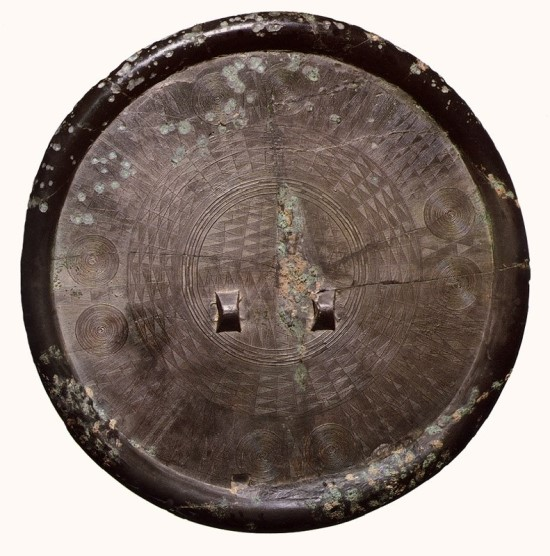
고조선의 청동기 제작 기술은 매우 높은 수준이었습니다. 고조선의 수준 높은청동 제련 기술을 보여주는 대표적인 유물이 다뉴세문경(여러 꼭지 잔줄무늬 거울)입니다. 직경 21.2cm 안에 0.2mm 간격으로 13,000개에 이르는 가느다란 선을 넣은 다뉴세문경은고조선 지역에서 발굴되었습니다. 주석의 비율이 27%에 달하여매우 견고할 뿐 아니라 빛을 밝게 반사하는 이 청동 거울은 강단 사학계에서 보는 것과 달리 고조선이 고도의 청동기 제작술을 자랑하는 동북아 문명의 주역이었음을 보여줍니다.

—————-
Traditional academic historians have maintained that Korea’s Bronze Age dates back no further than around 1300 BCE. However, recent research suggests that the Bronze Age in Korean history actually began more than a thousand years earlier. Archaeological discoveries indicate that the Korean people were already using bronze around 2500 BCE.
One of the key findings is the Haga-jeom Ha-cheung Culture in the Yeseo region. This culture emerged earlier than the Bronze Age cultures in the Yellow River basin around 2200 BCE and in Siberia around 1700 BCE. The Haga-jeom Ha-cheung Culture, which spanned the area from the Inner Mongolian city of Zhefang to the Baekdudaegan region, and the Yimu-lu Mountain area in Liaoning Province, was distinct from the cultures of the Yellow River basin in China, as evidenced by the presence of fortresses and the types of artifacts discovered. This area was part of the territory of Gojoseon, and the Haga-jeom Ha-cheung Culture is therefore considered an integral part of the Gojoseon civilization.
The excavation of this site has sent shockwaves through mainstream Korean academia, which has long argued that the Korean Bronze Age began after 1300 BCE, and that only after this period did the ancient Korean states emerge. Based on this chronology, they had previously dismissed the historical records of Gojoseon in the Hwando Gogi, which claim that Gojoseon was founded in 2333 BCE. However, archaeological discoveries in the very areas mentioned in the Hwando Gogi now provide evidence supporting this historical record, forcing mainstream Korean historians to reconsider and redefine Gojoseon history.
Among the most famous artifacts of Gojoseon’s Bronze Age, discovered in regions including the Yeseo, Yodong, Manchuria, and Hebei and Shandong provinces of China, is the Bipa-hyeong Donggeom (also known as the Guo-yin Dan-gum in China), a bronze sword resembling a traditional stringed instrument. This distinctive sword has not been found in the central regions of China or Siberia. Made of an alloy of bronze and zinc, the Bipa-hyeong Donggeom is harder and more durable than the swords made of lead commonly found in China. The alloying of bronze and zinc requires advanced metallurgical techniques due to the differing boiling points of these metals. This alone demonstrates the advanced level of Gojoseon’s civilization over 4,000 years ago.
The Bipa-hyeong Donggeom has been found not only in northern Korea but also in southern regions such as Buyeo in Chungcheongnam-do and Yeocheon in Jeollanam-do. This discovery suggests that the entire Korean Peninsula, from the northern regions to the south, belonged to the same cultural sphere as Inner Mongolia, Yeseo, and Manchuria, and that Gojoseon’s domain stretched from the Yeseo region to the Korean Peninsula.
The bronze casting technology of Gojoseon was highly advanced. A representative artifact that showcases Gojoseon’s sophisticated bronze manufacturing skills is the Danyeosemun-gyeong (a mirror with intricate ridged patterns). The Danyeosemun-gyeong, which measures 21.2 cm in diameter, features over 13,000 fine lines etched with a 0.2mm spacing. It was discovered in the Gojoseon region. With a tin content of 27%, this mirror is extremely durable and reflects light brilliantly, serving as evidence that, contrary to the views of mainstream historians, Gojoseon was a leader in advanced bronze manufacturing and played a central role in the ancient civilizations of East Asia.