<고조선의 복식 문화>
고조선 영역이었던 요령성에서 청동기 문화가 시작된 때는 적어도 BCE2500년 경이고, 중국 황하 유역의 청동기 문화는 이보다 늦은 BCE2200년경에 시작 되었습니다. 이러한 고조선의 앞선 청동기 문화는 농기구, 제기, 무기 등의 제작 기술 수준도 높였지만, 직물 생산도구의 발전도 가져왔습니다. 직물 생산 도구의 향상은 사직물(누에고치 실로 만든 천), 면, 마 등의 생산을 보편화시켰을 뿐 아니라, 생산 기술도 급성장시켰습니다.
지금까지 발굴된 고고학 자료에 따르면, 고대 한국이 비단을 생산하기 시작한 때는 중국과 비슷한 BCE2700년경입니다. 배달국의 말기에 비단이 생산되었다는 고고학 자료는 초대 단군왕검이 하백의 딸을 황후로 맞이하여 누에치기를 관장하게 한 환단고기의 기록을 뒷받침합니다. 하지만 고조선의 뽕나무는 중국 것과 다른 품종이고, 비단의 직조방법과 염색 기술도 다릅니다. 고조선이 독자적인 비단 생산 기술을 가지고 있었음을 알 수 있습니다.
고조선의 양잠 기술이 중국에서 들어온 것이 아니라는 것은, 고조선의 강역이었던 평안도 평양에서 출토된 BC33000년경의 질그릇에서 확인됩니다. 이 질그릇의 밑바닥에 통 잎 뽕나무의 뽕잎 무늬가 새겨져 있습니다. 통 잎 뽕나무를 재배하였다는 것은 이 뽕잎을 먹는 토종 뽕 누에를 키워 누에고치 실을 뽑았음을 의미합니다. 토종 뽕 누에는 중국과는 다른 품종으로 야생 메 누에를 순화시킨 것입니다. 따라서 비단을 생산하지는 못했을지라도, 고조선은 BCE3000년경에 이미 독자적인 양잠 기술을 개발하였다고 볼 수 있습니다.
고대 복식사를 연구하는 박선희교수는 ‘홍산문화 유물에 옥잠(옥누에)이 나오는 것을 보면, 한국의 직조 기술이 중국보다 앞섰다’라고 말합니다. 매미 날개처럼 아주 얇은 실크를 중국보다 우리가 앞서서 생산했고, 실크의 종류도 고조선이 더 많았다고 합니다. 실크로드 즉 비단길은 동방에서 서방으로 간 대표적 상품이 중국산 비단이었던 데에서 유래한 말입니다. 그러나 홍산문화 유물, 고조선 유물, 환단고기 등을 근거로 한다면, 실크로드의 역사는 새로 써야 합니다.
면직물의 생산도 고대 한국이 중국보다 앞섭니다. 우리나라는 고조선 때부터 면이 있었지만, 중국의 경우 면직물이 원나라 때부터 있었습니다. 고조선 시대에 이미 품질이 우수한 백첩포를 생산하였습니다. 백첩포는 원나라의 목면과는 다른 품종인 백첩을 사용한 것입니다. 고려 시대 문익점이 원나라에서 몰래 목화씨를 가져온 이후에 비로소 우리나라가 면직물을 생산하게 되었다는 것은 각색된 이야기에 불과합니다.
고조선 사람들은 삼베와 모직도 생산하였습니다. 함경남도 북청 토성리의 고조선 시대 유적에서 삼베 조각이 출토되었고, 길림성 성성초 유적에서는 양털 실과 개털 실을 섞어서 짠 모직물이 출토되었습니다. 고조선 후기 유적인 길림성 후석산 유적에서는 방직기로 짠 마포가 출토되었습니다. 방직기 사용은 고조선의 상당히 높은 직조 수준을 보여줍니다.
이 유적에서 또한 옷을 장식하던 청동 단추를 비롯한 여러 치장용품도 발견되었는데, 이것은 고조선 사람들이 옷을 만들어 단추도 달고 다양하게 치장하였음을 보여줍니다. 결론적으로 말해서 고대 한국은 고조선 이전 배달 시대 때부터 옷감을 생산할 수 있었고, 수준 높은 금속 가공 기술을 바탕으로 동북아시아에서 가장 우수한 직물 생산 기술을 보유하고 있었습니다.
삼국지-부여전을 보면, “부여 사람들은 흰색 옷을 숭상하여 흰 베로 만든 큰 소매가 달린 도포와 바지를 입고 가죽신을 신었다”라고 하였습니다. 이 기록은 부여의 의복 문화를 말한 것이지만, 부여는 고조선을 계승하였으므로 고조선의 복식도 이와 큰 차이가 없었을 것입니다. 복식 문화에서도 백색의 천지 광명 사상을 중시한 한민족의 도가적 신교 문화를 느낄 수 있습니다.
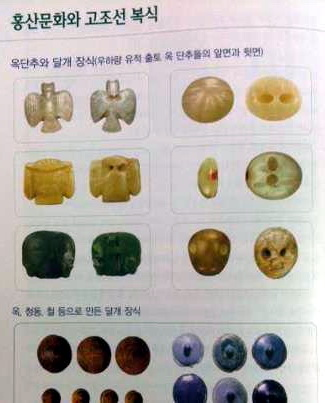
한국은 중국보다 적어도 16세기 정도 앞선 BCE25세기에 청동 단추로 장식된 복식을 착용했고, 그 뒤에는 갑옷과 투구에 이를 응용했습니다. 또 시베리아의 청동기 문화는 BCE1800년경에 시작 되었습니다 그러므로 중국과 북방 민족들보다 앞서 고조선이 가장 이른 시기에 청동 단추로 장식한 갑옷을 생산한 것입니다.
그리고 후한서나 삼국지 등 중국 사서의 내용을 보면 고대에 우리 민족은 ‘머리를 틀어 올렸다’는 것을 알 수 있습니다. 홍산문화 유적에서는 머리 위에 쓰는 옥으로 만든 옥고가 여러 개 발굴되었습니다. 박선희 교수는 이 옥고가 고조선 시대에도 계속 발전하였고, 옥고에서 한국 금관의 기본 양식이 비롯되었다고 합니다. 한국에서 금관을 쓰기 시작한 것은 고구려 때이고, 전 세계 금관의 3분의 2가 우리나라에 있습니다.
중국에서 금관이 만들어진 것은 이민족인 거란이 세운 요나라 때였습니다. 매장 풍습으로 왕의 시신을 금으로 덮으면서 금관을 만들기 시작한 것입니다. 금관만으로도 한국인의 정체성과 고유성을 증명할 수 있다고 말하는 박선희 교수는 한국을 금관의 종주국이라 주장합니다.
<고조선의 음식, 주거 문화>
고조선인의 식생활은 어떠했을까요? 평양시 남경 유적에서 5천 년 전의 탄화미가 한 구덩이 안에서 대량으로 발견되었습니다. 이 벼의 종자는 현재 우리가 먹는 쌀과 같은 단립종이고 야생 벼가 아니라 재배종으로 판명되었습니다. 이것은 고조선 이전부터 한반도 땅에 벼농사가 정착되었음을 뜻합니다.
고조선 사람들은 벼 외에도 조, 기장, 콩, 팥, 피, 수수 같은 잡곡도 재배하였습니다. 또한 돼지, 소,말, 양, 닭 등 집짐승도 기르고 산짐승을 사냥하여 고기와 가죽을 이용하였습니다. 후한서의 기록에 따르면 음식을 먹을 때 조두(나무로 만든 제기 형태의 그릇)를 사용하였다고 합니다. 그런데 실제로 고조선 시대의 유적지에서는 나무로 만든 그릇 외에도 바리, 접시, 굽접시, 시루, 단지, 항아리 등 여러 가지 그릇이 나옵니다. 이것은 고조선 사람의 식생활 수준이 매우 높았음을 말해줍니다.
당시 주거 문화에서 특히 눈여겨 볼 것은 한민족의 고유한 난방시설인 온돌이 고조선 후기 유적에서 발견되었다는 점입니다. 함북 웅기와 평북 강계, 자성, 영변 등의 주거 유적지에서 구들 형태가 확인되었습니다.
—————
< Clothing Culture of Gojoseon >
The Bronze Age began in the Liaoning region, part of Gojoseon’s territory, around 2500 BCE, earlier than the Yellow River region in China, where it started around 2200 BCE. Gojoseon’s advanced Bronze Age culture not only improved techniques for making agricultural tools, ceremonial items, and weapons but also significantly developed textile production tools. These advancements enabled the widespread production of textiles such as silk, cotton, and hemp, and accelerated technological innovation in fabric manufacturing.
According to archaeological evidence, ancient Korea began producing silk around 2700 BCE, contemporaneously with China. This aligns with records in the Hwandan Gogi, which state that King Dangun married the daughter of Ha Baek and assigned her to oversee sericulture. However, Gojoseon’s mulberry trees were of a different species from China’s, and its silk weaving and dyeing techniques were distinct, demonstrating an independent silk production technology.
Gojoseon’s independence in sericulture is further evidenced by findings from Pyongyang. A pottery artifact dating to 3000 BCE was found with an imprint of mulberry leaves from the tongip mulberry tree, a native species. This suggests that native silkworms, domesticated from wild strains, were already cultivated in Gojoseon for silk production. While silk might not have been produced on a large scale, these findings show that Gojoseon developed independent sericulture techniques as early as 3000 BCE.
Professor Park Seon-hee, an expert in ancient clothing history, asserts that artifacts such as jade silkworms unearthed from the Hongshan culture indicate that Korea’s weaving technology predated China’s. She argues that Gojoseon produced ultra-thin silk, akin to cicada wings, earlier than China and had a greater variety of silk types. The Silk Road, traditionally viewed as a route for Chinese silk, might need re-evaluation based on evidence from Gojoseon artifacts, which suggest a more significant role for Korean silk in ancient trade.
Gojoseon also led in the production of cotton textiles, which were present in Korea during the Gojoseon period. In contrast, China began producing cotton textiles only during the Yuan Dynasty. Gojoseon produced Baekcheoppo, a high-quality cotton fabric made from a native variety of cotton, distinct from Yuan’s Mokhwa (tree cotton). The widely told story of Moon Ik-jeom bringing cotton seeds from Yuan to Korea is thus a later fabrication.
In addition to silk and cotton, Gojoseon produced hemp and wool textiles. Fragments of hemp cloth were discovered at a Gojoseon site in Bukcheong, South Hamgyong Province. Wool textiles, woven from a blend of sheep and dog hair, were unearthed at the Seongseongcho site in Jilin Province. Furthermore, woven linen fabrics from the Huseoksan site in Jilin showcase Gojoseon’s advanced weaving techniques, including the use of looms. The discovery of bronze buttons and other decorative items from these sites indicates that Gojoseon people adorned their clothing with intricate accessories, showcasing their refined fashion sense.
Records in Samgukji – Buyeojeon describe the people of Buyeo, Gojoseon’s successor state, as wearing white robes with large sleeves, trousers, and leather shoes. This suggests that Gojoseon’s clothing style emphasized white, reflecting the Korean people’s spiritual focus on Cheonji Gwangmyeong (Heaven and Earth’s Radiance).
Korea was far ahead of China and northern nomadic cultures in clothing technology, as evidenced by the bronze buttons used in Gojoseon attire around 2500 BCE, which were later applied to armor and helmets. Comparatively, Siberian Bronze Age culture began around 1800 BCE, and China’s bronze buttons emerged much later.
Additionally, jade hairpins (Okgo) unearthed from Hongshan culture sites evolved into more elaborate forms during the Gojoseon era. Professor Park Seon-hee identifies these hairpins as the precursors to Korea’s gold crowns, first used in Goguryeo. Today, Korea possesses two-thirds of the world’s ancient gold crowns, solidifying its status as the origin of gold crown culture. In contrast, China’s gold crowns appeared much later, during the Liao Dynasty, established by the Khitan people.
< Food and Housing Culture of Gojoseon >
Archaeological discoveries reveal much about the diet of the Gojoseon people. At the Namgyeong site in Pyongyang, a large cache of carbonized rice grains dating back 5,000 years was unearthed. The rice was a cultivated japonica variety, similar to the rice consumed today, indicating that rice farming had already been established on the Korean Peninsula before Gojoseon.
In addition to rice, the people of Gojoseon cultivated millet, sorghum, beans, red beans, foxtail millet, and barley. They also raised domesticated animals such as pigs, cattle, horses, sheep, and chickens, while hunting wild animals for meat and hides. According to Hou Hanshu (Book of the Later Han), they used wooden bowls and vessels for eating. Excavations have revealed a variety of utensils, including bowls, plates, footed dishes, steamers, jars, and pots, illustrating the advanced culinary culture of Gojoseon.
In terms of housing, one of Gojoseon’s most remarkable contributions is the development of Ondol, Korea’s unique underfloor heating system. Ondol remains from the late Gojoseon period have been found at sites in Unggi (North Hamgyong Province), Kangye, Jaeseong, and Yongbyeon (North Pyongan Province), showcasing the early use of advanced heating technology in residential architecture.
In conclusion, Gojoseon excelled in textiles, food production, and housing technologies, demonstrating its role as a cultural and technological leader in ancient Northeast Asia.