

일본 역사의 진실을 아는 사람은 ‘일본사는 한민족의 이민사’라고 거침없이 주장합니다. 이 주장과 같이, 여러 가지 이유로 고국을 떠나야 했던 한민족의 선조들은 바다를 건너가서 일본 역사를 개척하였고, 고대 일본 사회의 지배층을 형성하였습니다. 특히 삼국 시대에 이르러 백제의 영향력은 절대적이어서 왜 조정은 백제의 분조나 다름 없었습니다.
하지만 백제가 망한 후(660년), 왜는 친정집인 한반도와의 관계를 단절하는 작업에 착수하였습니다. 그리하여 종래에 사용하던 왜라는 나라 이름을 일본으로 고치고(670), 왜왕을 천황으로 부르기 시작하였습니다. 그리고 일본 역사를 자생 왕조사로 변색시킨 고사기와 일본서기를 편찬하였습니다.
일본은 첫 역사서에서 천황가를 백제와 무관한, 신대로부터 시작된 만세일계의 왕조로 조작하였습니다. 이때 일본은 자기네 역사를 자생 역사로 만드는 한편, 모국인 한민족의 역사를 오히려 식민지사로 변조하였습니다. 4세기 후반 신공황후가 한반도 남부 가야 지역의 소국들을 정벌하고 임나일본부을 설치하여 2백년 동안 다스렸다는 남선경영론을 주장한 것입니다.
8세기에 일본의 첫 역사서를 만들면서 가공한 남선경영론(임나일본부서)은 19세기 말 일본의 조선침략 명분으로 다시 악용되었습니다. 과거에 자신들의 조상이 한반도로 진출하여 지배하였으니, 근대 일본이 한반도를 식민지로 삼는 것은 침략이 아니라 옛 땅을 회복하는 일이라 하였습니다.
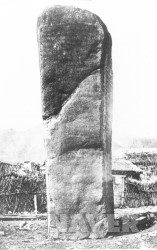
이때 일본은 이른바 남선경영을 뒷받침할 사료의 빈곤을 해결하기 위해 만주의 광개토태황비에 새겨진 비문까지 위조하였습니다. 일본에게 불리한 글자를 깨부수거나 석회를 발라 비문의 내용을 바꾸어 버린 것입니다. 그런 다음 비문을 해독하여 임나일본부설을 공식화하고, 고구려, 백제, 신라, 가야의 역사를 모두 일본의 식민지사로 전락시켰습니다.

————–
Those who understand the true history of Japan assert without hesitation that “Japanese history is the immigration history of the Korean people.” In line with this claim, the ancestors of the Korean people, who had to leave their homeland for various reasons, crossed the sea and pioneered Japanese history, forming the ruling class of ancient Japanese society. Particularly during the Three Kingdoms period, the influence of Baekje was so absolute that the Yamato court of Japan was virtually a branch government of Baekje.
However, after the fall of Baekje in 660, Japan began to sever its ties with its motherland, the Korean Peninsula. As part of this process, Japan changed its national name from ‘Wa’ to ‘Nihon’ in 670 and began referring to the Wa king as ‘Tennō’ (Emperor). Subsequently, Japan compiled the Kojiki (712) and Nihon Shoki (720), distorting its history into that of an indigenous royal lineage.
In these first official histories, Japan fabricated its imperial lineage as one unrelated to Baekje, tracing it back to divine antiquity as a single, unbroken dynasty. While establishing its history as self-originated, Japan distorted the history of its mother nation, the Korean people, into that of a colony. It asserted the “Southern Advancement Theory,” claiming that in the late 4th century, Empress Jingū conquered the small states of the Gaya region in southern Korea and established the Mimana Nihonfu, which ruled the area for two hundred years.
The fabricated Southern Advancement Theory, created during the compilation of Japan’s first historical records in the 8th century, was later exploited again in the late 19th century as justification for Japan’s invasion of Joseon. The logic was that since their ancestors had once advanced to and ruled the Korean Peninsula, modern Japan was not invading but merely reclaiming former territory.
At that time, in order to compensate for the lack of historical evidence to support the so-called Southern Advancement, Japan went so far as to tamper with the inscription on the Gwanggaeto Stele in Manchuria. Japan altered the contents of the stele by destroying characters unfavorable to them or covering them with lime. Then, by decoding the modified stele, Japan officially promoted the Mimana Nihonfu theory and reduced the histories of Goguryeo, Baekje, Silla, and Gaya to mere colonial narratives under Japanese rule.