다시 열릴 황금시대에 대해 구체적으로 이야기하기 전에 잠시 지난 근현대사를 돌이켜보기로 하겠습니다. 흔히 서양에서는 감성주의 문화를 버리고 이성주의, 실용주의 문화에 몰입하기 시작한 때인 17~18세기를 근대의 시작으로 간주합니다. 근대는 과학과 기술을 바탕으로 산업혁명이 일어나고, 거기서 축적된 경제력을 바탕으로 서양 제국이 아시아, 아프리카, 아메리카 등으로 진출하여 식민지를 개척한 시기입니다.
그런데 서양 고전문헌학의 대가였던 철학자 니체에 의하면 근대의 출발은 그 속에 이미 파멸의 씨앗을 내포하고 있었습니다. 본래 서양문명은 감성주의와 이성주의 양자의 문화 코드를 가지고 출발했지만, 근대에 오면서 지나치게 이성주의, 과학주의만 강조함으로써 스스로 타락의 길을 걷게 되었다는 것입니다. 나아가 니체는 서양의 감성주의 조류가 급격히 이성주의로 전환된 것은 그 근원이 소크라테스에게 있다고 비판합니다.
감성주의는 인간이 자연과 하나 되고 조화를 이루는 정신이 밑바탕에 깔려 있는데 ,이러한 경향이 소크라테스의 이성주의로 말미암아 소멸되었다는 것입니다. 이후 이성을 중시하게 된 서양의 근대 사조와 문화는 허무주의를 낳았고 그것은 곧바로 기독교의 허무주의와 합쳐짐으로써 서구의 몰락을 가져오게 되었다고 니체는 비판합니다.
이성과 과학과 기술의 발전, 그리고 서양의 세계 진출과 지배라는 측면을 따져 17~18세기를 근대라고 규정하는 것이 아주 잘못되거나 크게 문제될 것은 없습니다. 그러나 지구촌 전 인류를 수용하는 보편적인 시각으로 근대를 규정 하려면 보다 포괄적인 차원의 기준이 제시되어야 할 것입니다.
그것이 바로 지구촌 창세 문화의 근원인 삼신상제문화를 기준으로 근대를 보는 눈입니다.
지구촌 원형문화 신교의 눈으로 인류 역사와 문화를 보는 신교사관과 온 인류를 큰 하나의 가족으로 보는 대한사관으로 볼 때 진정한 근대의 출발은 태고의 우주 삼신문화, 삼신상제 문화가 인류사에 다 시 부활한 시점이 됩니다. 동양 우주론의 결정판인 우주 일 년의 선후천관으로 볼 때 오랫동안 생장, 분열하던 지구촌의 모든 동서 문명이 수렴, 통일되기 시작하는 시점이야말로 진정한 의미의 근대라 할 것입니다. 우주의 가을을 맞아 인류의 태곳적 원형문화, 광명문화가 가을철의 통일문화로 재탄생하기 시작하는 때, 바로 그때가 근대의 출발점이 되는 것입니다.
이제 인류는 바야흐로 우주의 가을철 열매문화 시대를 맞고 있습니다. 그러면 성숙한 열매문화 시대는 어떻게 열리게 될까요? 그것은 일찍이 삼신상제님을 받들던 상고시대의 신명나는 신교문화가 부활하면서 실현될 것입니다. 모든 생명 기운이 근본으로 돌아가면서 결실을 맺는 가을철 변화법칙에 따라 인류의 시원 문화의 신교가 열매 진리로 다시 출현하는 것입니다.
인류사의 전면에 열매 진리가 나온다는 선언이 지난 19세기 중반 조선의 한 선각자에 의해 울려 퍼졌습니다. 그 선각자는 바로 다시 개벽 소식을 알린 수운 최제우(1824~1864) 입니다.
수운은 1860년에 삼신상제님으로부터 직접 도를 받아 동학을 창도 했습니다. 동학이 태동한 19세기는 자본주의의 대량생산 체제를 바탕으로 서양 제국주의 열강이 식민지 시장을 개척하기 위해 발호跋扈한 때입니다. 서양 제국은 총칼로 무장하여 약소국들을 정복하며 식민지를 널펴 나갔습니다.
조선도 정복의 대상이 되어 동양에서 유일하게 제국주의 대열에 합류한 일본과 서양 열강의 침략에 시달렸습니다. 특히 일본 제국주의는 7백만 조선 민중을 참혹한 죽음의 나락으로 몰아갔고, 역사의 뿌리와 삶의 원형을 파괴하였습니다.
이처럼 약육강식의 국제질서 아래 전 지구촌이 시련을 겪으면서 상극의 갈등과 상처가 절정으로 치닫던 시기에 다시 개벽이라는 새 세상 소식을 알리는 동학이 태동했습니다.
동학이 전하려 한 소식은 두 가지입니다.
첫째는 시천주(侍天主) 사상입니다.
우리 고유의 천제문화의 전통으로서 삼신상제님을 모시는 신교문화, 상제문화를 회복해야 한다는 것입니다.
둘째는 ‘다시 개벽’ 소식입니다.
이 ‘다시 개벽’은 자연, 문명, 인간이라는 세 가지 차원에서 이루어집니다. 천지 대자연의 질서가 새로운 질서로 뒤집어지는 자연개벽과 지금의 세계 인류 문명이 전쟁과 병란(괴질)의 혼란 속에서 완전히 뒤집어지는 문명개벽과 인간이 잃어버린 광명한 신성을 되찾는 인간개벽이 그것입니다.
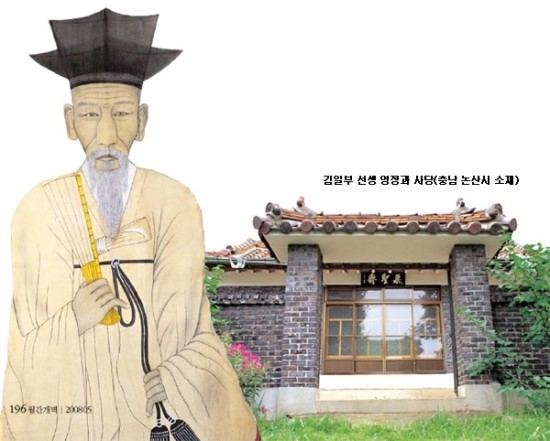
시공간이 새롭게 열리는 자연개벽의 구체적인 소식은 김일부 (1826~1898)에 의해 밝혀졌습니다. 동학이 선포된 때와 비슷한 시기에 김일부는 주역의 완결본인 정역을 선포하였습니다. 우주의 가을 세상이 되면 새로운 달려, 정력正曆 쓰게 된다는 것입니다. 지금 우리가 쓰는 365 1/4일이 1년인 달력이 장차 360일을 1년으 로 하는 달력으로 바뀌게 되는 것입니다.
김일부가 선포한 정역은 동서양 시간관에 대한 일대 혁명이자 완성입니다. 김일부의 정역 사상에서 더욱 중요한 것은 1년 360일의 달력이 단순히 자연의 변화로 이루어지는 것이 아님을 밝혔다는 점입니다. 그는 천지와 일월의 운행이 상극에서 상생의 질서로 전환되는 대자연의 개벽에는 삼신상제님이 직접 개입하신다는 것을 강조하였습니다.
최수운은 문명개벽을 “십이제국 괴질운수 다시개벽 아닐런가”(용밤 유사-몽중노소문답가)라는 노랫말로 전하였습니다. 지구촌의 온 인류가 특히 귀기울여야 할 대변혁의 주제가 바로 이 괴질 병란으로 일어나는 문명개벽입니다. 무한경쟁의 과정을 거치며 문명은 극치로 발달했지만 천지와 대자연의 만물은 병이 들었습니다. 그 안에서 사는 인간의 몸과 마음도 역시 병들었습니다. 이렇게 병든 자연, 인간, 문명이 토해 내는 재탄생의 몸부림이 곧 다시 개벽의 주제인 괴질 병란입니다.
동학은 다시 개벽의 소식을 전하면서 아울러 개벽을 주재하시는 상제님이 신교문화의 본고장인 동방 땅에 오신다는 것을 전하였습니다. 그것은 곧 한반도가 다시개벽의 진원지이자 새 세상을 여는 구심점이 된다는 사실을 표현한 것입니다. 이를 주역에서는 성어호간成於乎艮이라 합니다.
인류가 지금까지와는 전혀 다른 문명시대로 전환하는 개벽에서 세계 구원을 성사시키는 성스러운 땅이 바로 간방이라는 것입니다. 여기서 말하는 간방艮方은 곧 한반도입니다.
이러한 문명개벽의 놀라운 소식에서 볼 때 동학은 인류의 신교문화의 원형을 새롭게 선언함으로써 진정한 근대 출발점이 되는 것입니다.
—————–
Before discussing in detail the golden age that is to reopen, let us briefly revisit modern and contemporary history. In the West, the 17th–18th centuries are generally regarded as the beginning of the modern era, when emotional culture gave way to rationalism and pragmatism. Modernity was defined by the rise of science and technology, the Industrial Revolution, and the subsequent expansion of Western empires into Asia, Africa, and the Americas through colonial conquest.
Yet, according to Nietzsche, the great scholar of Western classical philology, modernity contained within itself the seed of destruction. Western civilization had originally been built upon both emotional and rational cultural codes, but in the modern era, excessive emphasis on rationalism and scientism set it on a path of degeneration. Nietzsche further argued that the sudden turn from emotionalism to rationalism in the West originated with Socrates, whose exaltation of reason extinguished the spirit of unity and harmony with nature that had characterized earlier cultural tendencies. This overreliance on reason, he claimed, ultimately produced nihilism, which in turn fused with Christian nihilism and brought about Western decline.
Defining the 17th–18th centuries as modernity on the basis of scientific progress, technological development, and imperial expansion is not inherently wrong. However, to define modernity from a universal perspective that embraces all humanity, a broader criterion must be established. That criterion is the Samsin Sangje culture — the primordial spiritual tradition at the root of humanity’s original culture.
From the standpoint of Singyo historiography (which views history through the divine culture of Heaven) and the Daehan historiography (which regards all humanity as one family), true modernity begins with the rebirth of the cosmic Samsin Sangje culture in human history. According to the cosmology of the Cosmic Year, which divides time into epochs of growth and decline, the true modern era begins when the long cycle of growth and division gives way to the unification and convergence of Eastern and Western civilizations — the autumn of the universe, when humanity’s primordial luminous culture is reborn as the unified culture of fruition.
Humanity now stands at the threshold of this autumnal fruit-bearing culture. How will this mature civilization be realized? It will come through the revival of the ancient Singyo culture, in which Samsin Sangje was revered. In accordance with the law of cosmic autumn, whereby all life returns to its roots and bears fruit, the original divine culture of humanity will reemerge as the truth of fruition.
This declaration was first sounded in the mid-19th century by a Korean visionary, Choe Je-u (1824–1864), known as Su-un, who proclaimed the news of Gaebyeok (“Great Renewal”). In 1860, he received direct revelation from Samsin Sangje and founded Donghak (Eastern Learning). This was the 19th century, a time when Western imperialist powers, armed with capitalism and mass-production, were expanding colonies across the globe. Korea, too, became a target of conquest, suffering under Western encroachment and Japanese imperial aggression. Japan’s colonial policies drove millions of Koreans into misery and destruction, erasing cultural roots and ancestral traditions.
In this era of global strife, when the law of survival of the fittest reached its peak and conflict brought humanity to the brink, Donghak arose to proclaim the dawn of a new world — Gaebyeok. Donghak’s message had two key dimensions:
First, the Si-cheonju (Serving the Lord of Heaven) teaching. This meant reviving the native Korean tradition of divine culture, the worship of Samsin Sangje, rooted in ancient Singyo.
Second, the message of Gaebyeok (Great Renewal). This renewal unfolds in three dimensions — natural Gaebyeok (cosmic reordering of Heaven and Earth), civilizational Gaebyeok (collapse and transformation of human society through wars and pandemics), and human Gaebyeok (the recovery of humanity’s lost divine light and spiritual nature).
The vision of natural Gaebyeok was further elaborated by Kim Il-bu (1826–1898), who, around the same time as Donghak’s founding, completed the Jeongyeok — the “Corrected Book of Changes.” He taught that in the autumn of the cosmos, a new calendar would govern time: not 365¼ days, but 360 days per year. This was not merely a calendrical reform but a revelation that the great transformation of Heaven and Earth from conflict (sanggŭk) to mutual life-giving harmony (sangsaeng) is directed by Samsin Sangje himself.
Su-un Choe expressed the message of civilizational Gaebyeok through a prophetic song: “Is it not the destiny of the Twelve Kingdoms to be overturned by a great pestilence, heralding a new Gaebyeok?” This refers to the great disease catastrophe as the pivotal event that will remake civilization. Modern society, driven to its limits by unrestrained competition, has sickened both nature and humanity. The crises of war, epidemic, and ecological collapse are the labor pains of a rebirth — the essence of Gaebyeok.
Donghak also proclaimed that Samsin Sangje would appear in the East, the original homeland of Singyo, to preside over this renewal. This means that the Korean Peninsula is the epicenter of Gaebyeok and the axis of the coming new world. In the language of the I Ching, this is expressed as seongeo-hogan (成於乎艮) — “completion comes from the northeast.” Here, ganbang (the northeast) refers to the Korean Peninsula.
Seen in this light, Donghak was not only a social movement but also a spiritual proclamation of the rebirth of humanity’s original divine culture. By declaring the return of Singyo and the dawning of Gaebyeok, Donghak represents the true starting point of modernity in human history.