
온라인 광고 효과와 효율성을 높이기 위해 광고비를 여러 채널에 분배하는 것은 사업계획 목표와 KPI(Key Performance Indicator, 핵심성과지표)에 맞는 전략적 접근이 필요하다. 그래서 또 사업계획이 필요하고, 연간 매출목표를 어떻게 달성할지를 구체적으로 월별 채널별로 분배하는 것이 필요하다. 그것이 곧 전사적인 목표달성을 위한 KPI가 되는 것이다.
예를 들어, 브랜드 인지도 증가, 고객유입 증가, 구매전환율 향상 등이 있을 수 있다. 이러한 회사의 KPI는 모든 임직원들에게 다시 분배되어, 각 직원들의 세분화된 KPI로 설정되어야 목표 중심적인 실행력을 증대하고 궁극적으로는 회사의 목표가 달성될 수 있다. KPI 설정에 대해선 나중에 경영관리 질문에서 다시 이야기하겠다.
KPI 기반에 따라 광고 예산을 분배할 때는 광고의 목적에 따라 고려되어야 한다. 광고의 목적이 브랜드 인지도 증가 또는 고객유입 증가라면, 당장의 매출과 연결되는 것은 아니기 때문에 효율성보다는 효과성에 초점을 두어야 한다. 물론 적은 비용으로 목표를 달성했다면 효율적이기도 하지만, 구매전환과 같은 매출이 직접적으로 바로 발생하는 경우가 적기 때문에 경영자는 참고 기다려줘야 한다.
대부분의 CEO들은 디지털 마케팅이 즉각적인 반응이 온다고 잘못 이해하는 경우가 많은데, 사실은 그렇지 않다. 물론 디지털 광고는 과거 4대매체 중심의 광고보다 빠른 반응이 오며 빠르게 광고효과를 분석할 수 있지만, 특히 신제품의 경우 브랜드가 알려지고 사용되어서, 후기들이 쌓이고 누적되어 검색에 노출될 때까지는 적어도 6개월은 필요하다.
내가 한 제약회사에서 화장품사업본부장으로 입사한지 1년도 채 안됐을 때였다. 사업계획 보고 때, 오너 회장이 화장품 사업의 지지부진함을 질타하며, 당장 TV CF를 만들어서 광고를 하라고 지시했다. 그때 나는 TV CF를 해도 바로 매출이 증가하지 않을 것이라며 반대했다. 왜냐하면 최근 화장품 시장은 TV CF를 방송한다가 바로 매출로 연결되지 않으며, 특히 더마 화장품은 고관여 제품이라서, 제품을 선택하는데 심사숙고하는 소비자가 쉽게 브랜드를 바꾸는 시장이 아니었기 때문이다. 출시한지 한 달뿐이 안된 브랜드에겐 시장에서 자리를 잡기 위한 시간이 필요했다.
당시 내가 제안했던 건, 디지털 마케팅을 6개월 이상 해서, 온라인 검색에서 브랜드가 노출이 되고 많은 사용후기가 누적된 다음에, TV CF를 방송하는 게 효과적이란 주장이었다. 그렇지 않으면 공기중에 돈을 뿌려버리는 것과 다름없는 일이었다. 디지털 시대에는 소비자의 구매행태도 변화했기 때문이다.
소비자의 구매활동은 과거 오프라인 시대에 AIDMA, 즉 Attention(인지)→Interest(흥미)→Desire(욕구)→Memory(기억)→Action(구매)의 단계로 이루어졌다면, 지금 온라인 시대에는 AISAS, Attention(인지)→Interest(흥미)→Search(검색)→Action(구매)→Share(공유)의 단계로 이루어지고 있다.
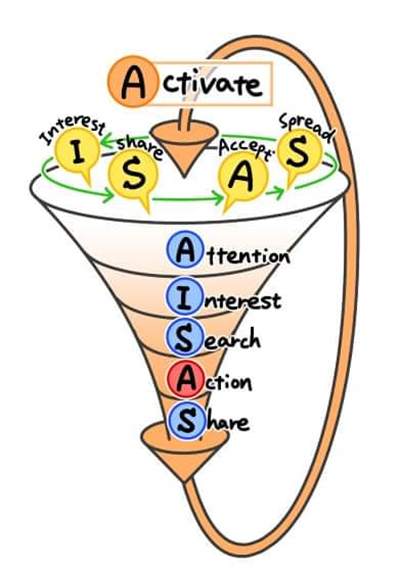
지금의 고객들은 오프라인 매장에 가서 어떤 제품을 구매하기 전에 일단 인터넷으로 검색(Search)을 한다. 이를 통해 제품의 정보와 구매평들을 습득하고 나서 확신이 서면 비로소 구매를 하며, 거기서 멈추지 않고 마음에 들면 스스로 제품을 공유하여 다른 이들에게 정보를 제공하는 역할도 하는 것이다. 따라서 신제품의 디지털 마케팅은 이렇게 소비자들이 얼리 어댑터(Early Adaptor)나 인플루언서(Influencer)들의 제품평가를 검색할 수 있는 콘텐츠들이 축적되는 과정이 필요하다. 그후에 TV 광고나 구매전환을 유도하는 광고가 따른다면 더욱 효과가 있을 것이다.
하지만 당시 회사에서는 세간의 화제가 되었던 에스티로더가 닥터자르트를 수천억 원을 주고 인수한 것과 같은 꿈이, 화장품 사업을 하면 금방 이루어질 것 같은 착각을 하고 있었다. 나는 이에 대해 반박의 이야기를 했던 적이 있다.
“닥터자르트는 2004년 창업 후 10년이 지난 후인 2014년에 되어서야 매출이 330억 수준이었습니다. 그러다 2015년 에스티로더의 투자를 받으며 글로벌 확대를 하면서 860억원대로 성장을 하였고, 이후 파격적 성장으로 금년 5,000억원 이상의 매출을 이루면서 에스티로더에 100% 인수되었습니다. 이런 성장의 이면엔 단단한 브랜드를 마련한 10년의 세월이 있었습니다.
또한 유니레버가 인수한 AHC의 경우도 1999년부터 전문적인 에스테틱 사업을 시작하여 2009년 커버코리아라는 회사를 설립하기까지 기반을 쌓아가는 10년이 있었으며, 그 전문성으로 에스테틱 전문관리를 화장품으로 안방에서 받을 수 있다는 개념으로 홈쇼핑에 런칭하여 성공하였기 때문에, 유니레버가 3조원에 인수한 것입니다. 브랜드가 성장하기 위해서는 아기가 걸음마를 떼고 걷고 뛸 수 있게 될 때처럼 기다림의 시간이 필요합니다.”
처음엔 오너도 수긍하는 것 같았지만, 한 달이 지나자 왜 아직도 매출이 증가하지 않느냐고 화를 내기 시작하더니, 급기야는 당장 CF를 제작해서 방송하라는 명령을 내렸다. 그리고 그의 말에 따르지 않았던 나는 중국으로 발령이 나서 떠나게 됐고, CF는 빠르게 제작되어 수십억 원의 광고비가 투입되어 TV에 방송되었지만, 매출엔 큰 영향을 주지 못했다.
화장품은 약이 아니다. 기능적으로 즉각적인 효능이 나는 약과 달리, 오랜 기간 소비자에게 사용되어지고 인정을 받아야만 되는 제품이다. 그런 과정에서 기능뿐만 아니라 감정적으로 브랜드와 교감도 형성되는 것이다. 화장품 시장에선 이런 과정이 디지털 마케팅에서도 당연히 필요한 시간이다.
이처럼 디지털 광고도 시간을 가지고 콘텐츠를 쌓아가는 노력과 함께 브랜드 인지도를 높이면서 매출을 확대하는 과정이 필요하다. 그러려면 확실한 광고의 목적이 구분되어야 하고 이에 따라 콘텐츠도 달라지고 대상 채널도 달라질 수 있다.

만약 신제품의 인지도가 목적이라면 브랜드 이미지를 높이는 광고 및 콘텐츠를 소셜 미디어에 지속적으로 하며 소비자들의 참여와 경험을 유도해야 한다. 반면에 구매전환율을 높이려면 검색엔진광고(SEA)와 타깃팅 광고에 예산을 할당하여 바로 지갑을 열 수 있는 구미가 당기는 콘텐츠를 노출하는 것이 좋을 것이다. 이는 회사의 매출목표, 예산, 브랜드 포트폴리오 등 여러 상황에 따라 다를 수 있지만, 아래와 같은 일들은 항상 습관적으로 고려하고 진행해야 할 것이다.
- 타깃 고객: 목표 고객의 선호도, 행동, 소비 패턴을 분석하여 가장 영향력 있는 플랫폼을 파악하고 가장 효과적인 채널에 더 많은 예산을 배정한다.
- 다양한 채널 통합: 서로 다른 채널의 강점을 활용하여 광고 캠페인을 실행한다. 예를 들어, 소셜 미디어 광고로 인지도를 높이고, 이메일 DM과 검색엔진광고로 전환을 유도할 수 있다.
- 성과 측정 및 분석: 캠페인의 성과를 지속적으로 모니터링하고 분석하여, ROAS가 높은 채널에 추가 예산을 재분배하는 데이터를 기반으로 하는 의사결정을 한다.
- 자동화 도구 사용: 광고 성과를 최적화하고 관리하는 데 도움이 되는 마케팅 자동화 도구를 사용한다. 최근에는 인공지능(AI)을 활용하여 타깃팅을 개선하고, 광고 성과를 자동으로 최적화할 수 있다.
중요한 것은 목표에 맞게 예산을 신중하게 분배하고, 지속적인 모니터링과 최적화를 통해 가장 효과적인 채널에 투자하는 것이다. 하지만 회사 자체적으로 이런 일을 하려면 디지털 전문 마케터가 필요하다. 따라서 다시 한번 권유하고 싶은 것은 전문 마케터 인건비를 부담하지 말고, 그 비용으로 차라리 이런 세부적인 일들은 전문 대행사에게 맡기는 것이 좋다. 회사는 그보다 더 잘할 수 있는 일에 집중하는 것이 시간과 노력이란 큰 기회비용을 절약하는 일이다.
——————————-
To enhance the effectiveness and efficiency of online advertising, distributing the budget across various channels requires a strategic approach aligned with business objectives and Key Performance Indicators (KPIs). This necessitates a detailed business plan, which should specify how the annual sales targets will be achieved by distributing the budget monthly and by channel, thereby aligning with the overarching corporate goals reflected in the KPIs.
For example, possible company KPIs might include increasing brand awareness, customer influx, or improving conversion rates. These KPIs should be distributed down to every employee, setting personalized KPIs that enhance goal-oriented execution and ultimately fulfill the company’s objectives. Detailed discussions on setting KPIs will be addressed later under business management queries.
When allocating advertising budgets based on KPIs, it’s crucial to consider the purpose of the ads. If the aim is to increase brand awareness or customer influx, these objectives are not immediately linked to sales, so the focus should be on effectiveness rather than efficiency. While achieving objectives at a lower cost also denotes efficiency, scenarios like improving conversions might not directly lead to immediate sales, requiring patience from management.
Many CEOs mistakenly believe that digital marketing yields instant responses. While digital ads do allow for quicker reaction and analysis compared to traditional media, especially for new products, it typically takes around six months for a brand to become recognized and accumulate reviews to appear in searches.
I recall a personal experience at a pharmaceutical company where I served as the head of the cosmetics division. During a business plan review, the chairman criticized the sluggish performance of the cosmetics business and instructed immediate TV commercial production. I opposed this directive, explaining that TV commercials would not instantly boost sales, especially since the derma cosmetics market involves high-involvement products where consumers take considerable time to switch brands. A newly launched brand needs time to establish its market presence.
I suggested implementing digital marketing for over six months to increase online visibility and accumulate user reviews before broadcasting TV commercials. Without this preparatory step, it would be akin to scattering money into the air. Given the changes in consumer purchasing behavior in the digital age, this approach is necessary.
Previously, consumer buying activities followed the AIDMA model—Attention, Interest, Desire, Memory, Action—in the offline era. In today’s online era, the model has shifted to AISAS—Attention, Interest, Search, Action, Share. Today’s consumers typically search online for product information and reviews before making a purchase and, if satisfied, may share their experiences with others, thereby playing an informative role.
Therefore, digital advertising for new products requires time to accumulate content, making it visible and credible to early adopters and influencers. Subsequent advertising that drives purchases, like TV ads, will be more effective if done after establishing a solid online presence.
However, the company at the time harbored illusions of rapid success, akin to Estée Lauder’s acquisition of Dr. Jart, which only achieved significant sales growth after a decade of brand building.
“Dr. Jart+ had been founded in 2004, and it wasn’t until ten years later in 2014 that the company reached sales of 33 billion KRW. Then, with Estée Lauder’s investment in 2015 and its subsequent global expansion, sales grew to 86 billion KRW, and following this dramatic growth, this year the company achieved sales exceeding 500 billion KRW, leading to a 100% acquisition by Estée Lauder. Behind this growth was a solid decade spent building a robust brand.
Similarly, AHC, which was acquired by Unilever, also had a decade of foundation-laying from 1999, starting its professional aesthetic business before establishing Cover Korea in 2009. It was their expertise that launched the concept of professional aesthetic care at home through home shopping networks, which proved to be a success, leading to its acquisition by Unilever for 3 trillion KRW. Just like a baby needs time to learn how to walk and run, a brand needs time to grow.”
Despite initial agreement, the owner soon demanded immediate sales increases and ordered TV commercial production. I was transferred to China for opposing this, and despite significant investment in the commercial, it failed to significantly impact sales.
Cosmetics are not medicine. Unlike drugs that can offer immediate efficacy, cosmetics require prolonged consumer use and recognition. Building emotional connections with the brand is also a part of this process, necessitating patience in digital marketing efforts. In the cosmetics market, such a process is naturally necessary in digital marketing.
Just like this, digital advertising requires time to build up content while enhancing brand awareness and expanding sales. It’s crucial to clearly define the purpose of the ads, which can affect both the content and the choice of channels.
If the goal is to increase the awareness of a new product, continuous advertising and content aimed at enhancing the brand image should be carried out on social media to encourage consumer participation and experience. Conversely, if the goal is to increase the conversion rate, it would be wise to allocate the budget to Search Engine Advertising (SEA) and targeted advertising to present content that immediately entices consumers to open their wallets. This can vary depending on the company’s sales targets, budget, and brand portfolio, but the following actions should always be considered and implemented routinely:
- Target Audience: Analyze the preferences, behaviors, and consumption patterns of the target audience to identify the most influential platforms and allocate more budget to the most effective channels.
- Integration Across Various Channels: Utilize the strengths of different channels to execute advertising campaigns. For example, use social media advertising to increase brand awareness and employ email direct marketing and search engine advertising to drive conversions.
- Performance Measurement and Analysis: Continuously monitor and analyze campaign performance, and make data-driven decisions to redistribute additional budget to channels with high Return on Ad Spend (ROAS).
- Use of Automation Tools: Use marketing automation tools to optimize and manage advertising performance. Recently, artificial intelligence (AI) has been utilized to improve targeting and automatically optimize advertising results.
In conclusion, digital advertising requires careful budget allocation aligned with specific goals and ongoing monitoring and optimization to invest effectively in the most impactful channels. It’s also advisable for companies to outsource these detailed tasks to specialized agencies, allowing them to focus on areas where they can excel, thus saving time and reducing opportunity costs.