“응. 이것이 나의 화두였어. M&C처럼 패션지향적인 제품엔 안티에이지 같은 기능성 제품이 어울리지 않는단 말이야. 그 싸움터에 들어가면 우리가 질 것만 같아. 내 생각에는 도시감각적인 남성용, 젊은 층의 피부를 더욱 화사하게 해주는 내츄럴 스킨케어, 프레시한 느낌의 향수와 바디용품 등의 제품라인으로 확장해 온 것 까지는 괜찮았는데…., 이런 보편적인 이미지 제품의 개발은 이제 국내 화장품 시장에선 브랜드를 벗어나 상품이 가지고 있는 힘이 부족해서, 계속 커지고 있는 기능성화장품의 경쟁에서 설 자리를 찾지 못할 것이라는 불안감을 떨쳐 버릴 수가 없어.”
“팀장님, 그래서 아까 여드름 화장품 얘기를 하신 건가요?”
박대리의 질문에 신팀장이 약간 자신이 없는 것처럼 희미하게 말했다.
“그래 맞아. 그래서 생각해 낸 것이 여드름 화장품인데…, 근데 이게 뭔가 풀어지지 않는 실타래처럼 내 머리 속을 어지럽게 얽히고 섥히게 하고 있단 말이야. 지금까지 국내외 시장 트렌드를 쭉 살펴본 결과, 내 생각에 분명 우리 회사는 여드름 시장으로 가야만 해. 이곳은 아직 아무도 밟지 않은 신대륙 같은 곳이야. 아직 이렇다 할 강자가 없는 곳이니, 우리가 발 빠르게 먼저 점령하면 크게 성공할 것 같단 말이지. 그런데 문제는 M&C 브랜드 이미지랑 너무 안 맞아서…. 아깝지만 포기하려고 했던 거야.”
“그런데, 아까는 또 여드름 화장품으로 가야 한다고 하셨잖아요?”
허진희의 질문에 신팀장은 빠르게 받아 쳤다.
“그래…. 다 진희씨 덕분이야.”
“네? 저 때문이라고요?”
“그래. 난 계속 M&C의 테두리 속에서 벗어나질 못했던 거지. M&C 여드름 화장품이란 게, 도저히 안 어울리는 거야. 분명 기회는 있는데 말이야. 그러다 M&C를 벗어나는 다른 일은 하지 말자고 한, 진희씨 말에 갑자기 퍼뜩 그 벽이 깨져 버린 거지. 유레카~! 바로 이거다 싶었어. 여드름 화장품이 왜 꼭 M&C 브랜드를 달아야만 할까? 여드름 전문 브랜드를 만들면 되잖아. 그럼 회사 전체적으로 봐도, M&C 브랜드와 카니발라이제이션(Cannibalization)도 없이 시너지를 창출하여 더욱 크게 성장할 거 아닌가?.”
“팀장님, 그런데…. M&C 브랜드숍에서 다른 브랜드를 판다는 게, 좀 그렇지 않습니까? 게다가 현재 우리 팀원들은 다 찢어져서 이젠 달랑 두 명뿐인데, 굳이 이렇게까지 할 필요가 있을까요? 우리 둘이서 새 브랜드를 또 하나 론칭한다는 일이 감당이 가지 않습니다.”
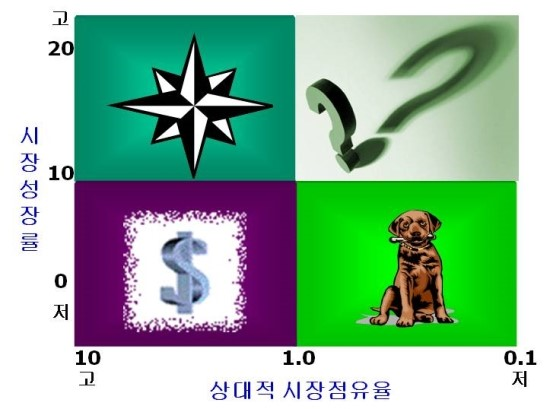
“박대리, 그렇게 자기 입장에서만 생각하면 안돼. 이건 우리 회사의 미래가 걸린 일이야. 우린 이제부터 M&C를 벗어난 PPM(Product Portfolio Management) 전략을 제대로 해야 해. 자~ 여길 봐봐.”
“여기 가로축은 상대적 시장 점유율이고, 세로축은 시장 성장률을 표시하는 거야. 그리고 각 네모 칸을 캐시카우(Cash Cow), 스타(Star), 도그(Dog), 물음표(Question Mark,?)라는 4개의 영역으로 표시하여, 제품 포트폴리오 전략을 모식화 할 수가 있어.”
그는 그림을 그려가며 각 항목에 대해 팀원들에게 열성을 다해 설명했다. (계속)
—————————
“Yes. That was my dilemma. Functional products like anti-aging don’t suit fashion-oriented brands like M&C. Entering that battlefield feels like we’re bound to lose. I think it was acceptable to expand our line into urban-style men’s skincare, natural skincare that brightens younger skin, fresh-scented perfumes, and body products… But developing such universally styled products is no longer enough in the Korean cosmetics market. These items, without the power of a strong brand, struggle to survive against the ever-growing competition in the functional cosmetics sector. I can’t shake off the anxiety about that.”
“Is that why you mentioned acne products earlier, sir?”
To Assistant Manager Park’s question, Team Leader Shin replied in a slightly uncertain tone.
“Yes, exactly. That’s where the idea of acne products came from… But it’s like a tangled skein of thread in my mind—no matter how I look at it, it won’t unravel. After reviewing both domestic and global market trends, I’m convinced that our company must enter the acne market. It’s like an uncharted continent—no dominant player has emerged yet. If we move quickly, I think we can capture the market and succeed. But the problem is that it doesn’t align with the M&C brand image at all… I was about to give it up, even though it felt like a waste.”
“But earlier, didn’t you say we should go into acne cosmetics?” asked Heo Jinhee.
Team Leader Shin responded immediately.
“Yes… and it’s all thanks to you, Jinhee.”
“Me? Because of me?”
“Exactly. I’d been trapped inside the boundaries of M&C. Acne skincare under the M&C label just doesn’t fit—it’s a mismatch. The opportunity is there, but I kept forcing it into M&C’s mold. Then, when you said we shouldn’t stray from M&C, it hit me—like a Eureka moment! Why does it have to be under the M&C brand? We can just launch a separate acne-specialized brand. That way, from a company-wide perspective, it won’t cannibalize M&C, and instead it will generate synergy and drive overall growth.”
“But sir… isn’t it a bit awkward to sell a different brand inside M&C brand shops? And besides, our team is practically dismantled—just the two of us left. Do we really need to go this far? Launching an entirely new brand with just the two of us feels overwhelming.”
“Park, you can’t only think from your own standpoint. This concerns the future of our entire company. From now on, we need to implement a proper PPM (Product Portfolio Management) strategy that extends beyond M&C. Now, take a look here.”
“This horizontal axis represents relative market share, and the vertical axis shows market growth rate. Each square here is divided into four categories—Cash Cow, Star, Dog, and Question Mark—allowing us to map out a strategic product portfolio.”
As he spoke, he drew diagrams and passionately explained each element to his remaining team members. (To be continued)