천태 아파트는 우리나라의 현대 아파트처럼 중국에서 나름 브랜드가 있는 큰 건설사 이름이다. 천태는 아파트뿐만 아니라 골프장, 호텔, 그리고 쇼핑센터 등도 가지고 있는 매우 큰 회사로써, 특히 한국의 아파트를 벤치마크 해서 보다 좋은 주거공간을 제공하기 위해 상당한 노력을 하고 있다.
그런 만큼 가격이 비싼 편이라서 현재 칭다오에서는 주로 한국인들이 하나의 군락을 이루며 천태 한국성이란 이름의 한국식 아파트에 살고 있는 반면, 그 옆에 나란히 중국성이라는 중국인들을 위한 작은 평수의 저가 아파트 단지도 함께 있어, 상당히 큰 대규모의 아파트 단지를 이루고 있다.
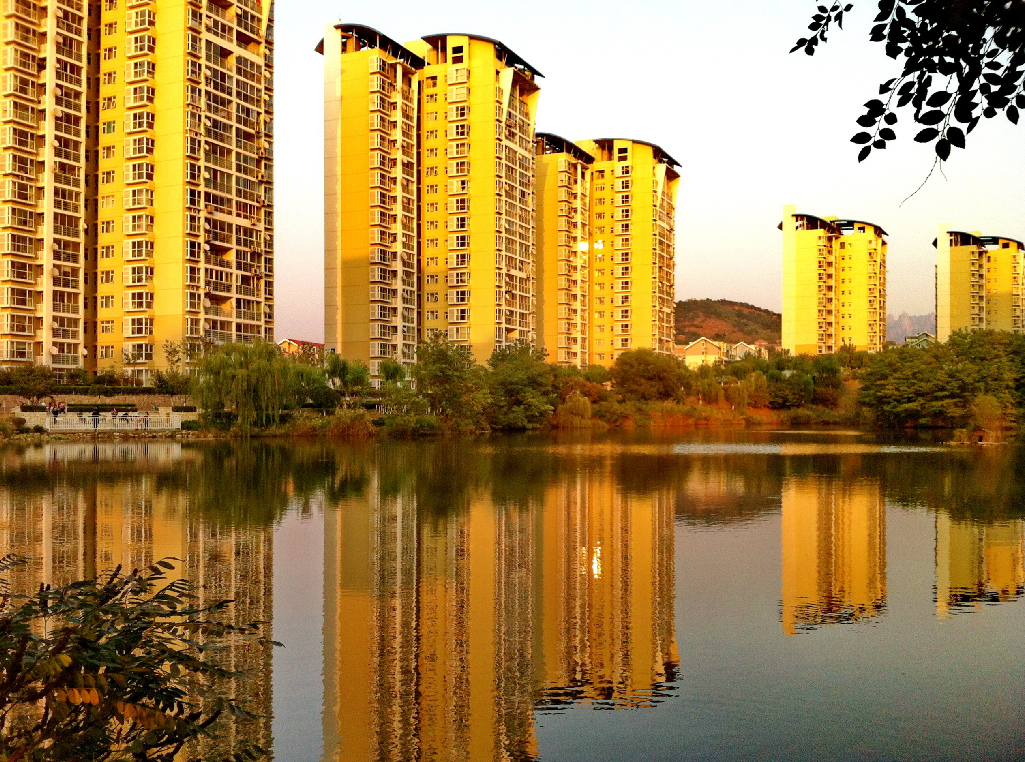
중국의 땅이 넓어서 그런지 대단지임에도 불구하고, 이 아파트의 장점은 무엇보다도 건물 간의 간격이 넓고 자연친화적인 조경으로 호수와 나무, 잔디밭이 잘 꾸며져 있다는 것이다. 나는 이런 점들이 마음에 들었지만, 무엇보다도 아파트가 회사와 가까운 것이 무척 좋기도 했다.
우리가 임대한 17층 복층 집도 한국에서 봤던 것과는 사뭇 달랐다. 우리나라의 일반 복층은 윗층 높이가 반뿐이 안되어서 위에서는 허리를 굽히고 다녀야 하는 경우가 많은데, 이곳은 윗층도 아랫층과 똑같은 높이의 완벽한 2층 집이었다. 게다가 거실은 위아래가 트여있어 천장이 매우 높고 시원한 느낌을 주는 게 꽤 괜찮은 호텔의 파티룸 같은 느낌이었다. 한국에선 이런 아파트에 살아 보기 힘들 것이라는 점에서 처음 우리는 이 집이 참으로 마음에 들었다.
하지만 곧 바로 닥친 겨울의 매서운 추위가 오자, 우리는 난방을 하루종일 강하게 켜놓아도 집에서 오리털 점퍼를 입고 있어야만 할 정도로 추위에 떨어야 했다. 단일 구조의 창문으론 황소바람이 새어 들어와 창문을 꼭 닫아도 높은 천장에서 길게 내려온 전등을 불안하게 흔들리게 하였으며, 복층으로 이루어진 높은 공간은 아무리 난방을 돌려도 열효율과 난방비를 잡아 먹는 도깨비처럼 보였다.
그러다가 겨울을 넘기고 나니, 그 정반대로 좋은 점은 여름에 에어콘을 키지 않아도 될 정도로 시원하고 호수가 보이는 전경이 좋다는 것이었다. 우리는 1년을 살아보고 이런 장단점을 비교하며 더 살지를 고민을 하다가 늘어난 짐을 옮기는 번거로움이 싫어서, 집주인이 창문을 이중구조로 고쳐준다는 조건으로 한 해를 더 살아봤다.
그러나 이 또한 대충대충한 부실공사였다. 베란다에 설치한 창문이 바람을 한번 걸러 준다 해도, 부실한 창틈 사이로 스며들어오는 한 겨울 매서운 추위에 우리는 또 오리털 점퍼를 입어야만 했고, 결국 2년 만에 따뜻한 남쪽나라를 찾아 난방이 잘되는 다른 동으로 이사를 하였다.
그런데 이번엔 난방이 너무 잘되어서 한 겨울에도 팬티만 입고 지내야 할 정도로 더운 게 문제였다. 게다가 개별난방이었던 지난 번 집과는 달리, 난방 수위를 조절할 수 없는 중앙난방식이라 우리는 한 겨울에도 창문을 열었다 닫었다를 반복하며 30도에 달하는 더위와 싸워야 했다.
지난 번 개별난방 집은 매달 우리가 가스를 충전하여 사용해야 했는데, 한 달에 난방비가 무려 27만원이나 들은 반면, 새로 이사온 중앙난방 집은 약 4개월의 겨울 내내 사용할 난방비를 한번에 결재하면 그 기간까지 싫든 좋든 무작정 난방이 들어오는 식이었는데, 한달 평균 난방비가 절반도 안 되는 12만원 수준이었는데도 더워서 못살 정도였으니, 참으로 비교체험 극과 극이었다.
그러다 보니 밖과 온도 차가 심한 이쪽 동에 사는 사람들은 겨울에 심한 감기를 앓는 사람이 많기도 했는데, 가뜩이나 몸이 약해진 우리도 예외는 아니었다. 그래서 지금 우리는 이 놈의 난방더위를 피해 또 한번 이사를 가야만 했다. (계속)
——————
Tiantai Apartments is the name of a major construction company in China with a recognized brand presence, comparable to Hyundai Apartments in Korea. Tiantai is a large-scale enterprise that owns not only residential complexes but also golf courses, hotels, and shopping centers. In particular, it has made significant efforts to benchmark Korean apartment models in order to provide more advanced residential environments.
As a result, the prices tend to be relatively high. In Qingdao, many Koreans have formed a community and reside in Korean-style apartments known as Tiantai Korean Town. Adjacent to this, there is also a Chinese Town—an area consisting of smaller, more affordable apartment units designed for Chinese residents—forming a large-scale residential complex overall.
Perhaps due to the vast land in China, despite being a large complex, one of the key advantages of this apartment is the wide spacing between buildings and the well-designed, nature-friendly landscaping, including lakes, trees, and lawns. I appreciated these aspects, but above all, I found it especially convenient that the apartment was close to my workplace.
The 17th-floor duplex unit we rented was also quite different from what we had seen in Korea. In Korea, typical duplex apartments often have a low ceiling height on the upper floor, requiring residents to bend over when moving around. However, this unit had a fully functional second floor with the same ceiling height as the lower level. Moreover, the living room had an open, double-height ceiling, creating a spacious and refreshing atmosphere, reminiscent of a high-end hotel party room. Considering how difficult it would be to live in such an apartment in Korea, we were initially very satisfied with this home.
However, once the harsh winter arrived, we were soon faced with severe cold. Even with the heating running at full capacity all day, we had to wear down jackets indoors. The single-pane windows allowed strong drafts to seep in, and even when fully closed, the cold air would cause the long light fixtures hanging from the high ceiling to sway. The large vertical space created by the duplex structure seemed to consume heat efficiency and heating costs like a bottomless pit.
After enduring the winter, we discovered the opposite advantage—during the summer, the apartment was so cool that we barely needed air conditioning, and the view overlooking the lake was excellent. After living there for a year, we weighed these pros and cons and considered moving, but we decided to stay another year to avoid the hassle of relocating our increased belongings, on the condition that the landlord would replace the windows with double-glazed ones.
However, this too turned out to be poorly executed construction. Even though the newly installed veranda windows provided some insulation, the freezing winter air still seeped through the poorly sealed gaps, forcing us once again to wear down jackets indoors. Eventually, after two years, we moved to another building in a warmer southern-facing area with better heating.
But this time, the problem was the opposite—the heating was too effective. It became so hot that even in the middle of winter, we had to stay indoors wearing only underwear. Moreover, unlike the previous apartment with individual heating control, this new place had a central heating system that we could not regulate. As a result, we had to repeatedly open and close the windows in the middle of winter to cope with indoor temperatures reaching up to 30°C.
In the previous apartment with individual heating, we had to recharge gas each month, which cost us as much as 270,000 KRW per month during winter. In contrast, the new central heating system required a one-time payment for the entire winter period of about four months, after which heating would be supplied continuously regardless of preference. The average monthly cost was less than half—around 120,000 KRW—yet it was unbearably hot. It was truly an extreme contrast in living conditions.
As a result, many residents in this building, where the temperature difference between indoors and outdoors was significant, frequently suffered from severe colds during winter. We were no exception, as our health had already weakened. Ultimately, to escape this oppressive indoor heat, we had no choice but to move once again. (To be continued)