“하지만, 네가 관리, 마케팅, 게다가 영업까지 어떻게 다 하겠다는 거야? 그러다 더 큰 걸 놓칠 수도 있어.”
“그러니 사장님, CFO감 한 명만 채용해 주세요. 저도 원래 재무통이 아니기 때문에 회사가 더 커지면, 어차피 제가 물러나고 중국 세법에 강한 재무 전문가가 맡아야 할 일입니다. 그런 사람이 재무적으로 자리만 잡아 주면 제가 발로 뛰면서 다 할 수 있습니다.”
“알겠네. 하지만 장 상무를 함부로 내보낼 수는 없어. 자칫 앙심을 품고 경쟁사로 간다면 아직 안정되지 않은 우리회사 영업이 더욱 위태로워질 수도 있단 말이야. 그러니 일단 기회를 한 번 더 주는 게 좋겠네.”
“그러니까, 장 상무는 2사업부 팀장으로 백의종군하라고 기회를 주세요. 정신 차리고 제대로 일하면, 그때 다시 영업 총괄로 복귀시켜 주십시오. 그동안 제가 해이해진 영업부를 다시 바로잡아 놓겠습니다.”
나의 계획에 민 대표는 다른 방안이 없다고 생각했는지, 마지못해 동의했다. 그렇게 해서 장 상무는 상무라는 호칭은 유지하였지만 직책상으로는 2사업부의 팀장으로 강등되어 나의 통제를 받게 되었다. 장 상무 밑에서 보조 업무를 하던 조 차장은 3사업부의 팀장으로 독립되어 새로운 비전을 꿈꿀 수 있게 되었다.
사실 이 정도 되면 일반적인 사람들은 미엔쯔가 구겨져서 스스로 물러나는 경우가 대부분이지만, 장 상무는 언제나 일반적 상식이 통하지 않았다. 조직 발표가 나자 처음엔 착잡한 표정을 지었던 장 상무는 다음 날 어떤 결심을 하였는지 나를 찾아와 말했다.
“그동안 업무가 너무 힘들고 책임이 무거웠는데, 이를 신총이 맡아 주신다니 저는 훨씬 마음이 가벼워졌습니다. 앞으로 2사업부 하나는 제가 잘 관리할 테니 잘 부탁드립니다.”
물론 자신의 감정을 숨기고 억지로 하는 말이라고 나는 믿고 싶었지만, 이후에도 그의 변하지 않는 행동들을 보고 나는 그때 그 말이 진심이었을 것이라고 생각하게 되었다.
나는 산둥성을 반으로 나누어 산둥성 북쪽과 인접한 허베이성, 산시성에 1사업부를, 산둥성 이남과 인접한 장쑤성, 안후이성에 2사업부, 그리고 새로 진입한 허난성에 3사업부를 편재하여 가장 큰 1사업부를 내가 직접 맡고, 각각 장 상무와 조 차장이 담당하게 했다.
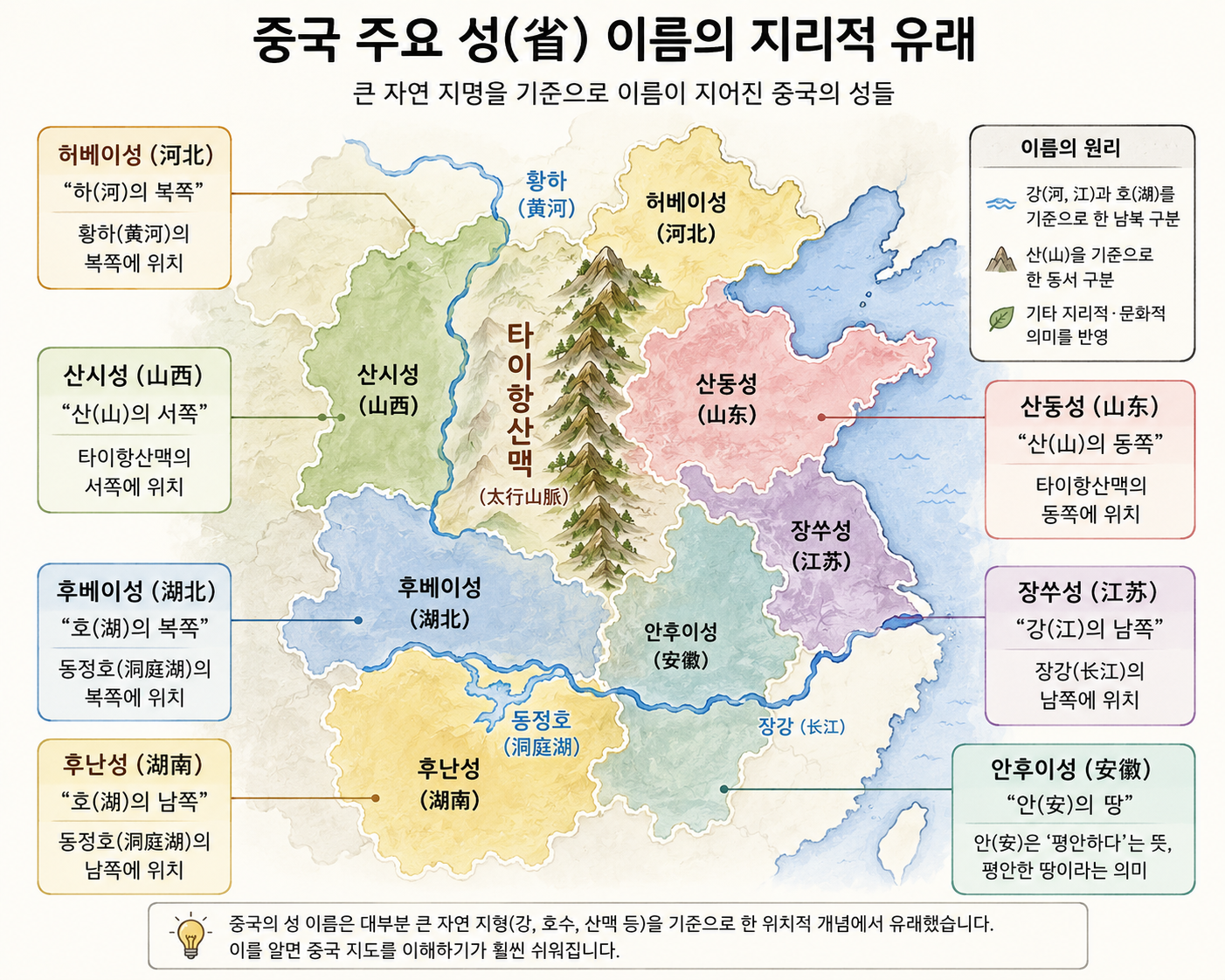
여기서 이해를 돕기 위해, 중국내 각 성의 지명에 대해 잠시 설명해 보겠다. 각 성의 이름은 일반적으로 큰 자연 지명과 연관이 있다. 한국어 발음으로 하남성(河南省)인 허난성의 경우도 큰 강인 황하(黃河)의 남쪽이란 뜻이다. 그런 점에서, 황하의 북쪽은 하북(河北), 즉 허베이성이 되는 것이다.
우리가 아직 진입을 못하고 있는 후베이성, 후난성도 마찬가지이다. 이번에는 강이 아니라 큰 호수이다. 바로 동정호(洞庭湖)의 북쪽이 후베이(호북), 남쪽이 후난(호남)이 된다. 그래서 나는 산둥성도 분명 산의 동쪽임을 유추 해석할 수 있었지만, 도대체 어느 큰 산이 있어 이렇게 큰 성을 동과 서로 나눌 수 있을까 하고 중국 현지인들에게 물어봤지만 명확한 답을 들을 수가 없었다.
그러다가 최근 한국인들도 많이 가는 타이항산(태항산)에 가 본 후에야 이를 명확히 알 수가 있었다. 우리가 흔히 말하는 타이항산은 하나의 산이 아니라 우리나라의 태백산맥처럼 여러 산들로 이루어진 거대한 산맥이었다.
허난성과 산시성을 지나 허베이성까지 연결되어 있는 이 거대한 산줄기를 중심으로 분명 그 서쪽은 산서(산시)성이고 동쪽은 산동(산둥)성임에 틀림이 없다. 이쯤하면 중국 지도에서 주요 성들이 어떤 위치에 있는지를 짐작할 수가 있을 것이다. (계속)
“But how are you going to handle administration, marketing, and sales all at the same time? You might end up neglecting something even more important.”
“That’s why I have one request, Mr. Min. Please hire a qualified CFO. Finance isn’t my specialty to begin with. As the company continues to grow, I know that I will eventually have to step aside and let a financial expert—someone thoroughly familiar with Chinese tax laws—take over that responsibility. Once such a person establishes a solid financial foundation, I can devote myself entirely to running the business in the field.”
“All right. But I can’t simply dismiss Executive Director Zhang. If he leaves holding a grudge and joins one of our competitors, our sales organization—which is still far from stable—could face an even greater threat. I think we should give him one more chance.”
“Then let him start over as the manager of Division Two. Give him the opportunity to prove himself from the ground up. If he regains his focus and performs well, you can always restore him as Head of Sales later. In the meantime, I’ll rebuild and reorganize the sales organization.”
Mr. Min reluctantly accepted my proposal, apparently concluding that there was no better alternative.
As a result, although Zhang retained the title of Executive Director, his actual position was reduced to Manager of Division Two, where he would now report directly to me. Deputy Manager Cho, who had previously worked under Zhang in a supporting role, was promoted to lead the newly created Division Three, giving him an opportunity to pursue a new vision of his own.
Ordinarily, someone in such a situation would resign voluntarily after suffering such a severe blow to their mianzi—their personal dignity and reputation. But Executive Director Zhang had never been an ordinary person.
When the organizational restructuring was announced, he initially looked stunned. The following day, however, he came to my office and said something I had never expected to hear.
“To be honest, the workload and responsibility have been overwhelming. Knowing that you’ll now be taking charge of the entire sales organization is actually a great relief. I’ll do my best to manage Division Two well from now on. I look forward to working with you.”
At the time, I wanted to believe he was merely hiding his true feelings and forcing himself to say those words. Yet as time passed and I observed that his behavior never changed, I gradually came to believe that he had actually meant every word.
I divided Shandong Province into two regions. Division One, which I led personally, was responsible for northern Shandong together with the neighboring provinces of Hebei and Shanxi. Division Two, under Executive Director Zhang, covered southern Shandong along with Jiangsu and Anhui Provinces. The newly established Division Three, led by Deputy Manager Cho, was assigned responsibility for Henan Province, where we had only recently entered the market.
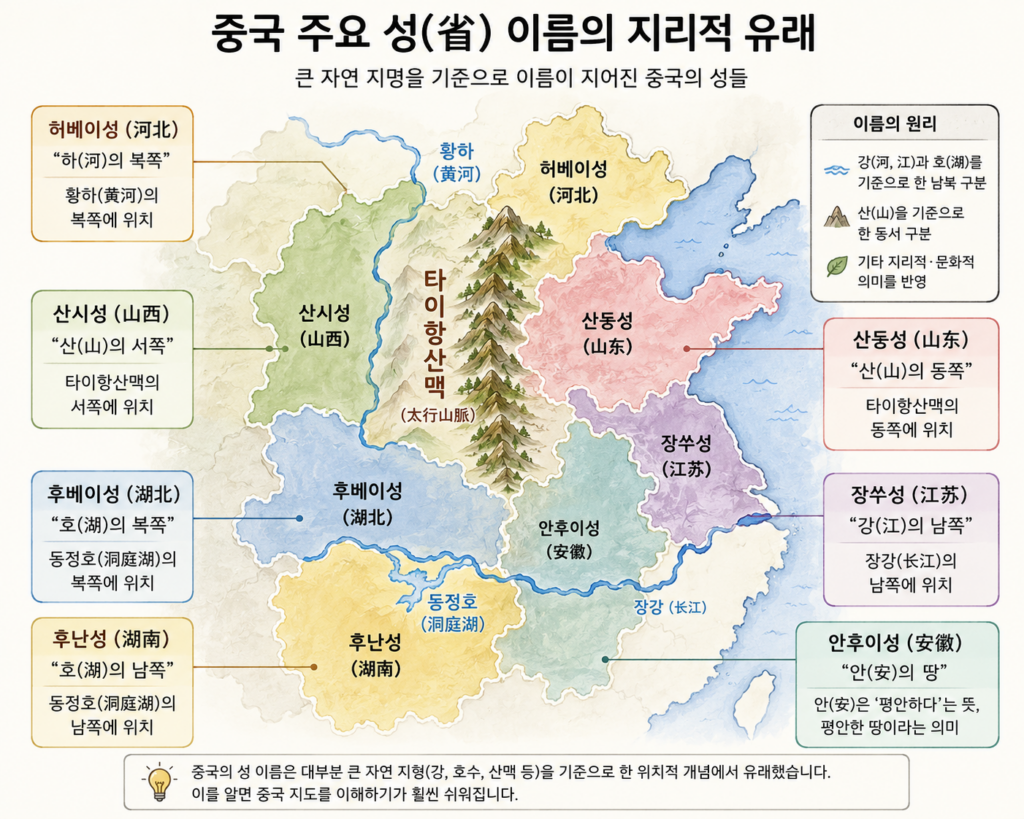
To help readers better understand China’s geography, let me briefly explain how many Chinese provinces received their names.
Most provincial names are closely associated with major geographical landmarks.
Take Henan Province, for example. In Chinese, Henan (河南) literally means “south of the river,” referring to the Yellow River (Huang He), China’s second-longest river. Naturally, the province on the opposite side of the river is called Hebei (河北), meaning “north of the river.”
The same naming principle applies to Hubei and Hunan Provinces, except that they are named after a lake rather than a river. The reference is Dongting Lake. Hubei (湖北) means “north of the lake,” while Hunan (湖南) means “south of the lake.”
Following this pattern, I assumed that Shandong (山东) must also mean “east of the mountain.” What puzzled me, however, was this: what mountain could possibly be large enough to divide such an enormous province into eastern and western regions?
I asked many Chinese colleagues, but no one could give me a clear answer.
It was not until years later, when I visited the Taihang Mountains—a destination that has recently become popular among Korean travelers—that I finally found the answer.
The Taihang Mountains are not a single mountain but a vast mountain range, much like Korea’s Taebaek Mountain Range.
Stretching across Henan, Shanxi, and Hebei Provinces, this immense range clearly forms the geographical boundary that inspired the provincial names: Shanxi (山西) lies to the west of the mountains, while Shandong (山东) lies to the east.
With this understanding, readers will find it much easier to visualize the locations of China’s major provinces on a map.
(To be continued)