앞서 말했지만, 브랜드 네임은 가장 바꾸기 힘든 요소이다. 로고, 심볼, 캐릭터, 슬로건 등,브랜드 아이덴티티를 구성하는 다른 요소들은 시간이 지나면서 조금씩 바뀌어 질 수 있지만, 시간이 흐를수록 가치를 더해가고 바꿀 수 없는 것은 오직 브랜드 네임뿐이다. 그래서 이토록 가장 중요한 브랜드 네임을 짓는 일을 그저 생각나는 데로 쉽게 할 수는 없다.
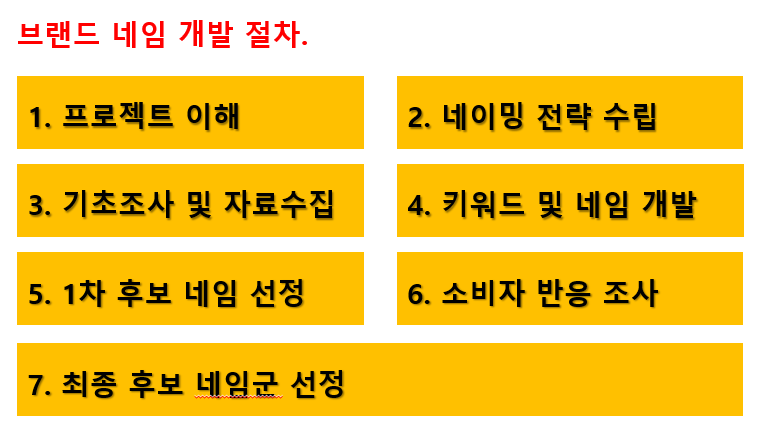
다음과 같이 보다 전략적으로 조사와 설계를 통해서 해야만 할 것이다.
- 프로젝트의 이해: 프로젝트 환경, 목적, 브랜드 컨셉, 타겟 세그멘트, 브랜드 포지셔닝 등, 신규 브랜드로 진행하려는 프로젝트를 확실히 이해해야 한다. 지피지기면 백전불태이다.
- 기초조사 및 자료수집: 기초 산업조사, 경쟁사의 브랜드 현황, 외부 시장환경 조사, 문헌조사, 현장연구, 기업내부의 실무진과 경영진 인터뷰, 기업내부의 구조, 규모, 광고예산 등을 조사한다.
- 브랜드 네이밍 전략 수립: 기초조사를 통해 얻은 자료를 종합적으로 분석하여, 언어, 음절수, 이미지 등을 브랜드 이미지 맵으로 그려보고, 브랜드 네임 스펙트럼을 만든다. 네임 스펙트럼은 유형에 따라 크게 설명어(네임이 콘셉트를 구체적으로 설명하는 것), 연상어(콘셉트의 핵심 내용과 관련이 있는 네임), 독립어(콘셉트의 내용을 알 수 없고 이미지적인 네임) 등으로 나눌 수 있다. 또한 내수 위주 제품인가, 수출 주력 제품인가, 온라인과 오프라인의 사업 비중이 어떻게 되는가, 제품의 라이프 싸이클이 어느 정도인가 등에 따라서도 네이밍 전략은 각기 다른 방향으로 세워질 수 있다.
4. 키워드 및 네임 개발: 우선 먼저 키워드를 추출하는 작업이 필요하다. 키워드는 브랜드 네임의 실질적 재료라고 할 수 있다. 네이밍 할 제품의 콘셉트로부터 연상되거나 관련되는 모든 단어가 키워드가 될 수 있다.
나이키는 승리의 여신으로 스포츠 관련 키워드로 좋은 브랜드가 되었으며, LG ‘후’는 황후를 나타내는 키워드로 고급 화장품 자리를 차지하였다. 또한 키워드를 합성해서 새로운 내임을 만들 수도 있다. 중국에서 나는 뷰티+부티크를 합성해서 뷰티크란 브랜드를 만들었으며, 반대로 적합한 키워드가 너무 길면, 단어의 일부를 절단하는 (Intelligence – ligence = Intel) 경우도 있다. 그리고 자꾸 써보고 읽어보면서 발음으로 나는 소리는 어색하지 않은 지, 디자인적으로도 좋은 면을 가지고 있는지 등을 고려하며 수정 보완한다.
5. 1차 후보 네임군 선정: 만들어진 여러 후보군 이름을 세부적으로 도메인 검색, 상호 및 상표 검색을 해서, 사용 가능한지 알아본다. 이는 변리사를 통해서 할 수도 있지만, On-line 검색(www.kipris.or.kr)으로, 누구나 무료 상표검색을 할 수 있다. 또한 글로벌 제품인 경우 수출 대상 국가 출신의 사람(Native Speaker)을 통해 후보 네임에 대한 발음성, 컨셉 적합성, 부정적 혹은 긍정적 연상 등을 평가하는 것이 좋다.
6. 소비자 반응 조사: 타깃 소비자에게 설문조사를 하는데, 여러 후보군 중 마음에 드는 이름 하나를 선택하는 방식으로 하지 말고, 반드시 5점 척도로 조사를 해야 한다. 왜냐하면 여러 개 중에 하나를 선택하라고 하면, 응답자는 전체적으로 마음에 들지 않아도 그 중에서 반드시 하나를 선택할 수밖에 없기 때문이다.
따라서 5점 척도를 해야만, 여러 후보군들을 소비자가 평가한 객관적인 점수로 평가할 수가 있다. 이중에서 5점척도 기준 비교적 우수한 3.5점 이상인 것들을 골라서, 그 중에서 다시 한번 마음에 드는 것을 선택하는 방식이 바람직하다. 5점척도는 콘셉트 적합성, 발음 용이성, 기억 용이성, 고가(저가) 이미지, 전체적인 선호도 등 3~5가지 등을 조사자가 설문에 활용하면 된다.
7. 최종안 선정: 이렇게 여러 단계의 절차를 거쳐 남은 네임들에 대해 소비자 샘플조사 혹은 FGI(Focused Group Interview)를 실시한다. 하지만 여의치 않으면 최종적으로 직원들 조사를 통해, 경영진의 최종확정을 한 후, 상표등록을 신청한다.
————————————
As mentioned earlier, the brand name is the hardest element to change. Other elements that constitute brand identity, such as logos, symbols, characters, and slogans, may change over time. However, the one thing that adds value over time and is irreplaceable is the brand name. Therefore, naming a brand should not be done casually or thoughtlessly. Instead, it should be approached strategically through research and planning as follows:
- Understanding the Project: It is essential to thoroughly understand the project environment, purpose, brand concept, target segment, and brand positioning for the new brand project. Knowing your enemy and yourself ensures victory.
- Basic Research and Data Collection: Conduct basic industry research, analyze competitors’ brand status, investigate external market environments, and gather data from literature reviews, field studies, interviews with internal staff and management, and assess the company’s internal structure, scale, and advertising budget.
- Formulating the Brand Naming Strategy: Synthesize the collected data to analyze language, syllables, and imagery to create a brand image map and brand name spectrum. The name spectrum can be broadly categorized into descriptive names (names that explicitly describe the concept), associative names (names related to the core content of the concept), and independent names (names that do not reveal the concept but have an image-based name). Additionally, the naming strategy can vary based on whether the product is for domestic or export markets, the balance between online and offline business, and the product’s lifecycle.
- Keyword Extraction and Name Development: First, extract keywords, which serve as the actual materials for the brand name. Any word that is associated with or derived from the product concept can be a keyword. For instance, Nike, named after the goddess of victory, is an excellent brand name related to sports. Similarly, LG’s ‘Whoo’ represents the empress, capturing a high-end cosmetic image. Keywords can be combined to create new names, such as “Beautique,” a combination of beauty and boutique, or shortened if too long, like “Intel” from intelligence. Continuously test and revise the name for pronunciation and design aesthetics.
- Selecting Initial Name Candidates: Conduct a detailed domain search, business name, and trademark search to ensure the name’s availability. While this can be done through a patent attorney, anyone can perform a free trademark search online (www.kipris.or.kr). For global products, it is advisable to evaluate pronunciation, concept suitability, and negative or positive associations with native speakers from the target export countries.
- Consumer Feedback: Survey the target consumers, not by having them choose one name out of several, but by using a 5-point scale. This method prevents respondents from selecting a name they do not genuinely prefer. A 5-point scale allows for an objective evaluation of multiple candidate names. Names scoring relatively well (3.5 or higher) should be selected for a second round of preference-based selection. Survey aspects like concept suitability, ease of pronunciation, ease of recall, high-end (or low-end) image, and overall preference.
- Final Selection: Conduct a consumer sample survey or Focused Group Interview (FGI) for the remaining names after several stages. If this is not feasible, gather feedback from employees and finalize the decision with the management’s approval before applying for trademark registration.