요즘 젊은이들은 잔소리 하는 부모, 선생, 상사 등 나이 먹은 사람들을 속칭 ‘꼰대’라 부른다. 원래 나이 많은 남자를 가리켜 학생이나 청소년들이 쓰던 은어였으나, 요즘은 구태의연한 사고 방식을 타인에게 강요하는 사람들에게 꼰대질 하지 말라면서 매우 보편화된 말이 되었다.
그러나 꼰대질을 젊은이들에게 하는 이유도 있음을 알아야 한다. 그것은 책임의식이 약하기 때문이다. 일이 아직 마무리 되지 않아도 퇴근 시간만 되면 일단 무조건 퇴근부터 하려하고, 이에 상사가 잔소리를 해야 마지 못해 책상에 앉아서 억지로 일을 하려고 한다면, 확실이 꼰대질이 필요할 수 밖에 없다.
분명 모든 젊은이들이 다 그런 것도 아니고, 그들을 탓하려고 하는 말도 절대 아니다. 어쩌면 그들을 이해하지 못하는 꼰대들의 탓일 수도 있다. 급변하는 사회문화환경 속에서, 과거에 집착해서 현재를 이야기하는 것도 문제가 있다.

따라서 그들을 무조건 과거의 방식으로 대하다 보면, 오히려 업무의 강도를 견디지 못하거나 억울함의 반발심에 회사를 쉽게 떠날 수도 있는 역효과가 발생한다. 과거에 비해 책임감이 약한 그들에게 무조건적인 행동을 강요하고 시키는 대로 하라고 하면 잘될 일도 더 안되게 된다.
그래서 중요한 것은 그들이 스스로 책임지고 자발적으로 일을 할 수 있는 책임감을 심어주는 것이다. 억지로 시키는 일이 아니라 책임감에 자발적으로 하는 일은 양과 질적인 측면에서 천지차이를 보여준다.
인도의 철학자 오쇼 라즈니쉬는 책임감이란 무엇인지에 대해 매우 쉽게 뜻풀이를 한 바가 있는데, 이를 간단히 설명해 보겠다.
책임감이란 영어로 ‘Responsibility’로써, 풀이해 보면 ‘Response + ability’, 즉 응답할 수 있는 능력을 뜻하는 것이지, 반드시 해야만 하는 의무감을 뜻하지는 않는다.
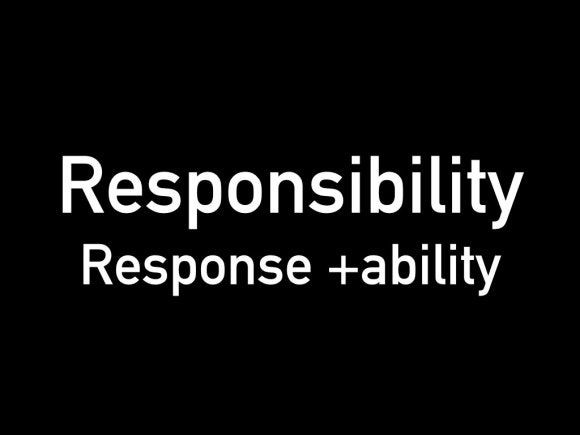
책임감이란 주어진 일에 응답하기 위해 매사에 열려 있고 준비하는 자세다. 상사의 갑작스런 요구에, 또는 내가 마땅히 해야 할 일에 스스로 마음을 닫고 반응하지 않는다면, 어떻게 일이 제대로 돌아가겠는가? 따라서 해야 할 일에 대해 마음을 열고 받아들이고 응답하려는 적극적인 자세가 바로 책임감이다.
그런 책임감이 생기기 위해서 선행되어야 할 것이 바로 책임질 목표와 업무의 역할이다. 쪼개진 목표에 더욱 쪼개진 계획과 역할은 할 수 있다는 자신감과 책임감을 부여해 준다. 그것이 명확하지 않을 때 책임감은 반대로 사라지게 된다. 그래서 때론 잘못된 책임감도 있다. 제대로 된 계획 없이 강한 책임감에 무모한 행동을 하면 낭패를 당할 수가 있기 때문이다.
—————————
These days, young people often refer to nagging parents, teachers, or bosses — in other words, older people — as “kkondae.” Originally, it was a slang term used by students or teenagers to describe older men, but nowadays, it has become a common expression for anyone who forces their outdated way of thinking onto others, as in “Don’t act like a kkondae.”
However, one must also understand that there are reasons why older people tend to “act like a kkondae” toward the younger generation — it is often because of their weak sense of responsibility.
When work is not yet finished but they insist on leaving exactly at quitting time, or when they only pretend to work reluctantly after being nagged by their superior, it’s natural that some level of “kkondae-like” scolding becomes inevitable. Of course, not all young people are like this, and this is by no means meant to blame them.
Perhaps the fault lies with the “kkondaes” themselves, who fail to understand the younger generation. In today’s rapidly changing sociocultural environment, it is indeed problematic to interpret the present solely through the lens of the past.
Therefore, if one insists on treating young employees with outdated, rigid methods, the result can be counterproductive. They may not withstand the work intensity or may leave the company out of resentment or frustration.
Compared to older generations, today’s youth generally have a weaker sense of responsibility; thus, forcing them to act mechanically according to orders often worsens the outcome. The key lies in cultivating a sense of self-driven responsibility — inspiring them to take ownership and work voluntarily. Work performed voluntarily out of responsibility, rather than under compulsion, shows a profound difference in both quantity and quality.
The Indian philosopher Osho Rajneesh once offered a simple yet insightful interpretation of what responsibility means, which can be explained briefly as follows.
Responsibility, in English, is composed of Response + Ability — meaning “the ability to respond,” not necessarily “the obligation to perform.”
Responsibility, therefore, is the attitude of being open and prepared to respond to what is given. If one closes their mind and refuses to respond — whether to a sudden request from a superior or to a task that rightfully belongs to them — how can the work possibly proceed properly? Thus, the proactive attitude of keeping one’s mind open, accepting, and willing to respond to what must be done — that is true responsibility.
In order for such responsibility to emerge, one must first have clear goals and defined roles to be accountable for. Dividing a large goal into smaller, actionable plans and roles instills confidence and a tangible sense of responsibility. When these elements are unclear, responsibility tends to vanish instead. Hence, there can even be misguided responsibility — when strong responsibility without proper planning leads to reckless actions and ultimately to failure.