

이러한 원칙이 글로 매뉴얼화 되어 있다면 금상첨화가 아닐 수가 없을 것이다. 2005년 미니골드에 근무할 때의 일이다. 중소기업의 경우 한 명의 사람은 대기업의 한 팀과 맞먹는다. 판촉 담당자 한 명, 그래픽 디자이너 한 명, 홍보 담당자 한 명 등, 모든 직원 개개인이 대기업의 한 팀에서 해야 할 일을 하고 있다.
그런데 중소기업의 문제는 일 잘하는 직원은 기회만 되면 다른 회사로 떠나 버린다는 것이다. 그럴 때의 업무 공백이란 매우 심각하다.
어느 누구도 그 일을 대신 할 수 없으니, 당시 마케팅 부장이었던 나도 다른 직원을 채용하기 전까지는 직접 실무를 담당할 수 밖에 없었다. 그럴 때마다 매번 업무 프로세스나 시스템이 아닌 직원 개인의 역량에 의존해 이루어졌던 일들을 나 혼자 모두 채울 수 없었으며, 후에 후임자가 와도 제대로 된 인수인계도 할 수 없는 큰 공백이 발생하였다.
그러다 때마침 전사적인 업무 매뉴얼을 만들자는 경영지원팀의 제안에 의해, 나는 당시 내가 담당했던 마케팅팀과 상품기획팀의 업무 매뉴얼을 만드는데 온 노력을 기울였다. 부족한 인력으로 매일 바빴던 우리는 거의 매일 야근하다시피 하며 수개월을 매진한 끝에 지금도 아주 자랑스러워 하는 완벽한 업무 매뉴얼을 완성하였다.


다른 부서와 달리 나는 대충 형식적인 매뉴얼이 아니라 진정으로 필요한 완벽한 업무 행동 지침서를 만들려고 했다. 덕분에 직원들은 연일 되는 야근에 힘들어 하며, ‘이렇게까지 할 필요가 있습니까?’라고 항의할 정도였지만, 그럴 때면 나는 직원들에게 말했다.
“여러분 전자제품 사면,사용방법을 몰라도 매뉴얼만 보고 작동할 수 있죠?업무 매뉴얼도 그리 만들어야 합니다.아무 것도 모르는 신입사원이 들어와도 매뉴얼만 보면 바로 실행할 수 있어야 하고,인수인계도 못한 전임자가 없어도 후임자가 매뉴얼만 보면 자동으로 인수인계가 될 수 있도록 해야 합니다.그것이 이른 바,진정한‘매뉴얼’이란 단어입니다.”
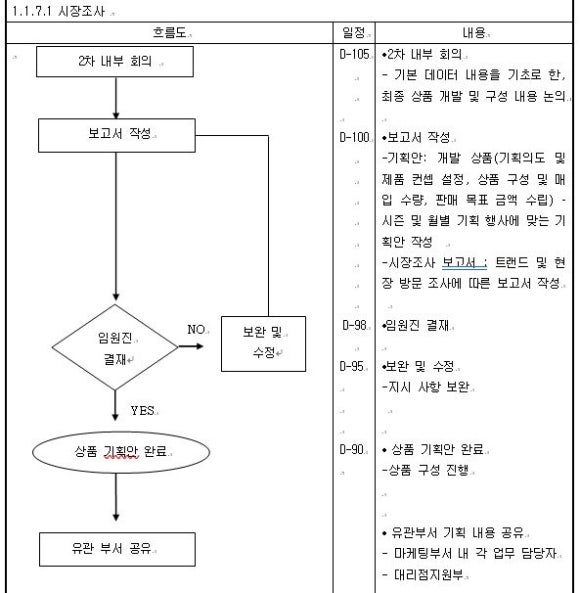
업무 매뉴얼에는 업무 용어의 정의로 시작해서, 업무의 절차와 흐름도, 관련부서와의 업무 프로세스, 업무기한, 전산 입력 방법, 그리고 거래선 리스트까지 모두 들어가 있었다.
그리고 마침내 직원들이 스스로 만든 수 백 페이지에 달하는 업무 매뉴얼이 바로 자신들의 기본적인 업무 지침으로 자리잡게 되자, 책임의식이 강화되어 기한 내 업무처리를 스스로 하게 되었고, 과거보다도 실수가 감소하였으며, 업무 공백이 생겼을 때도 이를 충분히 커버해 줄 수 있게 되었다.
그러나 반드시 이런 업무 매뉴얼 같은 대공사를 모두 다 할 필요는 없다고 생각한다. 원칙은 간결하되 세부적으로 정리되어 문서화된 행동 지침서가 되기만 하면 된다. 그것이 바로 실행으로 이끌어 주는 강한 연결고리로 작용할 수만 있으면 되는 것이다.
실행은 하얀 빈 도화지에 아무렇게나 그림 그리듯이 이루어지는 것이 아니다. 철저하게 준비되고 계획된 원칙에 따라 마치 연기자가 짜여진 극본에 따라 연기하듯이 실행되어야 한다. 이처럼 실행의 힘은 구체적이고 세부적일수록 더욱 강해질 수가 있다.

—————————
If such principles were to be documented in writing as a manual, it would indeed be the icing on the cake. This reminds me of my experience at MiniGold in 2005.
In small and medium-sized enterprises, a single employee often performs the equivalent of an entire team’s workload at a large corporation. One person handles promotions, another does graphic design, and another oversees public relations—each employee essentially covers the responsibilities of a whole team.
However, the common problem in SMEs is that competent employees tend to leave for better opportunities as soon as they arise. The resulting gap in operations can be devastating, as no one else can readily take over their work.
At that time, as the Marketing Manager, I had no choice but to personally handle all the operational tasks until a new hire could be brought in. Each time, I faced the same problem: tasks that depended heavily on individual capability rather than a defined process or system could not be seamlessly continued. Even after new staff were hired, it was impossible to ensure a proper handover.
Then, by chance, the Management Support Team proposed creating a company-wide operations manual. I poured my full effort into developing the manuals for the Marketing Team and Product Planning Team that I supervised. With limited manpower, we worked overtime almost every day for several months and ultimately produced a comprehensive operations manual that I still take great pride in.
Unlike other departments that focused on formality, I aimed to create a truly practical and complete behavioral guideline. Because of this, my team struggled with the endless late nights and often protested, asking, “Do we really need to go this far?” To that, I would always respond:
“When you buy an electronic appliance, even if you don’t know how to use it, you can operate it just by reading the manual, right? Our operations manual must be the same. A new employee with zero experience should be able to perform tasks immediately by following the manual. Even if a predecessor leaves without a handover, the successor should be able to continue seamlessly by referring to it. That is what a true ‘manual’ means.”
The operations manual began with definitions of key business terms, followed by workflow procedures, interdepartmental process charts, deadlines, data entry methods, and even client lists.
Once this comprehensive manual—spanning several hundred pages—became the team’s official operational guideline, employees developed a stronger sense of responsibility. They began managing their tasks proactively within deadlines, reduced errors, and were able to maintain operations even during staff turnover.
However, I don’t believe that every company needs to undertake such a massive project. Principles can be simple yet still effective, as long as they are clearly organized into a written behavioral guideline. What matters most is that the document serves as a strong bridge between principle and execution.
Execution is not like randomly sketching on a blank canvas. It must be carried out according to thoroughly prepared and well-planned principles—much like an actor performing precisely according to a script. The more concrete and detailed the principles of execution are, the greater and more powerful the force of execution becomes.