

대표이사 시절, 회의 중에 자꾸 잔소리가 늘어나게 되었다. 한참 얘기를 하다 문득 10명의 임직원들을 둘러봤다. 고개를 푹 숙이고 아무 표정과 대답이 없는 그들을 보며, 이건 마치 벽을 보고 이야기하는 게 아닌가 하는 답답함이 들었다.
그러다 문득 과거 나의 모습을 떠올랐다. 나도 회의실에서 윗상사가 마구 떠들어댈 때 저랬었지. 노트에 메모대신 낙서하며… 대체 언제 끝나나 하며… 나는 도움이 되라고 하는 얘기가 저들에겐 잔소리가 되겠구나 하고 생각하니, 갑자기 말문이 턱 막혔다.


어디부터 다시 말을 이어가야 할까? 영혼없는 듯 회의실 자리를 채우고 있는 그들에게 더 이상 무슨 말이 필요할까? 나는 조급히 마무리를 하고 회의실을 빠져 나왔다. 나의 생각의 속도가 너무 빠른 건 아닌가? 조금 천천히 그들과 보조를 맞추고 기다려 줘야 하는 건가?
세상은 100km의 속도로 달리고 있고, 난 그 속도에 뒤쳐지지 않으려고 안간 힘을 쓰고 있는데… 임직원들의 속도는 50km에 멈쳐 있는 것만 같았다. “이 높은 속도의 벽을 어떻게 깰 수 있을까”가 그때 나의 화두였다.
나는 지금도 회의에 참석한다는 것은 누구나 뭔가 자신의 의견을 한마디라도 게재해야 한다는 의무가 있다고 생각한다. 따라서 그렇지 못한 사람은 그 의무를 저버리는 것이다. 그러나 그들은 항상 나의 말을 듣고 수동적으로 행동하려고만 했다. 이렇게 회의석 상에서 말도 제대로 안 하는 임직원들에게, 결국 나는 질문을 통해 그들의 의견을 이끌어내기 시작했다.
그냥 의견을 말하라는 두리뭉실한 질문이 아니라, 구체적인 사항에 대해 구체적인 질문을 하기 시작하자, 그들도 구체적인 대답을 하기 시작했다. 알고보면 그들도 생각이 많고 의견도 많았던 사람들이나, 권력의 힘에 눌려 함부러 의견을 내지 못했던 것이다.
이렇게 제대로 된 질문이 제대로 된 대답을 이끌어내자, 어는 순간 그들은 질문이 없어도 자발적인 의견을 낼 수 있는 사람들이 되어갔다. 그러자 나는 더 이상 회의에 참석을 하지 않았다. 이제는 그들 스스로 회의를 해서 스스로 문제를 발견하고 해결할 수 있는 실행력이 생겼기 때문이다.
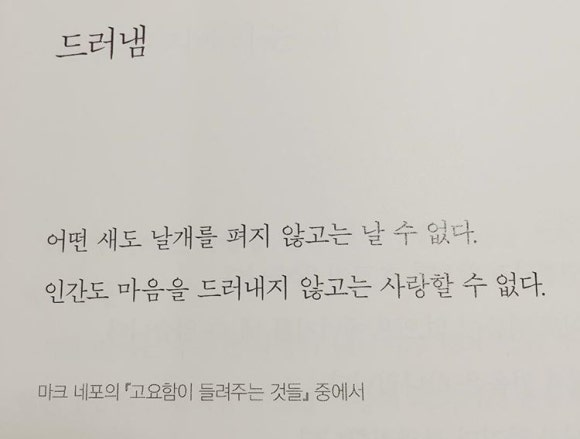
어떤 새도 날개를 펴지 않고는 날 수가 없다 (마크 네포). 만약 날지 못하는 새가 있다면,그것은 자기 스스로 날개를 펴야만 날아간다는 것을 잊어버린 결과이다. 이렇듯 세상을 이끌어나가고 행동하는 것은 자신의 의지에 따라서 달라질 것이다.
사람도 마찬가지이다. 마음을 드러내지 않고는 행동할 수가 없다. 그리고 새들처럼 그 누구도 나를 대신해서 날개를 펼 수는 없다. 설령 두려움이 있어도 마음을 드러내는 것 또한 자신의 몫이다. 너무 마음을 드러내지 못해 날개의 효능이 사라진 것도 모두 자신의 탓이다. 그래서 하늘로 오르는 두려움에 펴보지 않았던 날개라면, 이젠 힘있게 펼치고 날아오르도록 행동해야 한다.
노예로 살 것인가, 주인공으로 살 것인가는 어떤 날개를 펼치느냐에 따라서 달라진다. 밝고 긍정적이며 적극적으로 자신을 드러내는 것, 그것은 푸른 창공을 비상하려는 새의 날개짓과 같다. 새의 날개짓처럼 나의 마음을 밖으로 드러내는 힘이 곧 행동을 만드는 실행력이 될 것이다.

—————————–
Two years ago, during my tenure as CEO, I found myself increasingly giving unsolicited remarks during meetings. One day, while speaking passionately, I suddenly looked around the room at the ten executives and employees before me. Their heads were bowed, their faces expressionless, and no one was responding. It felt as if I were talking to a wall.
Then, all at once, I recalled my younger self. I, too, used to sit in meetings doodling in my notebook while my superior went on endlessly, wondering when it would all end. What I had believed to be helpful advice must now have sounded like mere nagging to them. The realization struck me, and I was at a loss for words.
Where should I pick up the conversation again? What more could I possibly say to people who sat there like lifeless figures just filling their seats? I hurriedly wrapped up the meeting and left the room. Was my mind simply moving too fast? Should I slow down and give them time to catch up?
The world, I thought, was racing ahead at 100 kilometers per hour, and I was struggling not to fall behind—yet my team seemed stuck at 50. Breaking through this wall of speed difference became my biggest challenge.
To me, attending a meeting means that everyone has a duty to express at least one opinion. Failing to do so is neglecting that responsibility. But my employees only listened to me passively, waiting for instructions instead of engaging.
So, I began to draw out their thoughts through questions. Not vague prompts like “What do you think?”, but specific questions about specific issues. And when I did that, they began to give specific answers. I realized then that they had plenty of thoughts and opinions all along—but they had been intimidated by authority, afraid to voice them freely.
As proper questions led to proper answers, a shift occurred. Over time, they no longer needed me to ask questions; they began offering opinions voluntarily. And that was when I stopped attending their meetings altogether—because by then, they had developed the executional autonomy to hold meetings on their own, identify problems, and take action to solve them.
Mark Nepo once said, “No bird can fly without opening its wings.” If a bird cannot fly, it is because it has forgotten that it must spread its wings on its own. Likewise, whether we act and lead in life depends entirely on our will.
Humans are the same. Without opening one’s heart, one cannot act. And like birds, no one else can open your wings for you. Even if fear exists, it is still your own responsibility to open your heart and act. When people suppress their hearts too long, their wings lose strength—it is their own doing. So if your wings have been folded out of fear of soaring into the sky, now is the time to unfold them and take flight.
Whether you live as a slave or as a protagonist depends on how you choose to spread your wings. Expressing yourself openly—with positivity, courage, and initiative—is like the powerful wingbeats of a bird soaring into the blue sky. Just like those wingbeats, the act of expressing your heart outward becomes the driving force of execution—the power to act.