

용기는 그 누구도 아닌 나 자신을 위한 것이다.
우리는 실패를 두려워하지 않는 용기를 가져야 한다. 변화와 마찬가지로 용기도 항상 두려움과 함께 살고 있다. 존 매케인 미국 상원의원은 용기를 이렇게 정의한 바 있다.
“용기는 두려움이 없는 것이 아니라, 두려운데도 불구하고 행동할 수 있는 능력이다.”
용기란 두려운 일을 하는 것이다. 세상에 두려운 일이 존재하지 않았다면, 어찌 용기란 단어가 만들어졌겠는가? 그리고 그 용기는 이제 직장상사를 위해, 회사를 위해 목숨 바쳐 헌신하듯 행하는 것이 아니라, 바로 나 자신을 위해 발휘되어야 한다. 이제는 패러다임을 바꿔, 내가 바로 서야 조직이 바로 서고, 조직이 바로 서야 또 내가 계속적으로 바로 설 수 있는 바람직한 선순환이 만들어져야 한다.
덱스터 예거는 그의 저서 <끝없는 추구>에서 내가 아닌 모습으로 사랑받기 보다, 있는 그대로의 모습으로 미움을 받는 게 낫다고 했다. 또한 긍정적 사고를 강조하는 ‘개인심리학’을 창시한 정신의학자이자 심리학자인 알프레드 아들러는 “인간은 변화할 수 있고, 누구나 행복해질 수 있지만, 그러기 위해서는 ‘용기’가 필요하다.”고 했다. 자유로워질 용기, 평범해질 용기, 행복해질 용기, 그리고 미움 받을 용기를….


조직에서 상사에게 잘못해서 미움을 받으라는 말이 아니라, 반대를 무릅쓰고 자기다움으로 승부를 걸 수 있는 용기가 있어야 한다는 말이다. 그러나 장기적인 코로나19 사태로 비대면 재택근무가 늘어나면서, 회사에 출근하지 않아도 업무에 큰 지장이 없다는 사실을 MZ세대들은 알게 되었다.
더욱이 재택근무를 했다가, 다시 직장으로 돌아가게 된 직장인들은 예전과 다른 마음을 가지게 되었다. 일이 인생의 전부가 아님을 알게 된 것이다. 과거 회사에 출근해서 직장동료들과 만나 서로 얼굴 맞대고 치열한 회의를 하고 단합을 했던 문화는 점차 사라지기 시작한 것이다.
그러다 보니 열정도 점점 사라져 갔고, 조용한 사직(Quiet Quitting)이란 말도 생겨났다. 조용한 사직이란 말이 처음 등장한 시기는 2009년 경제학 심포지엄이었다. 원래는 지금 당장 회사를 그만두는 게 아니라, 언제든 기회만 되면 사직서를 제출할 생각을 가지고 직장을 계속 다니는 것을 의미했었다. 한마디로 직장을 언제든 떠날 수 있다는 마음가짐으로 소극적으로 주어진 일만 하는 것이다.
그러나 조용한 사직은 코로나19 이후 더욱 주목을 받으며, 그 의미가 변했다. 퇴직하겠다는 마음은 없이, 조직이나 상사의 인정을 받기 위해 자신을 희생하는 것을 하지 않고, 정해진 시간에 주어진 업무만 처리하겠다는 의미다.

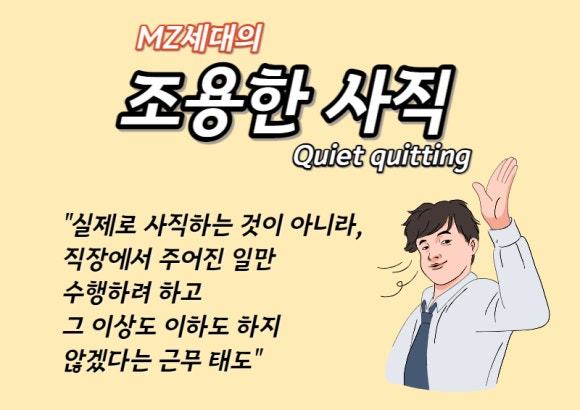
2022년 6월 미국에서 갤럽이 직장인 15,900명을 대상으로 조사한 결과, 응답자의 50%는 주어진 최소한의 일만 하고 일로부터 자신을 분리한 채 관여하지 않고 있다고 답했다. 또한 한국에서도 2023년 2월에 알바천국이 MZ세대 1,448명 대상의 설문조사 결과, 10명 중 8명은 ‘조용한 사직’에 대해 긍정적(79.7%)이라고 했다.
이전에 업무중심적 사고방식에서 벗어나 일과 가정, 개인의 삶의 밸런스를 중요시하는 워라밸(Work & Life Balance)이라는 사회적 트렌드도 있었지만, 경영자 입장에서 내게 조용한 사직이란 말은 워라밸에서 한발 잘못 벗어났다는 느낌이 들었다. 한마디로 상사의 눈치 보며 힘들게 사는 직장생활에서 벗어나서, 편하게 할 일만 하겠다는 것이다.
그래서 최근 미국에선 이에 대응하듯 조용한 해고(Quiet Firing)라는 말도 나왔다. 조용한 해고는 한마디로 소리 없는 구조조정이다. 직원에게 직접 해고를 통보하지 않고, 인사고과를 낮게 주거나 성과급 삭감, 근무지 이전, 대기발령 등 갖은 수단을 총동원해 자발적인 퇴사를 유도하는 형태이다.

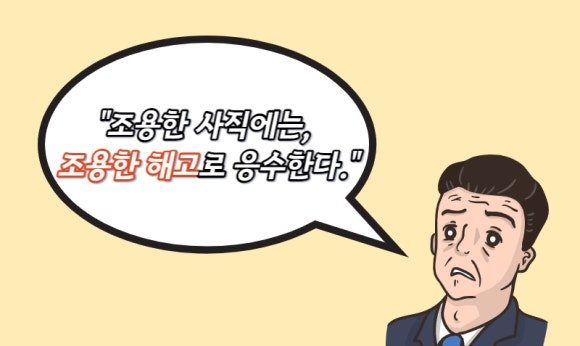
사실 이런 건 미국과 달리 근로기준법에 의거해서 직접 해고통지를 할 수 없는 국내 기업에선 오래전부터 흔한 일이었다. 다만 이런 일들이 벌어지고 있다는 건 코로나19와 최근 거시경제의 어려움으로 경영환경이 어려워진 것도 있지만, 경영인들 사이에서 조용한 사직에 대한 거부감이 커지면서 직원 고용을 최소화하려는 움직임으로 이어진 것이란 사실이다.
그러므로 지금의 조용한 사직의 개념을 일을 대충하겠다는 것이 아니라, 주어진 시간과 환경에서 적극적이고 능동적으로 일하겠다는 자세로 변화할 필요가 있다. 일할 때 확실히 일하고, 쉴 때도 제대로 쉬는 것이다. 하지만 기업이 이를 용납하지 않는 경우가 많다. 그래서 어쩔 수 없이 복종해야만 하는 직장인들은 사직서를 가슴에 담고, 다시 조용한 사직을 하며 수동적으로 일하는 사람으로 변할지도 모르겠다.
그래서 또 우리에겐 조용한 사직을 극복할 진정한 용기가 필요하다. 용기는 자신에 대한 깊은 믿음이며, 구속과 관습을 타파하는 자유이다. 자신에 대한 믿음이 자유의 날개를 얻었을 때 사람들은 열정적으로 변한다.


그리고 이런 용기는 태어나면서부터 타고나는 것이 아니라 만들어지는 것이다. 다이빙 선수가 높은 곳에서 아름다운 회전을 그리며 뛰어내릴 수 있는 것도 타고난 용기에 의해서가 아니라 부단한 훈련에 의해 만들어졌듯이, 용기도 객관적인 자료와 준비, 그리고 연습과 훈련을 통해 단련될 수 있는 일이다.
그러므로 기업도 직원들에게 용기와 열정을 만들 수 있는 훈련과 학습의 기회를 마련해 줄 수 있도록 조직이나 인사구조를 재편할 필요가 있다. 하지만 용기를 가지는 일은 기업이 뭔가를 해주기 전에 개인 스스로도 먼저 도전할 필요가 있다.
—————
Courage is not for anyone else but for myself.
We must have the courage not to fear failure. Like change, courage always coexists with fear. U.S. Senator John McCain once defined courage in this way:
“Courage is not the absence of fear, but the ability to act despite being afraid.”
Courage is doing something even when it is frightening. If there were no such thing as fear in the world, how could the word “courage” have been created? And now, that courage must be used not for the sake of a boss or a company as if sacrificing one’s life, but for oneself. It’s time to shift the paradigm. I must stand firm for the organization to be stable, and only when the organization stands firm can a virtuous cycle be created where I can continue to thrive.
Dexter Yager, in his book Dynamic People Skills, said it’s better to be hated for who you are than to be loved for who you are not. Additionally, Alfred Adler, a psychiatrist and psychologist who founded “individual psychology,” which emphasizes positive thinking, said, “Humans can change, and anyone can be happy, but it requires ‘courage.’” The courage to be free, the courage to be ordinary, the courage to be happy, and the courage to be disliked.
This doesn’t mean we should make mistakes and be disliked by our bosses. It means we need the courage to take risks and stand up for our true selves, even in the face of opposition. However, as the COVID-19 pandemic led to more remote work, the MZ generation (Millennials and Gen Z) realized that work could continue without much disruption even without going to the office.
Moreover, workers who had returned to the office after working from home gained a new perspective: work is not the be-all and end-all of life. The culture of going to the office, meeting colleagues face-to-face, engaging in intense meetings, and fostering unity has gradually begun to fade.
As a result, passion has also diminished, and the term “Quiet Quitting” has emerged. The term first appeared in 2009 during an economic symposium. Originally, it meant continuing to work while holding the mindset of being ready to submit a resignation letter whenever the opportunity arose—essentially doing only the minimum work required, with the intention of leaving the job at some point.
However, after the COVID-19 pandemic, the term Quiet Quitting has evolved to attract more attention. It no longer means having a desire to quit but rather a refusal to sacrifice oneself for recognition from the organization or boss. It means focusing solely on assigned tasks during work hours.
In June 2022, Gallup surveyed 15,900 U.S. workers, and 50% of respondents said they were doing only the minimum work required and disengaging from their jobs. In South Korea, a February 2023 survey by Albamon of 1,448 members of the MZ generation found that 8 out of 10 respondents had a positive view of Quiet Quitting (79.7%).
There was a previous social trend emphasizing work-life balance (Work & Life Balance), moving away from a work-centric mindset. However, from a manager’s perspective, Quiet Quitting seems to be a misstep in that balance. In short, it suggests an escape from a difficult workplace, where one is no longer striving to meet expectations but simply doing the bare minimum to get by.
In response, the term “Quiet Firing” has recently emerged in the U.S. Quiet Firing refers to silent layoffs—indirect means of pushing employees to resign voluntarily, such as giving them poor performance evaluations, cutting bonuses, changing work locations, or putting them on standby.
In fact, unlike in the U.S., where employers cannot easily terminate employees due to labor laws, Quiet Firing has long been common in South Korea. The fact that this practice exists points to the economic difficulties brought on by COVID-19 and recent macroeconomic challenges, which have made management tougher. It also indicates growing resistance among executives to Quiet Quitting, leading to efforts to minimize employee retention.
Thus, the concept of Quiet Quitting needs to shift from being about doing the bare minimum to taking a proactive and engaged approach within the given time and circumstances. Work with focus when working, and rest properly when resting. But many companies don’t tolerate this. As a result, employees who feel forced to conform may carry resignation letters in their hearts, returning to Quiet Quitting and working passively.
Therefore, we need true courage to overcome Quiet Quitting. Courage is a deep belief in oneself, a freedom that breaks through constraints and conventions. When belief in oneself gains wings of freedom, people become passionate.
And this kind of courage is not something we are born with, but something we can build. Just as a diver can leap from great heights and perform beautiful spins through practice and training, courage can also be honed through preparation, study, and training.
Therefore, companies should also restructure their organizations or HR systems to provide employees with opportunities for training and learning that foster courage and passion. However, before companies offer anything, individuals must first challenge themselves to cultivate their own courage.