눈부신 지느러미. 그날그날 처리해야하는 많은 활동과 매일 꺼야하는 일상적인 불처럼, 직장인들에겐 긴급하지만 중요하지 않은 업무에 쫒기는 일이 흔하게 발생한다. 설상가상으로 하찮은 일이나 바쁜 업무, 시간을 낭비하는 일처럼 중요하지도 긴급하지도 않은 활동에 쫒기는 경우도 허다하다.
그래서 너무 판에 박힌 일상의 업무들 때문에, 삶의 수렁에 빠진 직장인들은 새로운 기회를 알아챌 시간이 없다. 그들은 습관이 되어버린 일 때문에, 새로운 아이디어나 기회 또는 직장을 박차고 나가 새롭게 할 수 있는 사업에 대한 도전 등에 반드시 필요한 첫 걸음을 내딛지 못한다.
이에 대해 슘페터는 대부분의 사람들이 상황을 있는 그대로 유지하는데 만족하려한다고 말했다.
”물살을 따라 수영하는 것과 물살을 거슬러 수영하는 것의 차이는 여기에서 발견할 수 있다”
그래서 언제나 출발은 바로 ‘지금’이어야 한다. 할 수 있는 조건이 갖춰질 때까지 미루다 보면, 어느새 현실에 파묻혀 꿈을 잃어버리고 안주하고자 하게 된다. 그러므로 무언가 이루기 위해서는 반드시 지금 이 순간 무언가를 행동해야만 한다.
물론 행동에는 위험과 대가가 따른다. 그러나 아무 행동도 하지 않았을 때의 장기적인 위험과 대가에 비하면, 지금 행동하는 것이 훨씬 더 적을 것이다.
박찬순의《발해풍의 정원》중에서도 비슷한 말이 나온다.
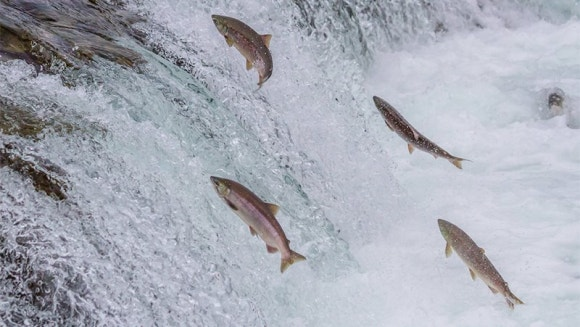
“내 곁에는 거센 물살을 힘겹게 가르는 작은 친구 물고기들이 있다. 그들은 물살을 따라 내려가다가 또는 거슬러 올라가다가 몸에 생채기가 나고 한쪽 지느러미가 잘려나갔다. 우린 모두 서로에게 실오라기 한 올만큼이라도 힘이 되어줄 수 없음을 나는 안다. 다만 이 말만은 할 수 있을 듯하다.
고통의 한가운데를 늠연하게 견뎌내는 이들의 지느러미에는 아무도 범접하지 못하는 눈부심이 깃들어 있을 것이라고. 그것을 찾아내는 일만이 이 혼돈의 세상을 사는 보람이라고.”
지느러미에 상처가 나는 것은 움직이기 때문이다. 거센 물살을 거슬러 진정으로 온 몸으로 몸부림을 치기 때문에 상처가 나는 것이다. 이렇게 도전을 회피하지 않고 살아 움직이는 것이 눈부시고 아름다운 삶의 행동이 되는 것이다.
나는 한때 등산을 좋아한다. 그러나 주말에 등산을 가기로 마음 먹었어도, 막상 문 앞에서 등산화 신기까지가 왜 그리도 싫은지… 그러다 억지로 몸을 일으켜 등산화 끈을 딱 묶는 순간, 쇼파에 누워 TV를 보며 꼼짝도 하기 싫어했던 조금 전, 그 마음이 흔적도 없이 사라지는 것을 느낄 수가 있다. 무엇이든 실행하기 전에는 마음이 행동을 지배하지만, 작은 하나라도 실행하는 순간부터는 행동이 마음을 지배하게 된다.
그래서 시작이 반이라는 말이 있다. 출발역에서 기차를 탔다면 종착역까지 가야만 한다. 인생의 목표를 위해 출발역에 왔다는 것은 이미 종착역까지 가기 위한 모든 계획이 끝나 실행을 하기 시작했다는 것으로써, 이는 이미 반은 지나온 것이나 다름 없다.
이렇게 목표의 이정표를 세우고, 한 곳 한 곳 작은 역을 지나 종착역에 도착하듯이, 작은 문제를 하나 둘 해결해 나가는 것, 그것이 바로 근본적인 행동의 힘, 실행력이다.
———————-
Like the numerous daily tasks that must be handled and the routine fires that must be extinguished every day, office workers often find themselves chased by urgent yet non-important work. Worse still, they also frequently get trapped in trivial tasks, busywork, and time-wasting activities that are neither important nor urgent.
Because of such monotonous daily work, office workers stuck in the swamp of life have no time to recognize new opportunities. Habitual tasks prevent them from taking the first essential step toward new ideas, opportunities, or entrepreneurial ventures that require breaking away from the security of a job.
Schumpeter noted that most people are satisfied with maintaining the status quo.
“The difference between swimming with the current and swimming against it lies here.”
Thus, the starting point must always be “now.” If one postpones action until all conditions feel ready, reality will bury dreams, and complacency will take hold. Therefore, to achieve something, one must act at this very moment.
Of course, action comes with risks and costs. But compared to the long-term risks and costs of doing nothing, taking action now imposes far less burden.
A similar sentiment appears in Park Chan-soon’s Garden of the Balhae Wind.
“There are small fish beside me fighting fiercely through the rushing current. They swim with the flow, then against it, their bodies wounded, a fin torn away. I know that we cannot offer even a single strand of strength to one another. But I can say this:
On the fins of those who endure pain with dignity will shine a brilliance no one can challenge. Discovering that alone gives meaning to life in this chaotic world.”
Fins get wounded because they move. Wounds come from truly struggling against a fierce current. Living without avoiding challenges—moving, fighting, striving—becomes a dazzling and beautiful way of life.
I once enjoyed hiking. Yet even after deciding to hike on a weekend, I found it terribly hard to lace up my boots at the door. The moment I forced myself to stand and tie my boots, the feeling of not wanting to move from the couch disappeared entirely. Before acting, the mind controls the body, but once one takes even the smallest action, the body begins to control the mind.
This is why people say well begun is half done. If one boards a train at the departure station, one must reach the final stop. Coming to the starting point of life’s goals means the planning is over and action has begun—half the journey is already complete.
Setting milestones and passing each stop one by one, solving small problems step by step—this is the fundamental power of action, execution.