기업은 직원들이 열정을 가지고 일할 수 있도록 하기 위해 조직문화를 바꾸고 조직을 재구성해야 한다. 최고의 경영전략가이자 런던경영대학원 교수인 게리해멀은 저서 “지금 중요한 것은 무엇인가(What matters now)”에서 비즈니스의 5가지 쟁점을 주장하고 있는데, 그 중 하나로서 지금 중요한 것은 열정이라고 말했다.
그는 매슬로우의 욕구계층이론(Maslow’s Hierarchy)을 이용, 기업이 원하는 직장 내 인간 역량의 계층 모형을 만들었고, 그 제일 상위 층 6단계에 ‘열정의 욕구’를 올려 놓았다. 이를 간단히 요약해보면 다음과 같다.
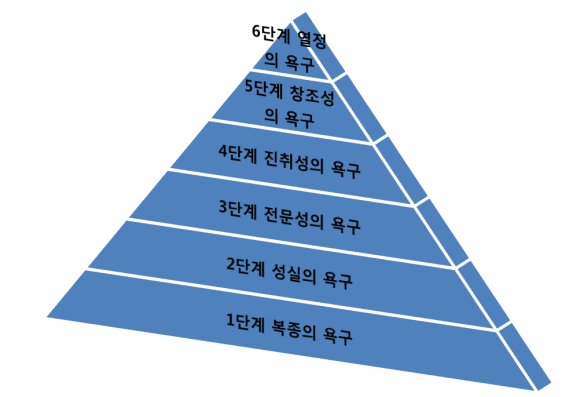
매슬로우의 욕구 5단계의 가장 하부단위인 인간의 기본적인 욕구인 의식주와 안전, 그리고 사회적인 욕구는 누가 뭐라고 해도 생존을 위한 가장 기초적인 필요조건이다. 이에 대해서는 특별히 누가 시키고 강조하지 않아도 인간은 당연히 살기 위해서 스스로 헤쳐 나가야만 한다.
이와 마찬가지로 기업에서도 직원들의 입장에서 가장 기본적인 태도인 복종과 성실, 그리고 잘 훈련되어 전문가적인 역량을 쌓는 일은 경영자가 크게 강조하지 않아도 당연히 행하고자 하는 일이다.
하지만 기업은 그보다 더 나아가 진취적이고 창조적이며 열정적이고 주인의식 있는 우수한 인재들을 원한다. 그런데 문제는 경영자들이 바라는 상위층 3단계는 항상 마음 속과 입에서만 맴돌 뿐이고, 정작 행동으로는 복종과 성실, 그리고 전문성을 강조하고 있다는 것이다.
게리 해멀은 이런 하부단계의 인력은 중국과 인도 등 저임금의 근로자로 아웃소싱하면 더욱 효율성을 높일 수 있으며, 실제로 많은 기업들이 그렇게 하고 있다 하더라도 이런 체제는 오래 못 가고 경쟁에 뒤쳐지게 될 것이라고 지적했다.
그래서 먼저 전문성을 넘어 진취성을 키워서 직원들이 문제나 기회를 잡았을 때 망설이지 말고 즉시 행동할 수 있도록 해야 하며, 통념에 맞서 새로운 아이디어를 만들어 내는 창조성을 기르도록 해야 한다. 또한 열정이 직원들로 하여금 업무를 사명으로 여기고 모든 것을 바쳐 일하며 즐길 수 있도록 해야 한다.
그러기 위해서는 통제의 쳇바퀴를 반대로 돌려, 조직보다는 구성원을 먼저 생각하고, 사람들이 정말 하고 싶은 일을 찾도록 해주어 열정의 공동체를 구축해야 한다고 게리 헤멀은 말했다.
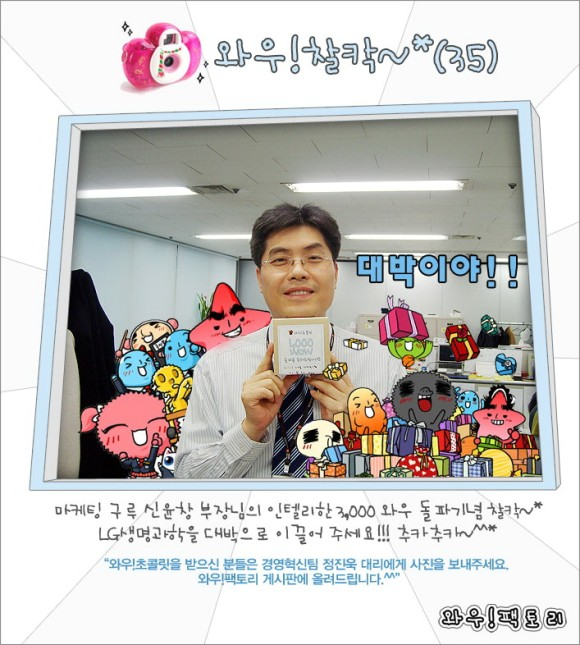
LG생명과학 마케팅전략팀에서 나와 팀원들은 회사의 중요 전략과제를 다루는 한편, 영업/마케팅 혁신 TFT, 제품 포트폴리오 TFT 등을 비롯한 각종 혁신활동에 투입되었다. 점차 우리의 역량과 열정이 인정받게 되었기 때문이었다.
그러나 이런 과정에는 항상 좋게 보는 사람들만 있는 것은 아니었다. 어떤 정치적 이유인지 모르겠지만, 탄생한지 3년 만에 팀장도 모르는 새에 팀이 해체된 것이다. 갈 길을 잃은 나는 마케팅3팀장으로 구사일생 하였고, 팀원들은 각자 다른 팀으로 뿔뿔이 흩어져 버렸다.
그리고 우리의 열정의 불도 서서히 꺼지기 시작하여, 나는 1년 만에 회사를 떠나 세라젬H&B로 새 둥지를 폈으며, 각 팀으로 흩어진 팀원들은 과장, 차장으로 진급들을 하며 열심히 일을 하였지만, 성실함은 여전한 반면 가슴 뛰는 열정은 사라져 버린 그들 대부분은 몇 년 후에 회사를 떠나고 말았다.
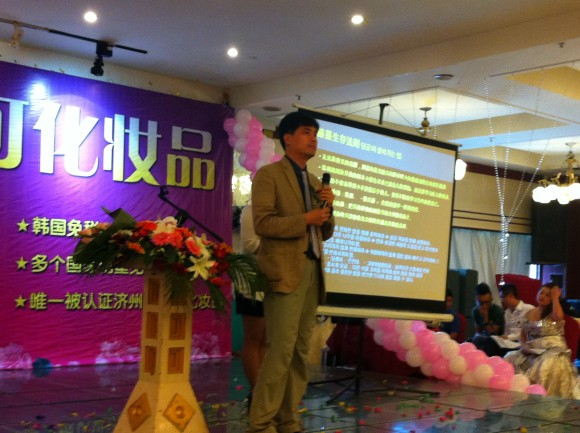
그러나 세라젬 H&B도 다르지 않았다. 2010년 나는 처음으로 중국으로 넘어가 세라젬H&B 중국법인을 세우고 새로운 직원들을 채용하여, 중국 전역을 돌며 중국법인장으로서 7년간 경영을 하였다. 처음 한 개 브랜드의 신제품과 산동성의 조그만 유통조직으로 시작했던 회사가, 10개 브랜드 150품목에 전국 2,000여 명의 대리상 조직으로 커가는 과정은 나와 직원들의 헌신적인 열정이 없었으면 이루어질 수 없는 일이었다. 그러나 이곳에서도 나는 회사를 떠나게 되었고, 함께 고생했던 직원들도 일부는 떠났으며, 일부는 중국에서 목구멍이 포도청이라 마지못해 다니고 있는 사람들도 있다.
두 회사 모두 게리 해멀이 말한 상위 층의 3단계 진취성, 창조성, 열정의 욕구를 회사가 스스로 꺾은 것이었다. 결국 하위 단계인 복종과 성실, 그리고 전문성만 남아 있었던 그들에게 남은 선택은, 회사를 떠나는 것뿐이었다.
무엇이 자신의 일을 사명처럼 여기며 목숨처럼 일했던 직원들의 열정을 깎아 버렸을까? 부서간의 헤게모니(Hegemony) 싸움, 조직의 이단아에 대한 공개처형, 아니면 훌륭한 인재로 성장한 마케팅전략팀원들에 대한 힘센 임원들의 욕심이었을까?
그것이 무엇이든 LG생명과학과 세라젬H&B 두 회사 모두 가장 큰 잘못을 한 것은 직원들의 성과와 열정을 보상으로 연결하여 불을 더욱 타오르게 하지 못하고, 오히려 찬물을 부어 꺼버린 것이다.
내가 회사를 떠난 이후에도, 밖에서 바라본 두 회사는 CEO가 바뀌고 임원들이 바뀌었어도 여전히 변하지 않았던 단 한가지는, 회사를 변화시키고 이끌겠다는 사명의식과 열정으로 인생을 걸만큼 헌신적인 팀과 사람이 없어 보였다는 것이다. 그리고 끝내 LG생명과학은 LG화학 의약품 사업부로 흡수되었고, 세라젬H&B 한국법인도 세라젬에 통합되어 이 세상에서 사라지고 말았다.
이 글을 통해 감히 한 때 몸 담았던 두 회사를 비난하려고 하는 것이 아니다. 아직도 분명 열정이 넘치는 사람들이 내부에서 쓴 소리를 하고 온 힘을 다 하고 있을 것이다. 단지 그 소리가 경영층에 체계적으로 전달되지 않거나, 전달되었다 하더라도 차, 포 다 떼이고 힘을 잃어 경영층이 귀담아듣지 않을지도 모를 일이다.
그래서 나는 이 글을 통해 내 인생의 40대를 불질렀던 두 회사가 조금이라도 자극을 받아, 직원들의 소리를 듣고 열정이 넘치고 활기 찬 조직을 만들어, 다시 독립된 회사로 분리되어 글로벌 기업으로 성장하기를 기대해본다.
열정이 넘치는 조직을 만들기 위해서는 지금까지 얘기한 바와 같이 직원들 스스로도 열정적인 사람으로 변화해야겠지만, 회사가 그런 직원들을 수용하고 더 키워줄 조직과 문화, 그리고 성과보상 체계가 제대로 이루어져야 한다.
그리고 무엇보다도 회사의 비젼을 잘게 쪼개서 직원들 개개인의 꿈으로 나누어 주고, 전 구성원의 꿈이 다시 하나로 합쳐지면 결국 실현될 수 있다는 가능성과 함께, 미래를 위해 절실히 원하는 꿈으로 만들어 주어야 한다.
그러면 회사의 강요에 의해 말로만 하거나 어쩔 수 없이 하는 혁신활동이 아니라, 직원들이 회사의 비젼과 중장기 목표를 달성하기 위해 팀내에서 스스로 우러나오는 혁신적인 업무를 수행하게 될 것이며, 기업이 항상 바라는 직원들이 가지길 바라는 목표의식, 사명의식, 주인의식이란 말들을 직접 몸으로 실행하게 하는 직접적인 원동력인 뜨거운 열정을 가슴에 품고, 펄펄 끓는 가슴에 참을 수 없어 몸부림치듯 일에 매진하는 직원들을 발견하게 될 것이다.
게오르크 빌헬름은 말했다.
“이 세상에 열정 없이 이루어진 위대한 것은 없다.”
열정은 자동차의 엔진과 같은 것이다. 자동차를 구르게 하는 바퀴도, 자동차를 바른 길로 가게 하는 핸들도 엔진이 뜨겁게 타오르지 않으면 소용이 없다. 열정은 변화하고자 도전(CHALLENGE)하는 사람들의 심장이다. 변화를(Change)를 향해 뜨거운 열정(Hot Passion)을 가슴에 가득 채운 당신은 이제 도전의 항해를 떠날 준비가 된 것이다.
Hot Passion, 뜨거운 열정으로 가슴을 채워라.
——-
To foster a workplace where employees work with passion, companies must transform their organizational culture and restructure their systems. Gary Hamel, a top management strategist and professor at the London Business School, emphasizes the importance of passion in his book What Matters Now, listing it as one of the five key issues in business today.
Hamel, using Maslow’s Hierarchy of Needs, created a model of hierarchical human capabilities that companies should cultivate in the workplace. He placed “the need for passion” at the very top of this six-tiered hierarchy. A summary of his ideas is as follows:
At the foundation of Maslow’s five-level hierarchy are basic human needs—food, shelter, safety, and social belonging—which are universally acknowledged as prerequisites for survival. These needs require no special encouragement; people naturally strive to meet them to live.
Similarly, in companies, employees inherently exhibit basic attitudes such as obedience, diligence, and the pursuit of professional skills. These are fundamental behaviors that managers need not excessively emphasize.
However, organizations seek talent that goes beyond these basics: proactive, creative, passionate, and possessing a strong sense of ownership. The problem is that while the upper three levels—proactivity, creativity, and passion—are frequently discussed by managers, in practice, they often prioritize compliance, diligence, and expertise instead.
Gary Hamel points out that tasks requiring these lower-tier skills can be outsourced to low-cost labor in countries like China and India to enhance efficiency. However, he warns that this approach will not sustain competitiveness in the long run.
Therefore, companies must move beyond expertise to cultivate proactivity, enabling employees to act immediately when encountering challenges or opportunities. They must foster creativity to generate new ideas that challenge conventional wisdom. Above all, companies must ignite passion in employees so they see their work as a calling, dedicating themselves wholeheartedly and enjoying the process.
To achieve this, Hamel argues that companies must reverse the cycle of control, focusing on individuals before the organization. By helping employees find work they truly want to do, companies can build communities of passion.
At LG Life Sciences, my team and I handled critical strategic initiatives while participating in various innovation activities, such as the Sales and Marketing Innovation Task Force and the Product Portfolio Task Force. Gradually, our capabilities and passion gained recognition.
However, not everyone viewed this process favorably. For reasons that remain unclear, possibly political, the team was dissolved after just three years, without even the team leader’s knowledge. Left adrift, I narrowly secured a position as the leader of Marketing Team 3, while my team members were scattered across other teams.
As time went on, the fire of our passion began to dim. Within a year, I left the company to join Ceragem H&B. My former team members, though promoted to positions such as managers and senior managers, had lost their enthusiasm. Most eventually left the company a few years later, their dedication and passion extinguished.
Ceragem H&B proved no different. In 2010, I moved to China to establish Ceragem H&B’s Chinese subsidiary, hiring new employees and managing the organization as its head for seven years. Starting with a single brand and a small distribution network in Shandong Province, we grew into a company managing 10 brands, 150 products, and over 2,000 distributors nationwide. This growth would not have been possible without the relentless passion of my team and me. Yet, even here, I eventually parted ways with the company. Some of my colleagues also left, while others stayed on reluctantly, unable to leave due to financial necessity.
Both LG Life Sciences and Ceragem H&B stifled their employees’ needs for proactivity, creativity, and passion—the very elements Gary Hamel identified as critical. Left only with compliance, diligence, and expertise, employees had no choice but to leave.
What extinguished the passion of employees who once worked with such dedication and purpose? Was it interdepartmental power struggles, the public “execution” of mavericks within the organization, or the ambitions of powerful executives targeting the talented members of the marketing strategy team?
Whatever the reason, the greatest failure of both LG Life Sciences and Ceragem H&B was their inability to connect employees’ achievements and passion with rewards that would further fuel their enthusiasm. Instead, they poured cold water on the flames.
Even after I left, I observed these companies from the outside. Despite changes in CEOs and executives, one thing remained constant: they lacked the devoted teams and individuals willing to dedicate their lives to driving organizational change. Eventually, LG Life Sciences was absorbed into LG Chem’s pharmaceutical division, and Ceragem H&B’s Korean subsidiary was merged into Ceragem, effectively erasing them from existence.
This is not meant to criticize the two companies where I once worked. Undoubtedly, there are still passionate employees within those organizations striving to make their voices heard. However, their efforts may not be systematically conveyed to management, or even if they are, they may lose their impact and fail to resonate with leadership.
Through this account, I hope to inspire these companies to listen to their employees, create passionate and vibrant organizations, and regain their independence, ultimately evolving into global enterprises.
To create an organization full of passion, as discussed, employees must also transform themselves into passionate individuals. However, companies must establish a culture and structure that supports and nurtures such employees, along with a robust performance and reward system.
Most importantly, companies should break their vision into smaller pieces, aligning these with the individual dreams of their employees. When the collective dreams of all employees come together, they can form a shared vision and foster a deeply desired aspiration for the future.
This approach can shift innovation activities from being mere obligations imposed by the company to genuine, self-driven efforts. Employees will take initiative within their teams to achieve the company’s vision and long-term goals. The passion that fuels commitment, ownership, and a sense of mission will be palpable, driving them to pour their energy into their work with unrelenting fervor.
Georg Wilhelm Friedrich Hegel once said:
“Nothing great in the world has ever been accomplished without passion.”
Passion is the engine of a company. Without it, the wheels cannot turn, and the steering wheel has no purpose. Passion is the heart of those who dare to challenge change. With a chest full of fiery passion, you are ready to embark on the voyage of challenge.
Hot Passion: Fill your heart with blazing fervor.