습관(習慣)에 관해 빠지지 않고 등장하는 트라이언 에드워즈(Tryon Edwards)의 명언이 있다.
“생각은 목적을 통해 행동으로 이어진다. 행동은 습관에서 발생하고, 습관은 성격을 결정하며, 성격이 그 사람의 운명을 바꾸어 놓는다.”
즉, 사람은 자신의 생각을 말로 표현하고, 사람의 말은 행동을 따라 오게 한다. 생각을 바꾸면 행동이 바뀌게 되고, 행동을 바꾸면 습관이 바뀌고, 습관을 바꾸면 성품이 바뀌고, 성품을 바꾸면 #운명 이 바뀐다는 것이다.
결국 사람의 생각과 말과 행동을 지배하는 것은 태도이므로, 한마디로 태도가 습관을 바꾸게 하고 습관이 운명을 바꾼다는 말이다. 그러면 제일 시발점인 ‘생각’도 아니고 ‘행동’이나 ‘태도’도 아니라, 하필이면 왜 ‘습관’이 ‘운명’을 바꾼다고 하는 것일까?
왜 습관이 인생의 성공과 실패를 좌우하는 것일까?
그것은 누구나 쉽게 새로운 생각을 하고 수시로 생각을 바꿀 수도 있으며, 또한 그 생각대로 행동도 할 수 있지만, 그러한 행동을 습관이 되도록 지속적으로 반복하여 실천하기가 매우 힘들기 때문이다.
습관(習慣)의 한자어를 보면, 습(習)자는 둥지에서 어린 새가 하늘로 날기 위해 날개를 계속 퍼덕이는 모습을 형상화한 것이고, 관(慣)자는 마음 심(心)에 꿸 관(貫)자가 더해진 것이다. 즉 어린 새의 날개 짓이 마음에 꿰였다는 뜻이다.
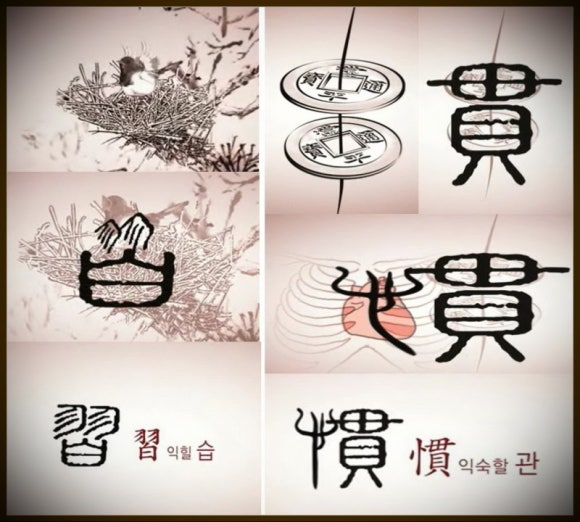
어미의 품에서 벗어나 둥지를 박차고 날아 오르기 위해 어린 새는 수도 없이 날개 짓을 반복한다. 그리고 매일 반복한 날개 짓은 어린 새의 마음 속에 깊이 자리 잡혀, 어느 날 자신도 모르게 하늘을 날 수 있는 모습으로 바뀔 것이다.
이렇게 습관(習慣)이란 어린 새가 날개 짓을 매일 반복하여 마음에 꿰인 듯 익숙해져, 누가 시키지 않아도 의도적으로 하려 하지 않아도, 자동적으로 이루어지는 자연스러운 행동을 의미한다.
매년 새해만 되면 하는 자신과의 약속도 작심삼일이 되는 것처럼, 사람들이 가장 하기 어려운 것은 행동을 지속적으로 유지하는 것이다. 그러나 이토록 어려운 반복적 행동이 지속되어야만 우리들 몸에 익어 습관이 되기 때문에, 습관이 운명을 바꾸게 한다는 점에서 더욱 중요한 것이다.
사람들은 모두 성공할 잠재력과 공평한 기회를 타고났지만, 그 결과가 다른 것은 모두 태도와 습관 때문이다. 습관은 항상 우리와 함께 있으며, 삶의 조력자가 될 수도 있고 가장 무거운 짐이 될 수도 있다.
따라서 우리는 나쁜 습관을 버리고 좋은 습관을 선택하여 몸에 맞도록 엄격하게 훈련해야 한다. 올바른 습관을 창조하는 것은 세포가 기억할 수 있을 정도의 훈련뿐이다. 그래서 오래된 습관을 버리고 해본 적도 없는 일을 한다는 것은 매우 불편한 일이다. 마치 몸에 맞지 않는 옷을 억지로 입는 것처럼 어색하고 불편하다.
그러나 그것에 한번 익숙해지면 언제 그랬느냐는 듯이 이전의 습관으로 되돌아가는 것이 오히려 어려워질 수도 있다. 그만큼 습관이란 한번 길들이기 나름인 것이다.
————-
When discussing habits, one often encounters a famous quote by Tryon Edwards:
“Thoughts lead to purposes; purposes go forth in action; actions form habits; habits decide character; and character fixes our destiny.”
In other words, our thoughts translate into words, and our words guide our actions. Changing one’s thoughts leads to changes in actions, which then alter habits, and subsequently character, ultimately reshaping destiny. This emphasizes that attitude governs our thoughts, words, and actions, thereby influencing habits and destiny.
But why is it habits, rather than thoughts, actions, or attitudes, that are said to determine destiny?
Why are habits considered the key to success or failure in life?
The answer lies in the fact that while anyone can think of new ideas or alter their thoughts and even act on them temporarily, it is exceedingly difficult to sustain such actions until they become habitual.
Looking at the Chinese characters for “habit” (習慣), “習” depicts a young bird flapping its wings repeatedly to learn to fly, while “慣” combines the heart (心) with continuity (貫), symbolizing a repetitive act that becomes ingrained in the heart.
To leave the nest and soar into the sky, a fledgling must practice flapping its wings countless times. This repetitive effort embeds the act into its nature, allowing the bird to one day fly effortlessly without conscious thought. Similarly, a habit represents an act repeated so consistently that it becomes second nature—a natural, automatic behavior requiring no deliberate effort.
Every New Year, people make resolutions, but many fail to sustain their efforts, falling into the trap of short-lived determination. Maintaining consistent actions is one of the hardest challenges, yet only sustained effort can turn behavior into habits that alter our destiny. This is why habits are crucial—they possess transformative power.
While everyone is born with the potential for success and equal opportunities, the divergence in outcomes boils down to attitude and habits. Habits are ever-present companions in our lives; they can serve as allies or burdens, depending on their nature.
Therefore, we must discard bad habits and rigorously train ourselves to adopt good ones. Establishing correct habits requires persistent effort until they are imprinted at a cellular level. Breaking away from entrenched habits or adopting unfamiliar routines can feel awkward and uncomfortable, akin to wearing ill-fitting clothes.
However, once new habits become ingrained, reverting to old ways becomes just as challenging. Habits, after all, are what we shape them to be.
By choosing and cultivating the right habits, we take control of our destiny, turning daily routines into powerful tools for success.